
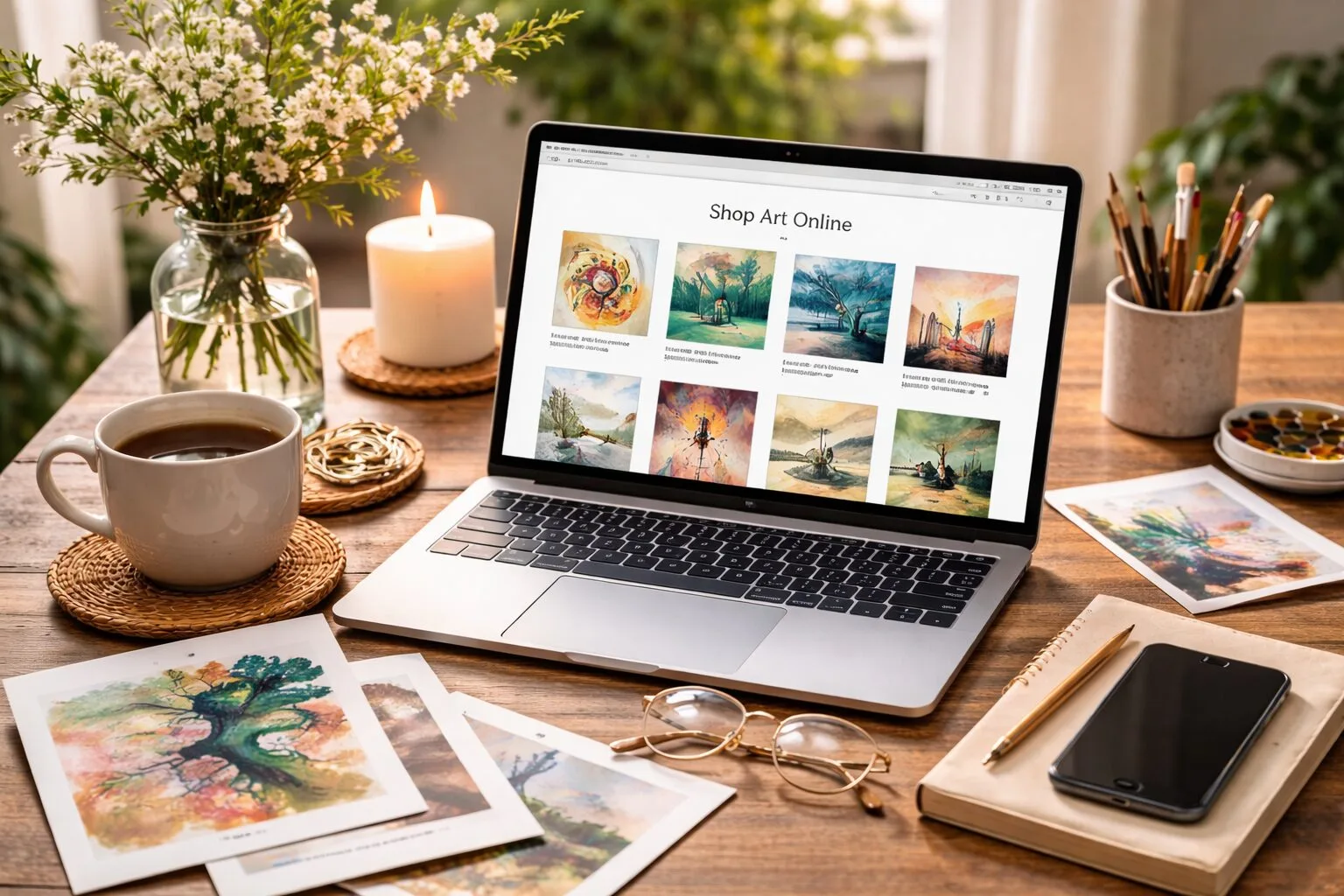
One of the most significant shifts in the art market over the past decade has been the steady rise of online art buying. What was once considered a niche or supplementary channel has now become a core part of how collectors discover, research, and purchase art. This trend is especially strong among new and younger collectors and continues to shape the art market heading into 2026.
Almost six in ten collectors now buy art online
Recent market research shows that 59 percent of art collectors purchased art online in 2024, and 73 percent of those buyers said they bought the same amount or more online compared to the previous year. This indicates that online buying is not only attracting first time collectors but also encouraging repeat purchases and long term engagement.
Online art market size and growth outlook
The global online art market was valued at approximately USD 11.67 billion in 2025 and is projected to grow to around USD 18.90 billion by 2033, representing an estimated 6 percent compound annual growth rate. This growth reflects increasing trust in digital platforms, improved online viewing experiences, and wider acceptance of purchasing art without physical viewing.
Digital platforms as a key discovery channel
Online platforms have become a primary discovery tool for collectors. Surveys show that 43 percent of galleries plan to increase their focus on online sales, recognising that collectors often begin their buying journey digitally. Platforms such as Artsy report strong growth in first time buyers and sustained online transactions, even during periods when physical fairs and exhibitions slow down.
Younger collectors are driving online purchases
Digital buying is especially prominent among younger collectors. Research indicates that up to 82 percent of collectors under the age of 36 have purchased art online. This group is comfortable researching artists, pricing, and provenance digitally and often makes buying decisions online before ever visiting a gallery or fair in person.
What this means for the 2026 art market
Online art buying is no longer optional or secondary. It is a foundational part of the art market ecosystem. Galleries and artists who invest in digital presence, online storytelling, and transparent pricing are better positioned to reach new collectors and build long term relationships.
Collectors today are also more empowered. Access to artist information, market context, and visual previews allows buyers to make informed decisions independently. The result is a more inclusive and accessible art market.
At the same time, the future points toward hybrid experiences. Many collectors now discover art online, research extensively, and then choose whether to buy digitally or view in person. This blended approach is likely to become the norm in 2026.
An important caveat for collectors
Market data and trends provide helpful context, but they should never replace personal connection. Collect what resonates with you emotionally and aesthetically, not simply what appears popular or in demand. Trends will shift, but art you love will continue to bring meaning long after market cycles change.
References
- AMRA & Elma, Art Platform Marketing Statistics
https://www.amraandelma.com/art-platform-marketing-statistics/ - Straits Research, Online Art Market Report
https://straitsresearch.com/report/online-art-market - Artsy Editorial, Art Market and Collector Insights
https://www.artsy.net/article/artsy-editorial-art-market-trends-2025
https://www.artsy.net/article/artsy-editorial-art-collector-insights-2024 - Barron’s, Mid Market Art Buying Trends
https://www.barrons.com/articles/art-market-revival-blue-chips-mid-market-20996d2f
Leave a Reply