
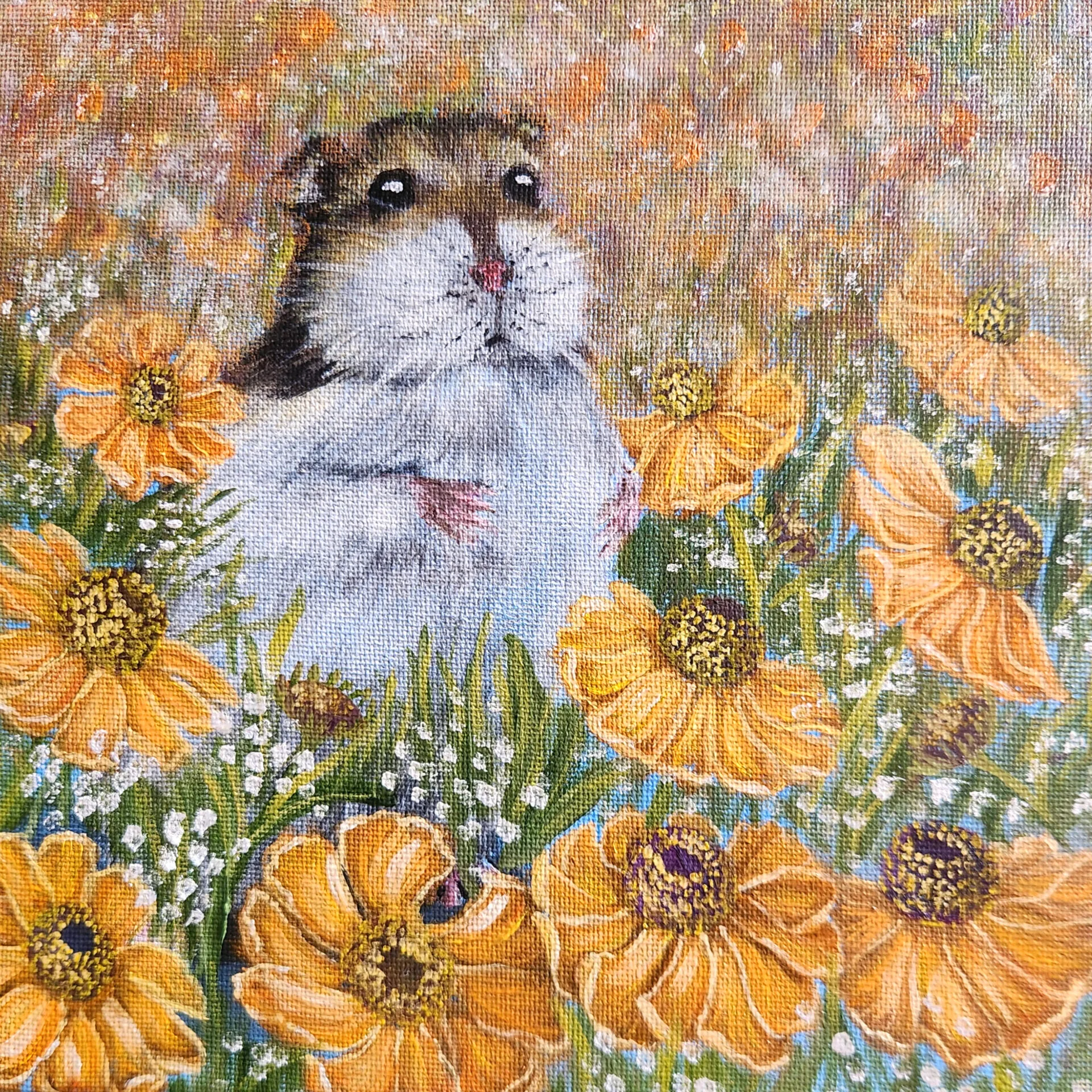
Have you ever stood in front of a painting and felt something shift inside you?
Not just admiration. Not just aesthetic approval.
But recognition.
That moment when you think, This is mine, even before logic enters the room.
Falling in love with art is rarely random. It feels intuitive, but psychology tells us it is deeply rooted in who we are.
1. We Are Wired for Emotional Projection
Art becomes a mirror.
Psychologists describe projection as the process by which we assign our internal states onto external objects. When you are drawn to a particular artwork, you are often responding to something inside yourself that you recognise in it.
A turbulent abstract piece may resonate during periods of personal transition.
A calm landscape may feel irresistible when life feels overwhelming.
A whimsical painting may reconnect you with parts of yourself that have been dormant.
You are not just choosing art.
You are choosing a reflection.
2. Colour Affects the Nervous System
There is science behind attraction to colour.
Research in environmental psychology shows that colour influences mood and physiology. Blues and greens tend to lower heart rate and calm the nervous system. Reds and oranges stimulate energy and alertness. Soft neutrals can create safety and emotional regulation.
When you say, “I just love this colour palette,” what you may really be saying is, “This regulates me.”
Art that aligns with your nervous system feels comfortable. You linger longer. Your breathing softens. That is not coincidence.
3. Memory Shapes Taste
Much of what we love is tied to memory.
Neuroscience shows that emotional memories are stored with sensory cues. Texture, light, pattern, even certain motifs can unconsciously link back to childhood spaces, travel experiences, or meaningful life chapters.
Perhaps you grew up near water and are drawn to marine themes.
Perhaps ornate patterns remind you of your grandmother’s home.
Perhaps minimalism appeals because it contrasts with a chaotic upbringing.
Art taps into memory before logic catches up.
4. Identity and Aspiration
We also buy who we want to become.
Studies in consumer psychology show that people purchase objects that reinforce identity or signal aspiration. Art is no different.
A bold contemporary piece might represent confidence.
A disciplined geometric work might reflect order and clarity.
A socially engaged artwork might align with your values.
Collectors are not just decorating walls. They are curating identity.
5. Familiarity Builds Affection
There is a well-documented psychological phenomenon called the mere exposure effect. The more we see something, the more we tend to like it.
This explains why certain artists grow on us over time. Why revisiting a fair or exhibition can change our perception. Why a piece you initially overlooked suddenly becomes compelling.
Familiarity reduces cognitive resistance. It allows emotional appreciation to surface.
6. Why Some Art Feels Instant
Then there is something harder to quantify.
Sometimes a work simply stops you.
Your body reacts before your mind explains it. This is often tied to pattern recognition. The brain constantly scans for coherence, rhythm, and meaningful structure. When it finds something that aligns with internal expectations yet offers novelty, it triggers reward pathways.
In simple terms, your brain experiences a small surge of pleasure.
That is the spark.
Collecting with Awareness
Understanding the psychology behind attraction does not reduce its magic. It deepens it.
Next time you feel drawn to a piece, ask:
- What does this say about my current state of mind?
- What memory might this be activating?
- Does this reflect who I am, or who I am becoming?
- Does my body relax or energise when I look at it?
Collecting well is not about suppressing emotion in favour of logic. It is about understanding emotion so that your choices are both heartfelt and intentional.
When you know why you love something, you collect with clarity.
And art chosen with clarity tends to stay meaningful long after trends fade.
Because in the end, we do not just fall in love with art.
We fall in love with the parts of ourselves it reveals.
Leave a Reply