Lately, I have been sitting with a difficult question. How do we make sense of the darkness in the world?
As an artist, I tend to see and feel things deeply. And in recent times, the weight of global events has felt heavier than usual. The tensions surrounding the Iran war, and the actions of powerful leaders such as Donald Trump and Benjamin Netanyahu, remind me how much influence a few individuals can have on the lives of many.
It is unsettling the way the things are panning out in the world. Is this the end of morality or is there still some hope?
When power is exercised without wisdom or compassion, the consequences ripple far beyond borders. Economies react. Markets tremble. Ordinary people, who have no part in these decisions, feel the impact in very real ways.
At the same time, the ongoing revelations and discussions around the Epstein files have been deeply disturbing. The idea that some among the rich and powerful could be involved in such depraved behaviour shakes something fundamental. Even reading about it creates a sense of discomfort. A feeling of violation, despite being far removed from it.
But what has troubled me just as much is something quieter.
The silence.
The quiet complicity of people who see, who sense that something is wrong, yet choose not to speak. On a larger scale, this silence allows systems of power to continue unchecked. It creates space for wrongdoing to persist, for truth to be blurred, for accountability to fade.
And I have seen this not just in the world at large, but in my own circles.
People who stay silent to avoid conflict.
People who choose comfort over truth.
People who look away, even when something does not feel right.
It is uncomfortable to admit, but this quiet complicity plays a role in shaping the world we live in.
It makes me pause and ask.
What is happening to our sense of right and wrong?
Where does accountability lie when power, wealth, and influence seem to blur the lines of morality, and when silence becomes the easier choice?
As someone who believes in God, I find myself returning to a more personal understanding of faith. Not one dictated by institutions, but one rooted in conscience, integrity, and inner guidance. In times like these, that inner compass feels more important than ever.
As an artist, this tension does not stay outside.
It enters my work.
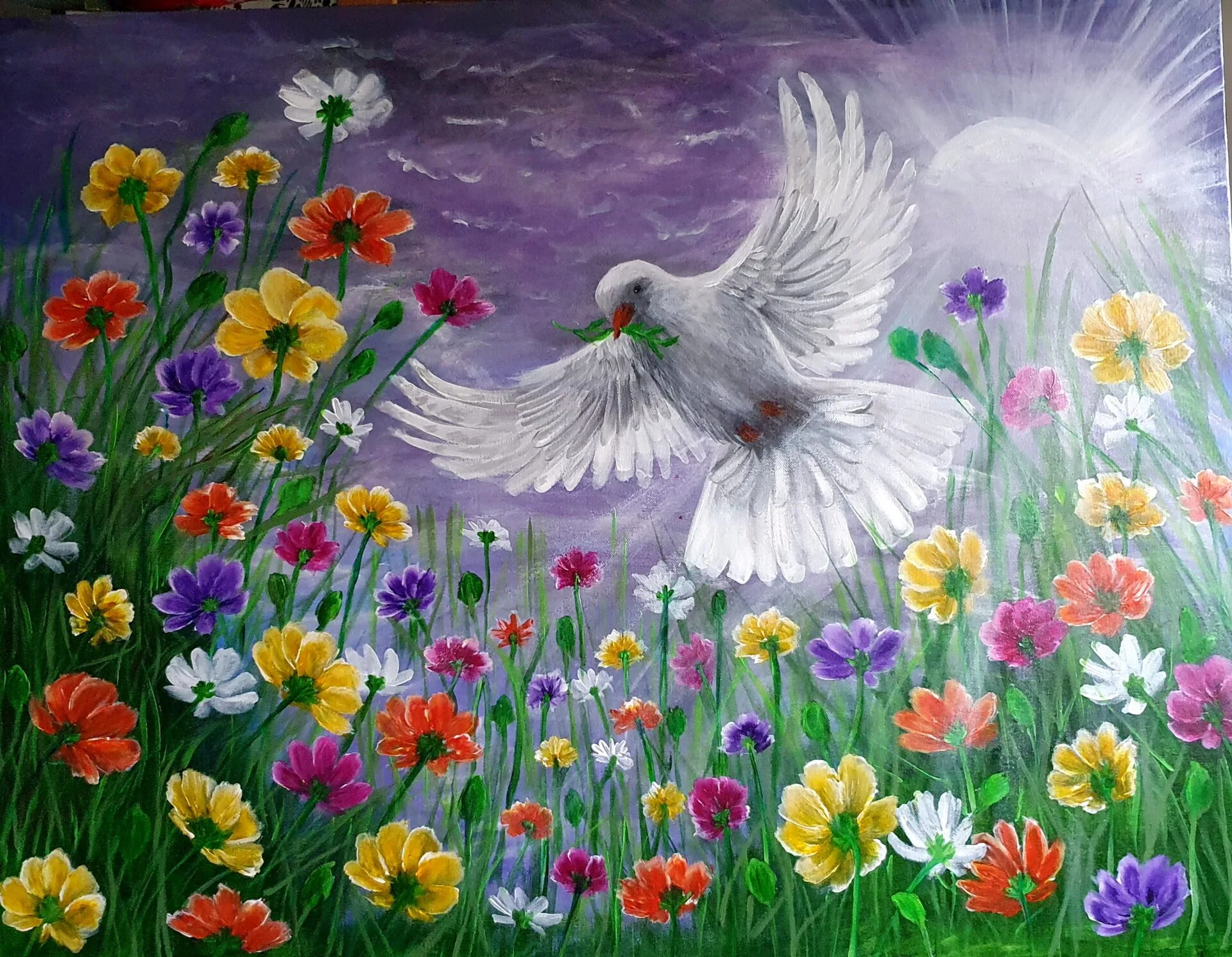
It challenges me to reflect on what I want to create and contribute. Do I mirror the chaos, or do I offer something different? Something that brings calm, reflection, and perhaps even healing?
As an investor, I also see how fragile stability can be. Geopolitical tensions can trigger waves that affect markets, livelihoods, and long term security. It is a reminder that behind every chart or number lies a deeper reality shaped by human decisions.
And as an individual, I feel the emotional weight of it all.
A mix of concern, disbelief, and at times, quiet sadness.
But I also ask myself this.
What can I do?
I may not be in positions of power. I cannot control global events. But I can choose how I respond.
I can choose not to be silent when something feels deeply wrong.
I can choose to stay aligned with my values, even when it is uncomfortable.
I can choose awareness over avoidance.
And as an artist, I can create work that reminds people of gentleness, of peace, of a different way of being. In a world that often feels harsh and divided, choosing to create softness is not passive. It is intentional.
It is a form of quiet resistance.
Because perhaps change does not always begin with loud actions.
Sometimes, it begins with refusing to look away.
And holding on to what is right, even when the world around us feels uncertain.
And maybe, through art, through reflection, through conscious living, we can offer something that steadies the chaos, even if only in small ways.
Leave a Reply