

There is something quietly unsettling about the speed at which the world is changing. Every week, another technological breakthrough appears promising greater efficiency, faster creation and increasingly seamless automation. Images are generated in seconds, essays assembled instantly, and even emotion itself is beginning to be simulated through code and algorithms. We are entering a cultural moment where speed is often treated as the highest form of intelligence. Yet beneath all this acceleration, many people seem more emotionally exhausted, overstimulated and disconnected from themselves than ever before.
When Beauty Becomes Content
Perhaps this is because the human spirit was never designed to live entirely inside velocity.
As an artist, I find myself thinking deeply about this tension between technological advancement and emotional humanity. Not from a place of fear, but from a place of curiosity. What happens to beauty in a world increasingly shaped by artificial intelligence? What happens to slowness, sensitivity, contemplation and emotional presence when nearly everything around us is becoming optimised for convenience and consumption?
I think one of the quiet tragedies of modern digital life is that it gradually weakens our capacity for genuine attention. We consume extraordinary amounts of visual information every day, yet very little of it truly lands within us. We scroll past sunsets while answering messages. We absorb thousands of images without properly seeing any of them. Beauty itself risks becoming flattened into content, something quickly consumed rather than deeply experienced.
But real beauty has never functioned that way.
True beauty asks for presence. It asks us to pause long enough to notice the softness of light moving across a room, the emotional atmosphere held inside a painting, the scent of rain on warm earth, or the strange ache that can arise when music unexpectedly touches something vulnerable within us. These moments are not productive in the conventional sense. They do not optimise output or increase efficiency. Yet they nourish something essential inside the human psyche that cannot survive on stimulation alone.
Why Presence Cannot Be Replicated
This is where I believe art still matters profoundly.
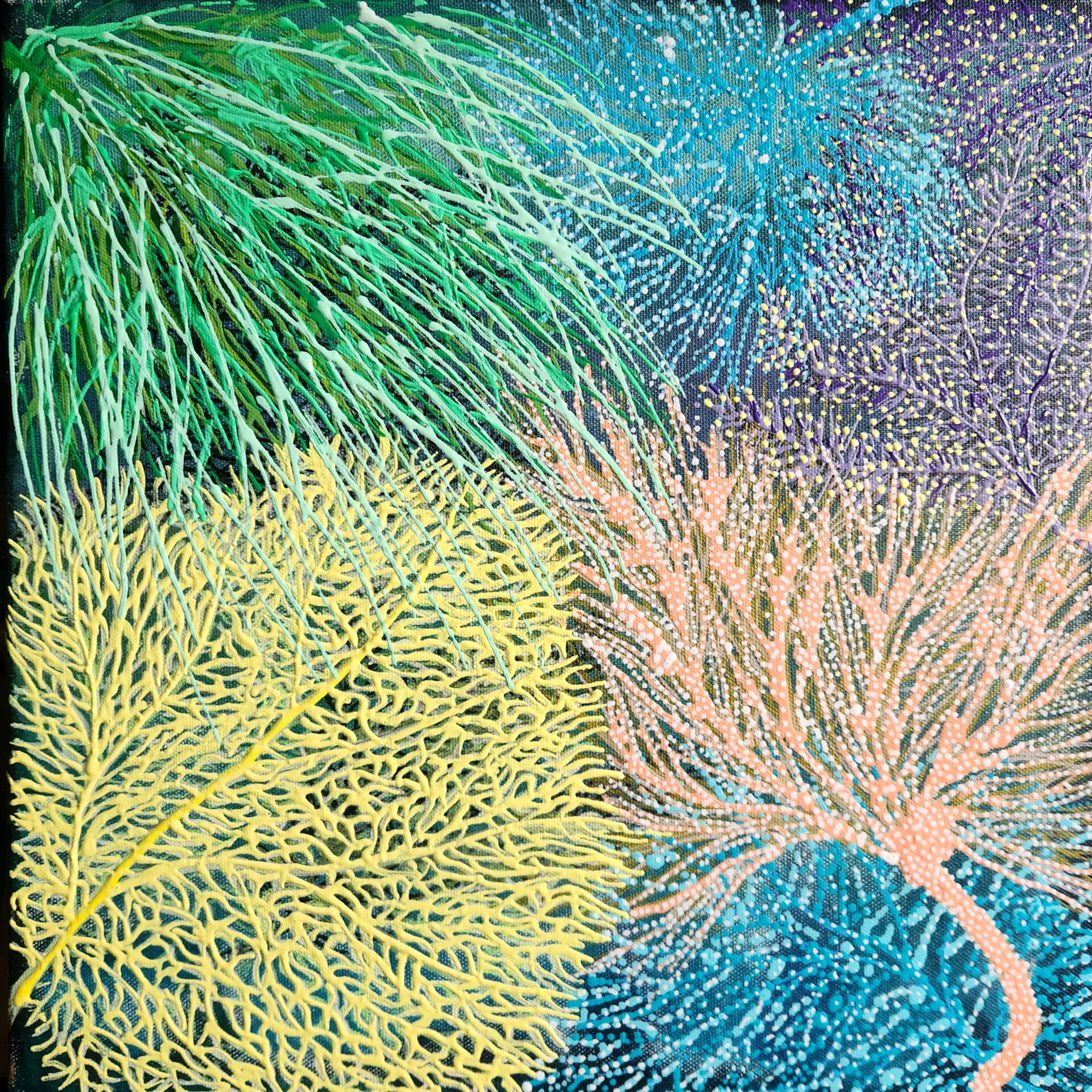
Artificial intelligence is becoming extraordinarily capable at reproducing aesthetics. It can analyse patterns, mimic visual styles and generate technically impressive imagery at astonishing speed. But presence is something entirely different from replication. Presence emerges from lived experience. It comes from grief, tenderness, memory, uncertainty, healing and the invisible emotional layers carried inside a human life. A painting is never only paint. Often, it is accumulated feeling translated into colour, texture and form.
That emotional sincerity is something people still recognise instinctively, even when they cannot logically explain it. We can feel the difference between something designed merely to impress and something created with genuine sensitivity. One may capture attention briefly. The other lingers quietly within us long after we leave the room.
I sometimes think beauty has become misunderstood in contemporary culture because it is so often associated with superficiality. But beauty, in its truest form, is not decorative. It is regulating. It softens the nervous system. It restores emotional spaciousness. Nature understands this instinctively. There is a reason people feel calmer near water, trees, candlelight, gardens and natural textures. There is a reason every civilisation throughout history has created music, ritual, art and sacred spaces even during periods of hardship and uncertainty.
Beauty as Emotional Regulation
Beauty helps human beings remember themselves.
And perhaps this is why it matters even more now, precisely because we are entering an era that risks becoming increasingly synthetic. The more artificial the external world becomes, the more deeply people will crave what feels emotionally real. Real conversations. Real texture. Real silence. Real art created by human hands carrying human experience.
I do not believe the answer is rejecting technology entirely. AI will inevitably become part of creative life in countless ways. But I do think we are being asked an important question as a culture: what aspects of humanity are we unwilling to lose in exchange for convenience?
Because art has never merely been about visual output. Art is evidence of consciousness. It is one human being reaching toward another through emotion, gesture, colour and form. Perhaps this is why original works still hold such power even in an age of infinite digital reproduction. Not because they are flawless, but because they are alive.
And maybe that is what beauty ultimately continues to offer us in this rapidly accelerating world. A return to presence. A reminder that life is not solely about optimisation and speed. A quiet defence of sensitivity, wonder and emotional depth in a culture that increasingly struggles to make space for them.
If you would like to explore the rest of these reflections, you can browse the Insider Peek series.
Leave a Reply