

Why Tactile Hobbies Feel So Comforting Right Now
There is a quiet cultural shift unfolding beneath the surface of modern life. In a world increasingly shaped by speed, automation and endless digital stimulation, many people seem to be returning to slower, more tactile ways of living. Slow living, analog hobbies and handmade creative rituals are reappearing not simply as lifestyle trends, but almost as emotional necessities. Knitting, crochet, ceramics, painting, gardening and journaling are offering people moments of calm, presence and creative wellbeing in a culture that often feels overstimulating and emotionally fragmented.
Perhaps this longing is unsurprising. Much of modern life now takes place through screens. We consume enormous amounts of information each day, often without pause, and many people are beginning to feel the emotional consequences of that pace. There is a growing sense of overstimulation and quiet exhaustion beneath contemporary life. Even creativity has become increasingly performative, measured through algorithms, visibility and output. In contrast, tactile hobbies offer something profoundly different. They ask us to slow down enough to feel texture, repetition, presence and time.
What fascinates me is that these slower forms of creativity often have very little to do with achievement. Nobody picks up watercolor painting or crochet because it is efficient. In fact, their beauty lies partly in their slowness. The repetitive rhythm of working with yarn, the feel of clay beneath the hands, the movement of paint across canvas or the simple act of tending to plants all invite us back into the body. They create moments where attention softens and the nervous system begins to settle.
Why Handmade Things Feel Human Again
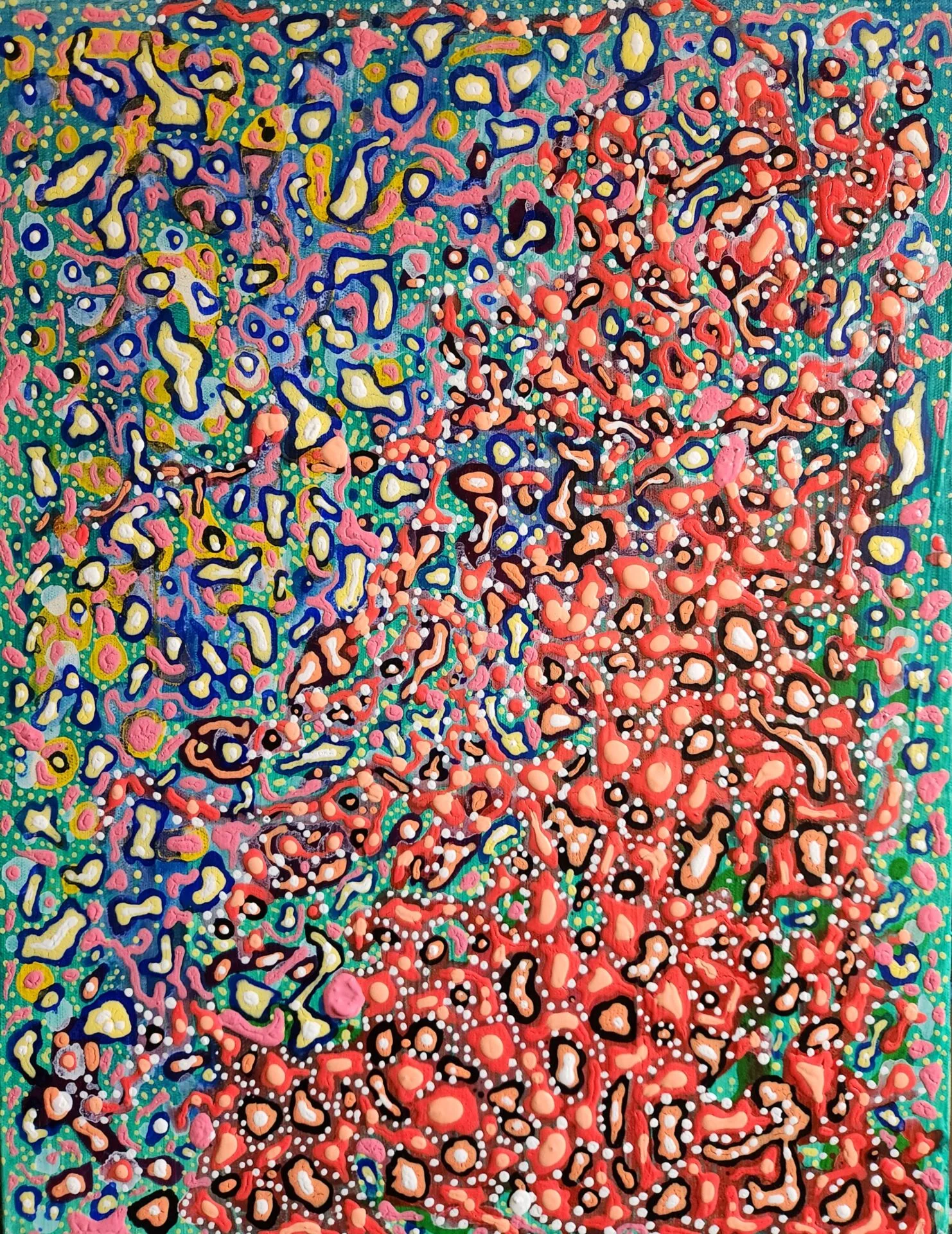
I think this may be one reason handmade objects and visible imperfections have become emotionally meaningful again. For many years, modern culture celebrated polished perfection and seamless efficiency. Now there seems to be a growing tenderness toward things that carry traces of the human hand. Handmade ceramics with uneven edges, worn linen, textured paintings and imperfect stitching often feel more comforting than mass-produced perfection because they remind us that someone real was here. They contain evidence of time, attention and lived experience.
This is also why original art continues to matter so deeply in the age of artificial intelligence. A painting is not merely an image to be consumed. It is accumulated presence. It carries the emotional atmosphere of the person who created it, along with moments of uncertainty, reflection, intuition and observation that cannot be replicated through automation. Human creativity contains lived experience, emotional memory and personal imperfection, which is precisely why human-made art continues to feel emotionally resonant in an increasingly artificial world.
Recent lifestyle and wellness trends suggest that many people are instinctively moving back toward slower and more tactile forms of living. Searches related to analog hobbies, mindful crafting and calming creative rituals continue to rise as people seek relief from digital fatigue and overstimulation. (cosmopolitan.com) Ceramics, knitting, embroidery, painting and gardening are quietly becoming forms of emotional grounding for people who are searching for beauty, creative wellbeing and a more human pace of life.
Slow Living as Emotional Grounding
What I find most hopeful is that this return to tactile creativity also reflects a deeper emotional hunger for beauty, presence and authenticity. Slow living is often misunderstood as laziness or escapism, but I see it differently. I think it is an attempt to remain emotionally awake within a culture that constantly encourages speed and numbness. Sometimes slow living looks incredibly ordinary. Making tea carefully instead of rushing. Sitting quietly with a sketchbook at dusk. Reading without multitasking. Walking without headphones. Lighting a candle in the evening. These small rituals restore a sense of humanity that modern life can quietly erode.
Perhaps this is why tactile hobbies feel so important right now. They remind us that life is not only meant to be optimized or consumed digitally. It is also meant to be touched, held, made and experienced slowly. In many ways, the renewed love for handmade creativity feels less like a trend and more like a gentle human correction. As the world becomes increasingly artificial, people are rediscovering their need for texture, imperfection, slowness and emotional presence. And perhaps that rediscovery is not small at all.
This essay is part of my Insider Peek series on art, slowness and creative life.
Leave a Reply