
Insider Peek 29: Flights of Fancy and the Freedom to Rise
The Flights of Fancy collection feels like a celebration of movement, colour and the part of the spirit that still wants to rise.
Birds have always carried a special kind of symbolism. They belong to the earth, but they are not bound to it in the same way we are. They perch, watch, sing, court, hunt, glide, hover and suddenly lift themselves into another element. A bird can be delicate or fierce. It can be affectionate, solitary, comical, regal, shy or dazzling. Some birds move like flashes of jewel-coloured light. Some seem to hold ancient silence in their eyes.
When I look at the Flights of Fancy collection, I see more than bird paintings.
I see freedom.
I see instinct.
I see the courage to take space.
I also see tenderness, especially in the way birds pair, gather, communicate and watch over one another. Their world is full of alertness, but also beauty. They remind me that life is not only about staying grounded. Sometimes it is about trusting the lift, following the current, and allowing ourselves to see from a higher place.
That is what this series signifies to me: the freedom to rise without losing the softness of the heart.
Why Birds Hold So Much Feeling
Birds are small miracles of design.
Even the common ones are extraordinary when we really look. The tilt of a head, the structure of a wing, the bright intelligence of the eye, the way feathers catch light, the confidence of a claw on a branch. Nothing is random. Everything has purpose and grace.
In painting birds, I am drawn to the tension between fragility and strength.
A feather is light, but a wing can carry a body across distance. A bird may look delicate, but it is built for survival. It reads weather, danger, season, food, territory and movement. It knows when to stay still and when to launch. It carries instinct in the body.
This is very moving to me.
We often think of freedom as something dramatic, like escape or complete independence. But birds show another kind of freedom. It can be precise, attentive and embodied. Freedom is not floating without direction. It is knowing how to use the air.
That is the feeling I wanted in Flights of Fancy: not only the beauty of birds, but the inner lift they awaken in us.
Birds of Paradise and the Joy of Being Seen
Some birds seem almost impossible, as if nature allowed herself a moment of extravagance.

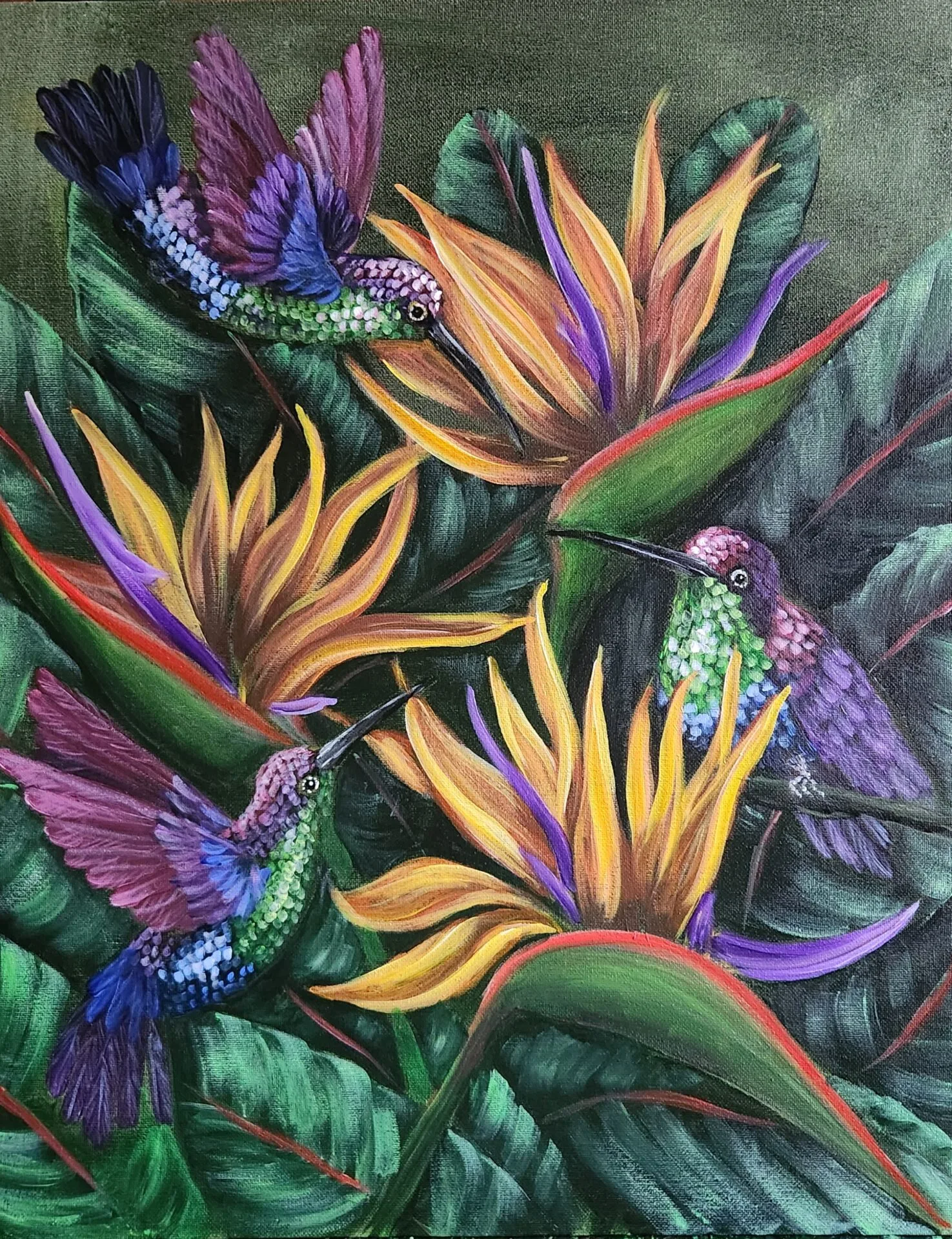
Bird of Paradise 1 carries that feeling for me. There is a theatrical beauty in birds of paradise, but it is not empty decoration. Their colour and gesture feel like a language. They express courtship, vitality, individuality and presence.
I love that these birds do not apologise for being beautiful.
They remind me that beauty can be bold without being shallow. Sometimes colour itself becomes a declaration. A vivid plume, a lifted posture, a turn of the head: these are not only visual details. They feel like confidence made visible.
In art, I often return to colour because colour speaks before words arrive. With birds of paradise, colour becomes almost emotional weather. It can feel joyful, daring, playful and alive. These paintings let me explore that side of nature that is unapologetically expressive.

Birds of Paradise 2 feels like a continuation of that joyful display. I see it as a reminder that nature is not always quiet or restrained. Sometimes nature arrives in full colour. Sometimes it asks us to look.
There is something freeing in that.
So much of life teaches us to shrink, to be practical, to stay muted, to not take up too much room. Birds of paradise feel like the opposite message. They say: bloom, shimmer, stretch, be vivid while you are here.
Hummingbird and the Beauty of Lightness
The hummingbird has a very different energy.
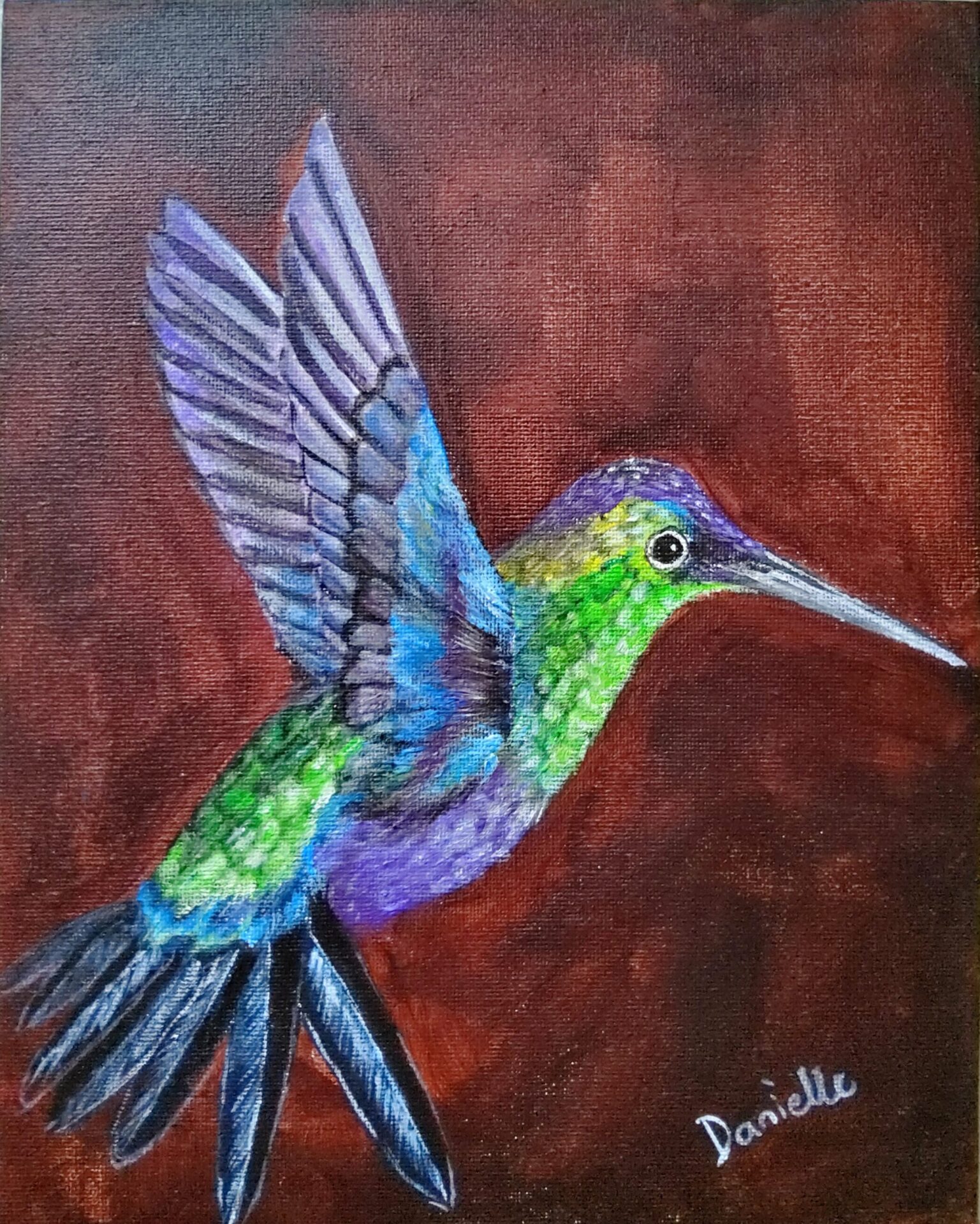
Hummingbird is small, but its presence is not small. Hummingbirds are astonishing because they seem to defy ordinary movement. They hover. They dart. They appear and disappear like living sparks.
To me, the hummingbird represents joy in a concentrated form.
It is not a heavy joy. It is bright, quick and fleeting. The kind of joy we might miss if we are not paying attention. A brief encounter. A shimmer of colour. A sudden visit from beauty.
Painting a hummingbird asks for sensitivity because the subject is so light. Too much heaviness in the brushwork would lose its spirit. I wanted the painting to carry the feeling of motion and delicacy, as if the bird has only paused for a breath before moving again.
There is wisdom in this too.
Not everything meaningful stays long. Some moments are precious because they pass quickly. The hummingbird teaches me to notice small wonders before they vanish back into the day.
Lovey Dovey and the Softness of Companionship
Not all flight is solitary.

Lovey Dovey speaks to the affectionate side of birds. Doves often carry associations of gentleness, peace, devotion and homecoming. Their beauty is quieter than the birds of paradise, but it is no less meaningful.
I like this contrast within the collection.
Some birds dazzle. Some watch. Some soar. Some simply sit close to another living being. In Lovey Dovey, the feeling is softer and more intimate. It is less about spectacle and more about connection.
This matters because freedom without tenderness can become lonely. The heart still needs companionship. It needs small gestures of nearness, trust and recognition.
Birds can teach us that too.
The collection is not only about rising alone into open sky. It is also about who we return to, who we sit beside, and how love can be present in the quietest forms.
Macaws and the Language of Colour
Macaws bring the collection into a world of saturated colour, intelligence and personality.

Macaw feels full of presence. Macaws are not background creatures. Their colour is intense, their gaze is lively, and their personalities often feel almost conversational.
As a painter, I enjoy that intensity.
The reds, blues, yellows and greens of macaws give me a chance to work with colour in a very direct way. But beyond colour, there is character. A macaw can seem curious, proud, mischievous, affectionate or commanding depending on the tilt of the head and the brightness of the eye.
That character is what makes bird paintings feel alive.
It is not enough to paint feathers accurately. The spirit must come through. The bird must feel as if it has its own thoughts, its own alertness, its own relationship with the viewer.

Macaws in Conversation is especially dear to me because it suggests communication. Birds are never silent beings in my imagination, even when a painting itself is quiet. They call, respond, warn, court, chatter and sing.
This painting feels like a moment between two presences.
Conversation does not always need human words. In nature, communication happens through posture, sound, distance, colour, movement and attention. I find that beautiful. It reminds me that life is always speaking, if we learn to observe.
Macaw Takes Flight and the Moment of Launch
There is a powerful difference between a bird at rest and a bird in flight.

Macaw Takes Flight is about that exact threshold.
The moment of launch is brief, but emotionally rich. Before flight, there is a gathering of energy. Then the wings open. The body shifts from perch to air. What was still becomes motion.
I think we recognise this feeling in our own lives.
There are times when we stand at the edge of something new, knowing we cannot remain where we are. A decision, a beginning, a move, a change in identity, a creative risk. The first movement can feel uncertain, but also alive.
This is why flight is such a strong image for me.
It is not only escape. It is trust. It is the body saying yes to space.
In this painting, the macaw carries colour into motion. The bird does not lose its brilliance by moving. It becomes even more itself.
Eagles and the Courage of Clear Vision
If hummingbirds represent lightness and macaws represent colour, eagles carry a different kind of power.

Bald Eagle Close-up is about vision. The close-up format allows the eye and expression to become the centre of the painting. An eagle does not feel scattered. It feels focused.
That focus can be intimidating, but also inspiring.
The eagle reminds me of clear sight, discipline and courage. It sees from height. It does not need to rush. It waits, watches and acts when the time is right.
This is another form of freedom.
Not every freedom is playful or gentle. Some freedom requires strength. Some asks us to sharpen our sight, choose direction and rise above confusion long enough to understand the wider landscape.
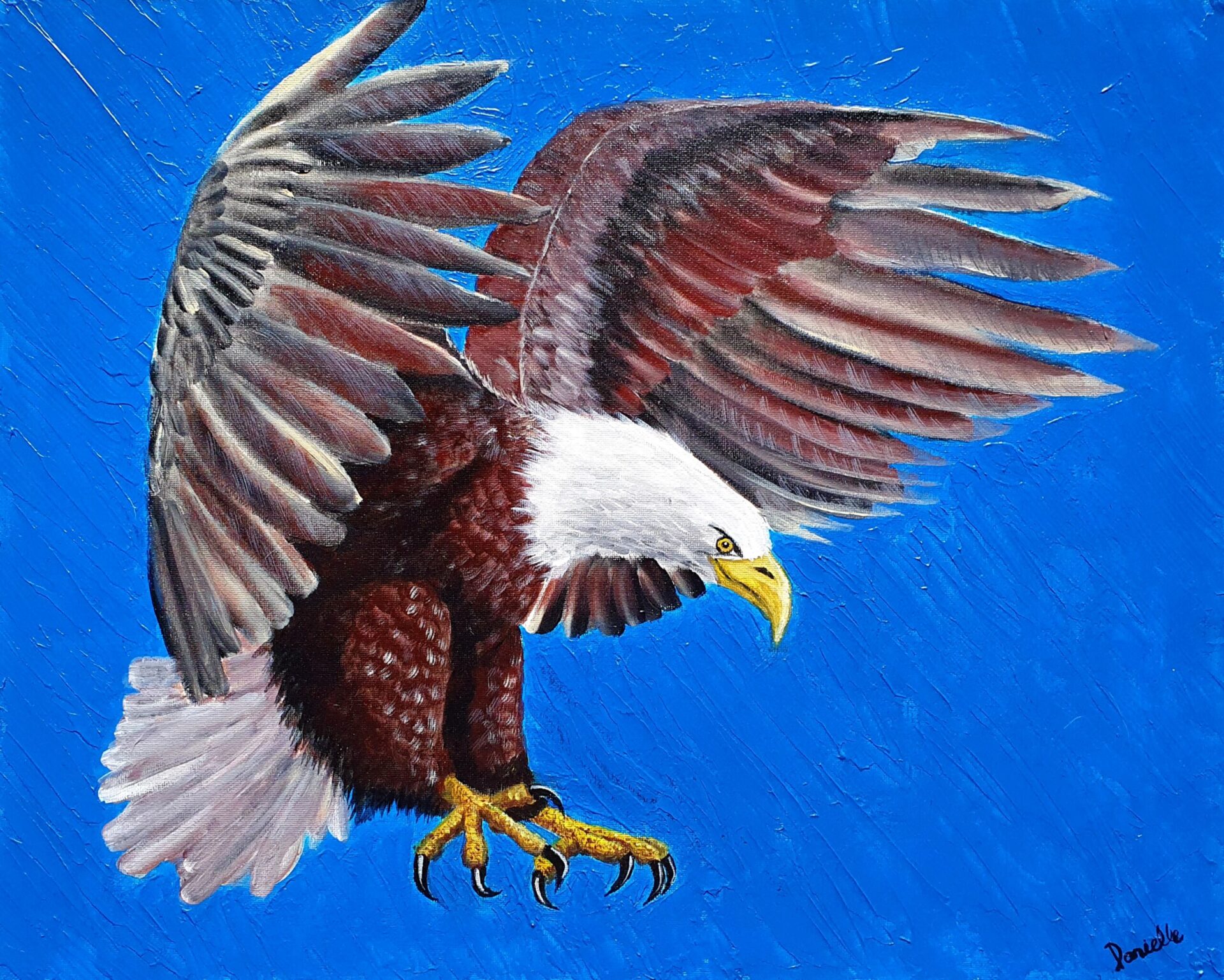
Bald Eagle Takes Flight carries the eagle into its element. Here, power is not only in the gaze, but in the wingspan and direction. The bird feels made for distance.
I see this painting as courage in motion.
It reminds me that rising is not always soft. Sometimes rising is fierce. Sometimes it asks for concentration, strength and the willingness to leave the familiar branch.
Owls and the Mystery of Stillness
The owls bring the collection into night, silence and watchfulness.
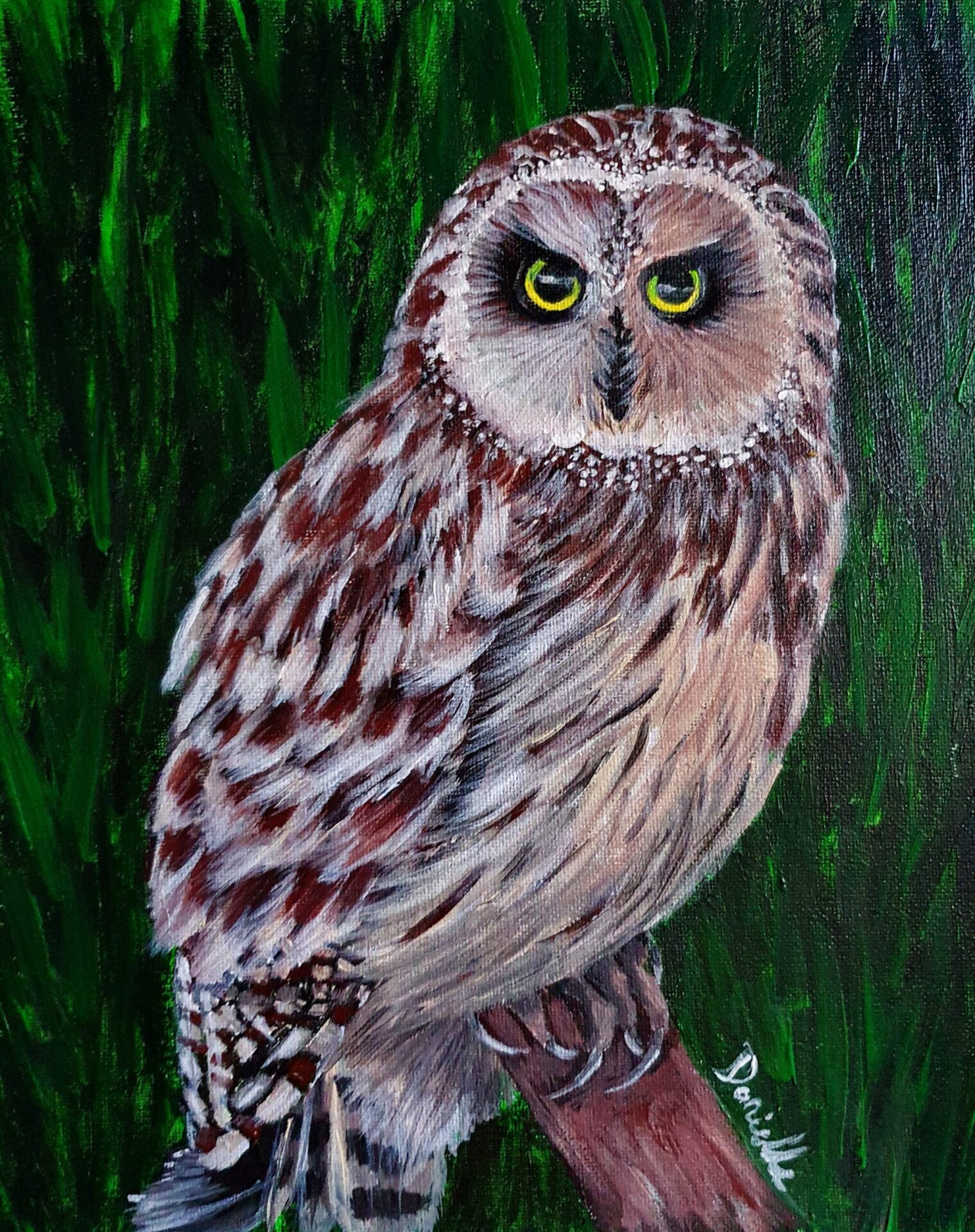
Owl has a very different mood from the macaws and birds of paradise. Owls do not need bright colour to hold attention. Their power is in stillness.
I am fascinated by this.
An owl can be almost motionless, yet completely alive. It watches from a branch as if listening to things we cannot hear. Its presence feels ancient, patient and private. There is a mystery in owls that belongs to dusk, night and hidden knowledge.
In a collection about flight, the owls remind me that movement is not the only kind of freedom.
Stillness can also be free.
To sit, observe, conserve energy and wait for the right moment is its own wisdom. The owl does not perform. It does not dazzle. It simply knows how to inhabit its nature.
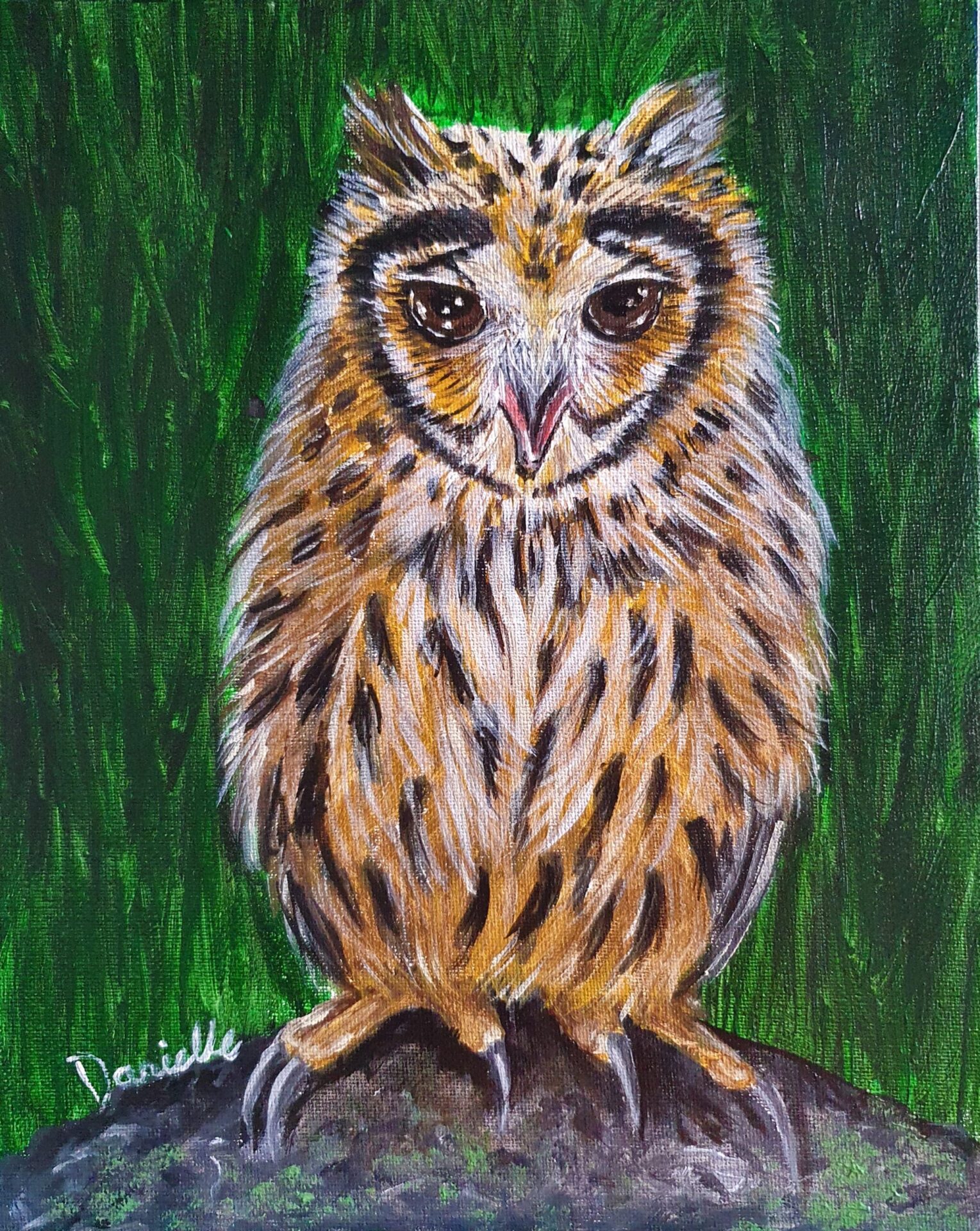
Owl 3 feels intimate because of its closeness. The viewer is brought near enough to feel the texture, gaze and presence of the bird. It is not dramatic in a loud way, but it has gravity.
This painting reminds me that mystery does not need to be explained.
Some creatures carry their own atmosphere. We can only meet them with respect.
What Flights of Fancy Means to Me
The phrase Flights of Fancy suggests imagination, and that is part of the collection too.
Birds invite the mind upward. They make us think of travel, dream, perspective, migration, song and the unseen paths above us. They are physical beings, but they also belong to metaphor. We use them to speak about hope, freedom, spirit, messages, courage, peace and longing.
That is why bird paintings can feel personal even when they depict creatures outside ourselves.
We project our own wishes onto wings.
We see in them the part of us that wants to move beyond fear. The part that wants more colour. The part that wants to love gently. The part that wants to watch wisely. The part that wants to rise after being grounded for too long.
For me, this collection is not only about birds as subjects. It is about the many emotional forms of flight.
The hummingbird teaches lightness.
The doves teach tenderness.
The macaws teach expression.
The birds of paradise teach unapologetic beauty.
The eagles teach vision and courage.
The owls teach stillness and mystery.
Together, they create a wider story about how we move through life.
Sometimes we need to be bright. Sometimes we need to be quiet. Sometimes we need to speak. Sometimes we need to listen. Sometimes we need to rise boldly. Sometimes we need to perch and observe before the next movement becomes clear.
That is the gift of these bird paintings for me.
They remind me that freedom has many shapes.
It can be colourful, gentle, fierce, watchful, intimate, playful or solemn. It can appear as a flash of wings, a steady gaze, a loving pair, or a body lifting into open sky. It can be loud with tropical colour or silent as an owl at dusk.
Most of all, Flights of Fancy reminds me that the world is always inviting us to look up.
Not to escape life, but to see it differently.
To remember that even when we are grounded, there is still air above us.
And somewhere inside, there is still a wing waiting for the right moment to open.
Leave a Reply