

The Strange Exhaustion of Perfection
There is a quiet shift happening in the way people experience art today. In an age saturated with polished digital imagery, algorithmically generated aesthetics and endless visual perfection, many viewers are beginning to feel emotionally disconnected from surfaces that appear too flawless, and more drawn to what still feels deeply human. Although technology can now create beautiful images within seconds, beauty alone is no longer enough. Increasingly, people are searching for something that feels human, tactile and emotionally sincere.
This may be one reason imperfect art feels more alive.
Imperfection in art is often misunderstood as a lack of refinement, when in reality it can be the very thing that creates emotional depth. A visible brushstroke, an uneven texture or a subtle irregularity within a composition can carry traces of the artist’s presence in a way that perfectly polished surfaces often cannot. These details reveal process, movement and humanity. They remind us that a real person stood before the canvas, responding intuitively, emotionally and physically in the act of creation.
The Human Trace Inside a Painting
There is something profoundly intimate about seeing evidence of the human hand. Texture allows a painting to breathe. Layers reveal time. Imperfections create softness and vulnerability within the work, making it feel less manufactured and more emotionally accessible. Rather than distancing the viewer, these qualities often invite deeper connection.
I have noticed that the artworks people respond to most emotionally are not necessarily the most technically perfect pieces. Often, they are the works that retain a sense of openness and life within them. Paintings that feel slightly unresolved or organic can hold a certain energy that overly controlled work sometimes loses. They contain movement rather than rigidity. Presence rather than performance.
Nature itself reflects this truth constantly. The natural world is filled with asymmetry, unpredictability and imperfection, yet this is precisely what makes it beautiful. Weathered stone, tangled branches, shifting water and imperfect landscapes feel alive because they are alive. Their irregularities carry authenticity. In many ways, human-made art functions similarly.
Why Imperfection Matters More in the Age of AI
As artificial intelligence continues to reshape visual culture, handmade art may become even more emotionally significant. Machines can imitate style, precision and speed, but they cannot fully replicate lived experience, emotional memory or the subtle imprint of human presence embedded within physical creation. Art has never only been about producing images. At its deepest level, art is about transmitting feeling.
Perhaps this is why imperfect art continues to resonate so strongly today. In a world increasingly defined by digital perfection and artificial surfaces, visible humanity becomes deeply comforting. Imperfect art reminds us not only of the artist, but also of ourselves. Our complexity, sensitivity, vulnerability and emotional texture.
How Imperfection Appears in My Own Work
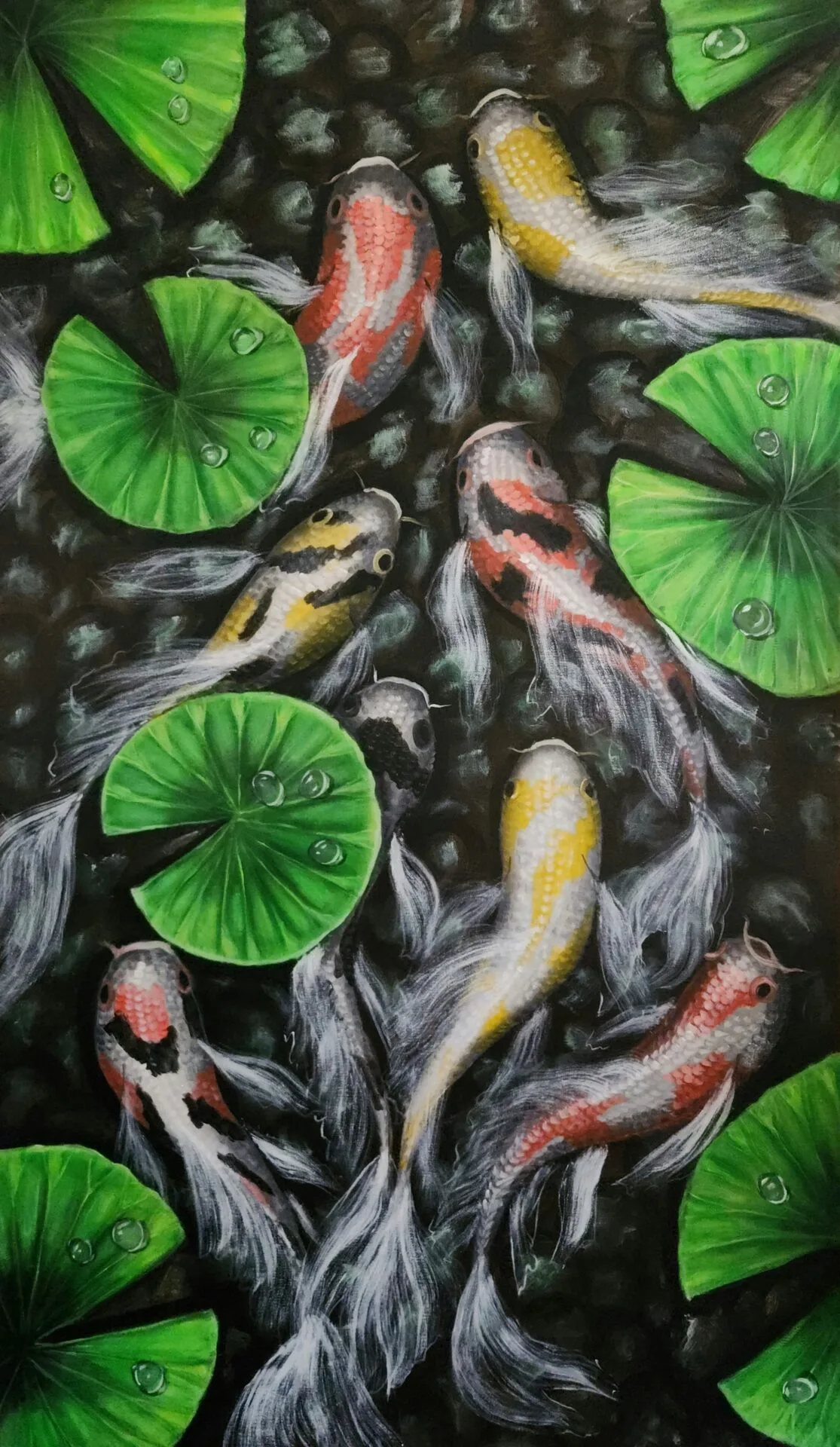
In my own paintings, imperfection often shows up through texture, layering and the willingness to leave some openness inside the work. I do not always want a painting to feel sealed off or overly controlled. Sometimes a slightly irregular edge, a visible brushstroke, or a surface that still carries movement makes the piece feel more honest to me. It feels closer to how real life is actually lived.
I think viewers often respond to this instinctively. They may not describe it as imperfection, but they can feel when a work still carries breath, hesitation, warmth and presence. That is part of why handmade art continues to matter. It does not only present an image. It also reveals something of the human process behind it.
And perhaps that is what makes it feel so alive.
If you want to follow the rest of this conversation, you can browse the Insider Peek series.
Leave a Reply