

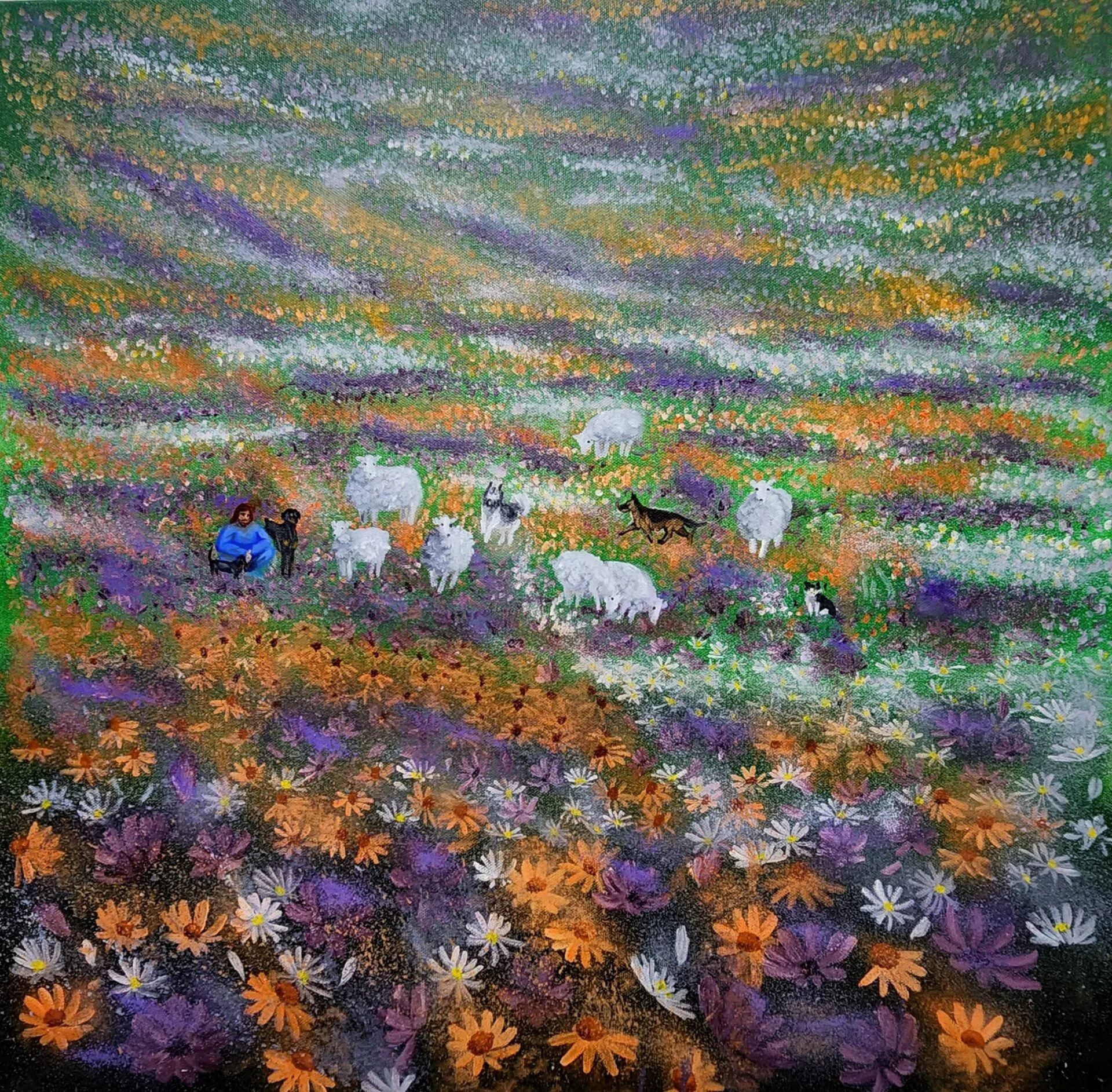
The Human Need for Emotional Resonance
Lately, I have been thinking about how quiet human creativity can be. Not the loud kind designed for constant visibility or performance, but the quieter forms that emerge from observation, feeling, memory and presence. The kind of creativity that asks us to slow down enough to notice something real. We are living in a moment where artificial intelligence is rapidly reshaping how images, writing and ideas are created. Entire visual worlds can now appear in seconds. Words are generated instantly. Creativity itself is beginning to feel accelerated, automated and endlessly abundant. And yet, beneath all this technological brilliance, I sense something else happening too. People seem increasingly hungry for what feels deeply human, especially in a culture still asking why beauty and emotional depth still matter.
There is no denying how astonishing AI technology can be. Some of what it produces is genuinely beautiful and technically impressive. But I also notice a certain emotional exhaustion that comes from living inside constant digital saturation. We scroll through endless streams of images and information so quickly that very little has time to settle within us. Beauty becomes disposable. Attention fragments. The nervous system rarely rests. In the middle of all this noise, human creativity begins to feel different. More intimate somehow. More grounding. More emotionally nourishing. Perhaps because when something is created slowly by a person rather than generated instantly by a machine, we feel traces of lived experience within it.
What AI Cannot Fully Replace
I often think art is less about producing something visually perfect and more about leaving evidence of presence. Evidence that someone paused long enough to truly see. That someone felt deeply enough to respond. A painting carries the emotional atmosphere of the day it was created. A written reflection contains traces of thought, memory and inner life. Even handmade imperfections hold meaning because they remind us that another human being was fully present in the act of creating. These subtle qualities may become even more important in the years ahead.
One of the most beautiful things about human creativity is its imperfection. The pauses, irregularities and unfinished edges often communicate far more emotionally than polished perfection ever could. Machines can imitate aesthetics remarkably well, but emotional resonance tends to live in more elusive spaces. A brushstroke can carry grief. Colour can reflect healing. Silence inside an artwork can evoke longing or tenderness without needing explanation. These things emerge not only from technical skill, but from consciousness itself. From the complexity of being alive.
Modern culture often measures value through productivity and efficiency. How quickly something can be made. How scalable it becomes. How much attention it captures. But art has never fully belonged to those systems. Some of the most meaningful creative experiences are deeply private and impossible to optimise. They exist not to maximise output, but to restore something essential within us. Reflection. Sensitivity. Emotional spaciousness. Presence. This is one reason creativity remains so closely connected to wellbeing. Not because art solves everything, but because it gently reconnects us with parts of ourselves that modern life often numbs.
Why Presence Still Matters
I notice more people gravitating toward slower and more tactile experiences lately. Nature walks. Journaling. Handmade ceramics. Yoga. Gardening. Painting. Reading physical books. Perhaps as the world becomes increasingly digital, people begin craving experiences that feel embodied and emotionally real. Art participates in this return to presence. Not by competing with technology, but by reminding us what it feels like to remain human within it.
For me personally, creativity has always been deeply connected to attention. The way afternoon light moves across a studio wall. The silence before beginning a painting. The emotional shift that occurs after spending time in nature. These moments are easy to overlook in a culture moving at relentless speed, yet they are often where meaning quietly lives. I think many people are longing for this kind of slowness again. Not as escapism, but as balance. As restoration. As a way of remaining emotionally awake inside an increasingly artificial environment.
I do not believe the future is about rejecting technology. Artificial intelligence will continue evolving and shaping the world in extraordinary ways. But perhaps its rapid rise also reveals something important about what we truly value. Presence. Depth. Emotion. Care. Human connection. The human spirit has always found ways to express itself through storytelling, painting, music, movement and beauty. That impulse remains ancient and deeply necessary.
If anything, I believe the age of AI may quietly remind us why human creativity matters so much in the first place. Because art is not only about generating images or producing content. It is about transmitting feeling. And that quiet emotional exchange between one human being and another may become one of the most meaningful things we continue to protect.
What Human Creativity Still Offers
For me, one of the clearest differences between human creativity and artificial generation is that human creativity is shaped by lived experience. A person creates from memory, grief, longing, healing, faith, uncertainty, tenderness and contradiction. Even when two people paint the same subject, what emerges will still carry something unrepeatable from each life behind the work.
This is why human creativity continues to matter even when technology becomes more sophisticated. We are not only responding to the finished result. We are also responding to the consciousness behind it. That quiet exchange between lived experience and expression is difficult to automate, and I think people will continue to feel its value even if they cannot always explain it in words.
This reflection belongs to my Insider Peek series on art, technology and the human spirit.
Leave a Reply