AI Is Helping Me Protect the Human Part of Art
When people talk about AI and art, the conversation often becomes very dramatic very quickly.
Will AI replace artists? Is it real creativity? Should artists use it? Where is the line between tool and author?
These are important questions, but they are not the only questions. In my daily life, AI has become useful in a much more practical way: it helps me clear space around my art.
I am not using AI to replace the experience of painting. The part of art that matters most to me still happens slowly, by hand and through attention. It happens when I look at a colour and decide it needs to be warmer, when I pause before adding another layer, when I feel that a painting is still missing something but do not yet know what.
AI does not give me that feeling. It does not stand in front of the canvas for me.
What it can do is help with the many tasks surrounding art: writing, organising, listing products, improving SEO, tracking finances, planning content, drafting descriptions and turning repeated processes into systems. Those tasks are necessary, but they can quietly take over the day.
Recently, I wrote a gratitude post about learning AI with OpenAI Codex and building four apps: two automation apps and two financial apps. One helps me edit content, optimise SEO and post to my website automatically. Another helps automate product listings on my website and Etsy. I also built an expense and budget app, and a net worth app to track my finances.
The time savings are real. Website posting that used to take at least two hours can now take around 30 minutes. Product listing work that could take about three hours can now take around 20 minutes or less. Financial tracking that once felt heavy can now be updated by uploading statements and letting the app categorise and summarise.
That is not a small change.
For an artist who is also running other projects, studying yoga therapy and Ayurveda, building a business, writing an eBook, and trying to keep space for new hobbies like crochet, time is not just a schedule issue. Time is creative oxygen.
The Hidden Work Around Art
The romantic image of an artist is someone standing at an easel, lost in colour and feeling. Sometimes that is true. But the actual life of an artist also includes a great deal of admin.
There are artworks to photograph, descriptions to write, image files to organise, blog posts to prepare, product pages to update, social content to plan, newsletters to consider, finances to track, invoices to manage, and search engines to appease. If you sell online, each artwork may need a title, price, dimensions, category, tags, alt text, shipping information, product description and related content.
None of these tasks are meaningless. They help the work reach people. They help collectors understand what they are looking at. They help a website become searchable. They help a business stay alive.
But they are not the same as making art.
The danger is that the artist spends all day supporting the art and has no energy left to make it.
This is where AI can become genuinely useful. Not as a replacement for imagination, but as a practical assistant that reduces the friction around repeated tasks.
When a tool can help draft a first product description, suggest SEO improvements, organise a post, summarise a financial report or format content for WordPress, the artist can return sooner to the work that cannot be delegated: seeing, feeling, choosing and making.
Making Time for Patient Looking: Golden Arowanas
Some paintings require time because the subject itself asks for patience.
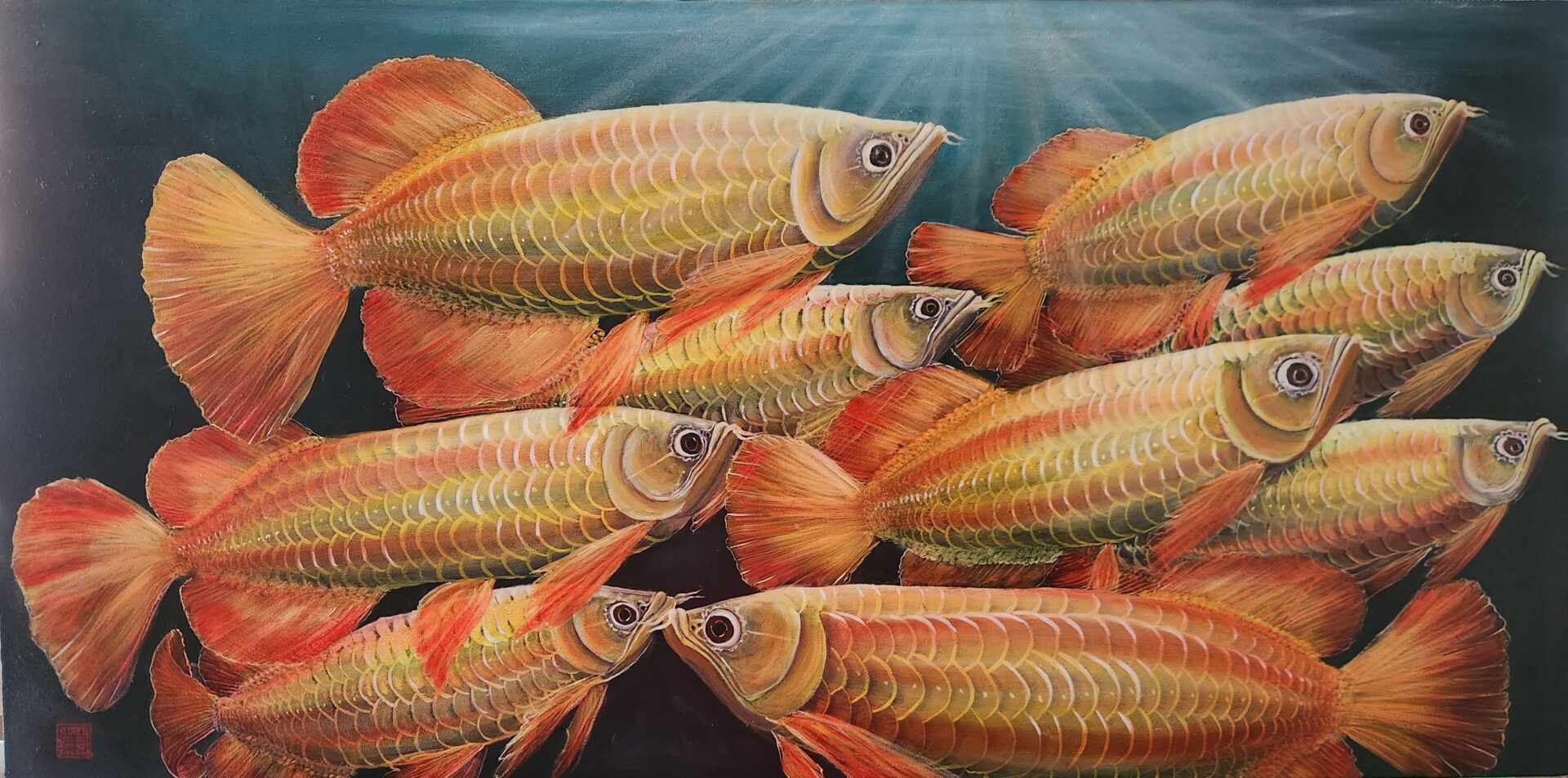
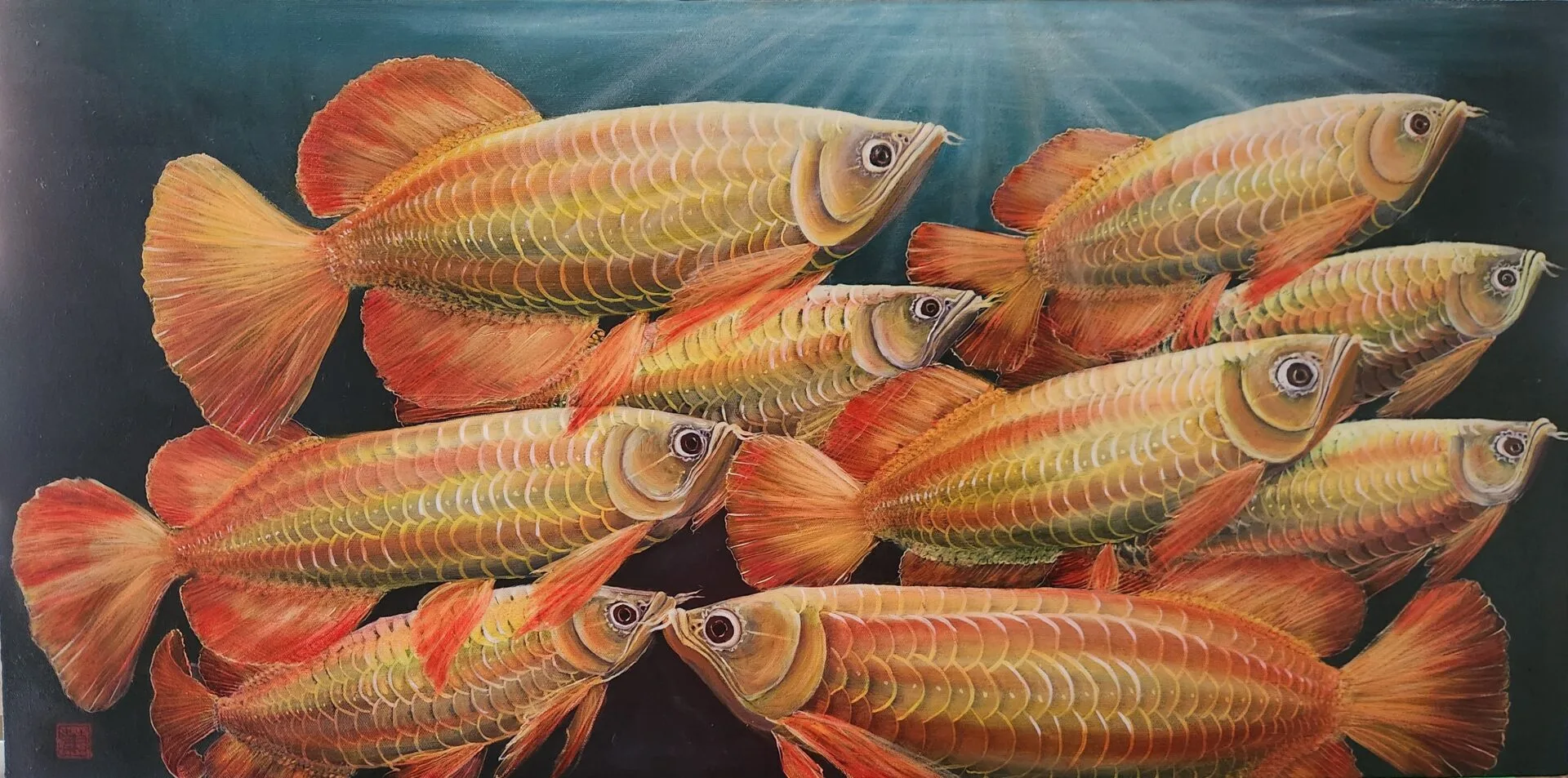
Golden Arowanas is a luminous painting of golden fish gliding through water. The subject carries associations of prosperity, elegance and quiet strength, but what interests me here is also the kind of attention such a painting requires.
Fish paintings are full of movement. The body curves, the fins shift, the water changes the way light behaves. Gold is never only one colour. It can move between yellow, ochre, amber, cream and reflected light. If the artist rushes, the shimmer becomes flat.
This is the kind of time AI cannot replace.
But AI can help protect it. If an automation tool reduces the hours spent preparing listings or formatting posts, that time can return to the studio. It can become time for looking at the curve of a fish, adjusting the light in the water or simply sitting with the painting long enough to know what it needs next.
That is one of the biggest benefits of AI for artists: not speed for the sake of speed, but speed around the edges so slowness can exist at the centre.
Organising the Many Threads of a Creative Life
My life is not only art. There is art, AI tax business work through iLevvy, yoga, my eBook, smaller business interests, yoga therapy and Ayurveda studies, and the personal things I still want to enjoy, such as crochet.
When too many things live only in the mind, the mind becomes crowded.
AI helps by turning some of that mental clutter into structure. It can help create a draft plan, sort information, produce checklists, summarise documents, turn notes into first drafts and remind me of steps I might otherwise forget.
For artists, this is not a minor benefit. Creative ideas often arrive in fragments. A title appears while doing something else. A painting series suggests itself before there is time to explore it. A business idea competes with a personal project. If everything depends on memory alone, many ideas disappear.
AI can become a kind of external thinking space.
It does not decide what matters. I still have to choose. But it helps hold the pieces long enough for me to see patterns.
Seeing Home More Clearly: Tapestry of Home
Art is often shaped by the life around it. A painting can come from memory, place, community and the slow noticing of familiar surroundings.
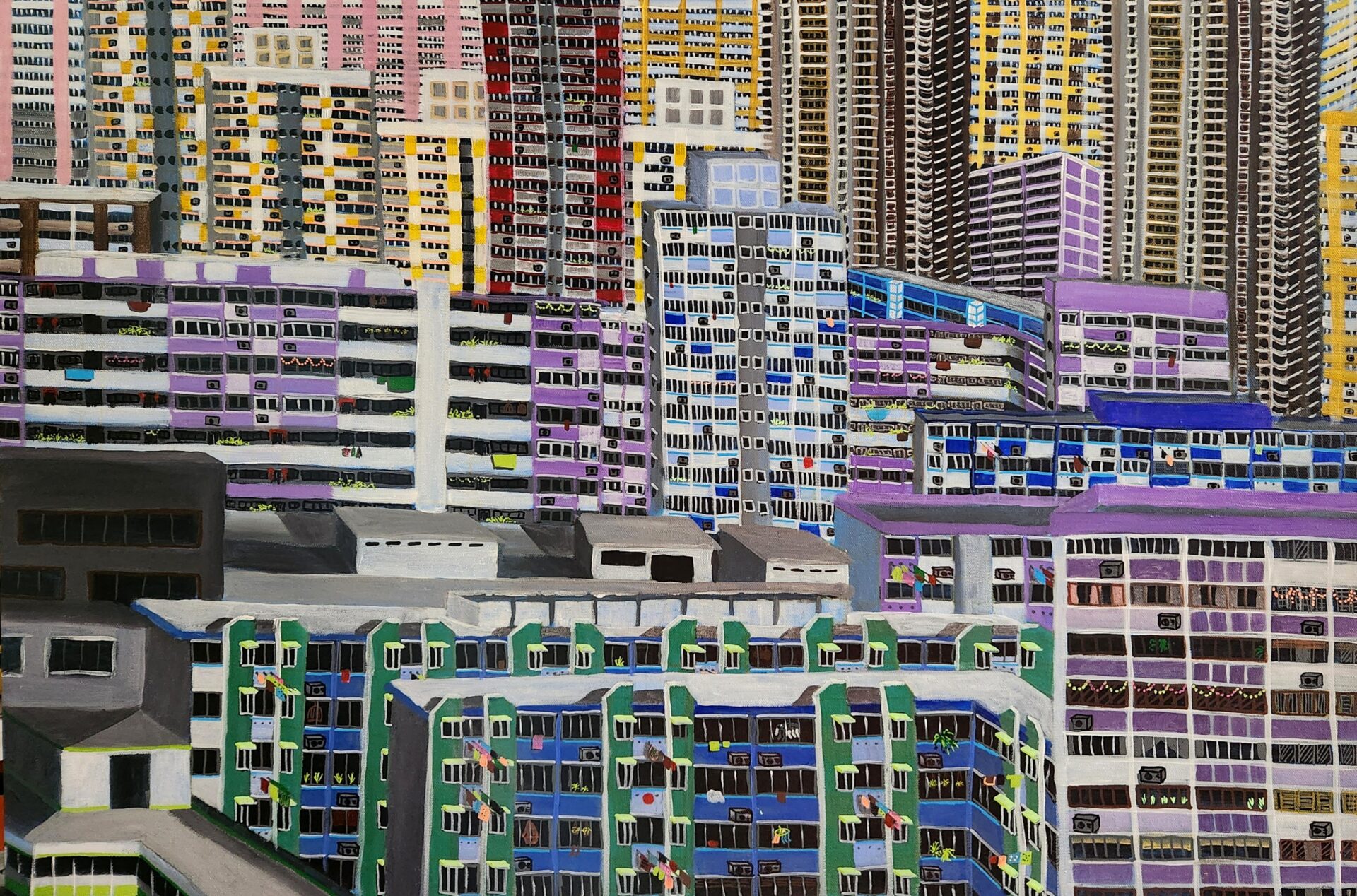
Tapestry of Home is a cityscape inspired by Singapore homes. It reflects memory, community and the changing rhythm of old and new HDB life.
This kind of work depends on observation and emotional association. It is not simply a building study. It carries the feeling of home, density, shared space and neighbourhood life.
AI can help an artist document these connections. It can help turn loose notes into clearer reflections, suggest ways to organise a blog post, or help connect a painting to related themes on a website. It can make the story around the artwork easier to share without flattening the artwork itself.
For a painting like this, that matters because the image and the writing serve different roles. The painting holds visual memory. The writing can help a viewer enter that memory more consciously.
This is another benefit of AI in daily life for artists: it can help translate process and meaning into language. Many artists struggle not because they lack depth, but because describing their own work is awkward. A good AI-assisted workflow can create a first draft, then the artist can edit it until it sounds true.
Reducing Financial Anxiety
One unexpected way AI helps my art is through finances.
Money stress takes up creative space. When I do not know where things stand, part of the mind remains busy in the background. Have I overspent? What is my budget? How are investments performing? What is my net worth? What needs attention?
The expense and budget app and the net worth app give me more peace of mind. I can upload bank, investment, credit card and CPF statements. The app categorises the information and shows me whether I am overspending or staying on budget. It updates net worth and investment performance.
This may sound separate from art, but it is not.
Artists need emotional and practical stability. A clearer financial picture reduces one layer of uncertainty. When the basic admin of money becomes easier, the mind has more room for creative work.
AI is not only helping me make content faster. It is helping me reduce background noise.
Making Room for Movement: Dance of the Goldfish
Some artworks feel like they need room to move.
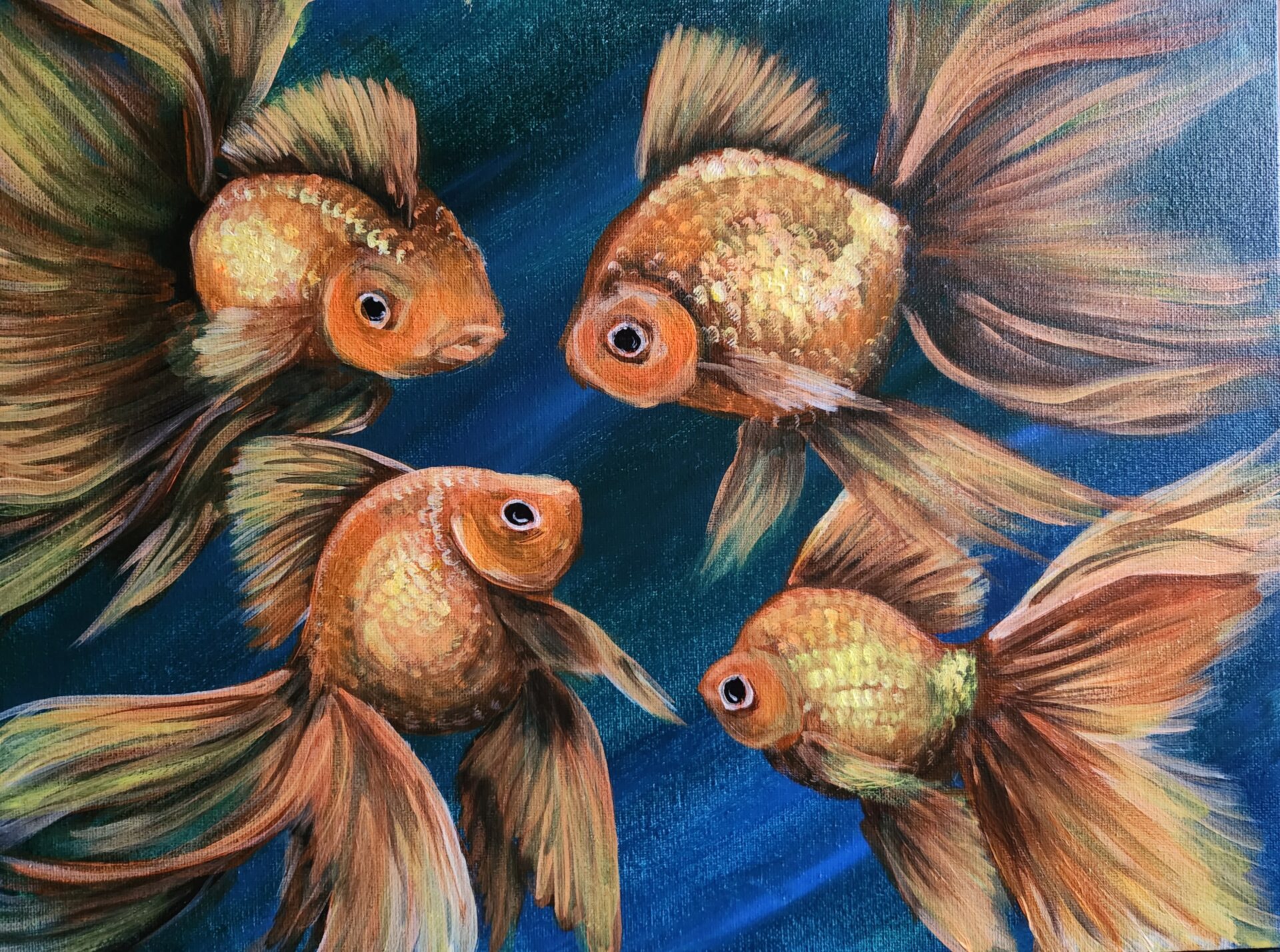
Dance of the Goldfish is a vibrant goldfish painting with blue water and flowing movement. It expresses harmony, connection and a calm decorative energy.
Movement in a painting cannot be manufactured by efficiency. It comes from visual rhythm: the direction of bodies, the spacing between forms, the push and pull of colour, and the invisible path the eye follows.
But movement in a creative life can be blocked by too many small obligations.
When AI reduces repetitive tasks, the day begins to move differently. Instead of spending hours formatting, listing, sorting and categorising, I can move between practices more fluidly: art, yoga study, business work, crochet, writing and rest.
This matters because creativity often benefits from cross-pollination. A yoga therapy idea can change how I think about pacing. Crochet can teach patience and pattern. Finance tools can reduce anxiety. Automation can free an afternoon. The different parts of life begin to support one another instead of constantly competing.
AI helps by making the transitions less heavy.
Experimentation Without Starting From Zero
Another benefit of AI is that it lowers the cost of beginning.
A blank page can be surprisingly difficult. A product description, blog outline, email draft, content calendar or SEO title may not be the deepest creative work, but it can still take energy to start.
AI can produce a rough first version. It may not be perfect, and it often needs editing, but it removes the first layer of resistance.
For artists, this can be useful in many daily situations:
- drafting artwork descriptions;
- planning a blog series;
- summarising a studio idea;
- generating alt text suggestions;
- creating a checklist for uploading new products;
- organising references;
- brainstorming titles;
- turning scattered thoughts into a workable outline;
- and building simple tools to automate repeated admin.
The artist still decides what stays. AI is not a substitute for taste. But it can help move an idea from fog into form.
Supporting Experiments: Coral Symphony 1
Experimentation is not limited to technology. It is central to art.
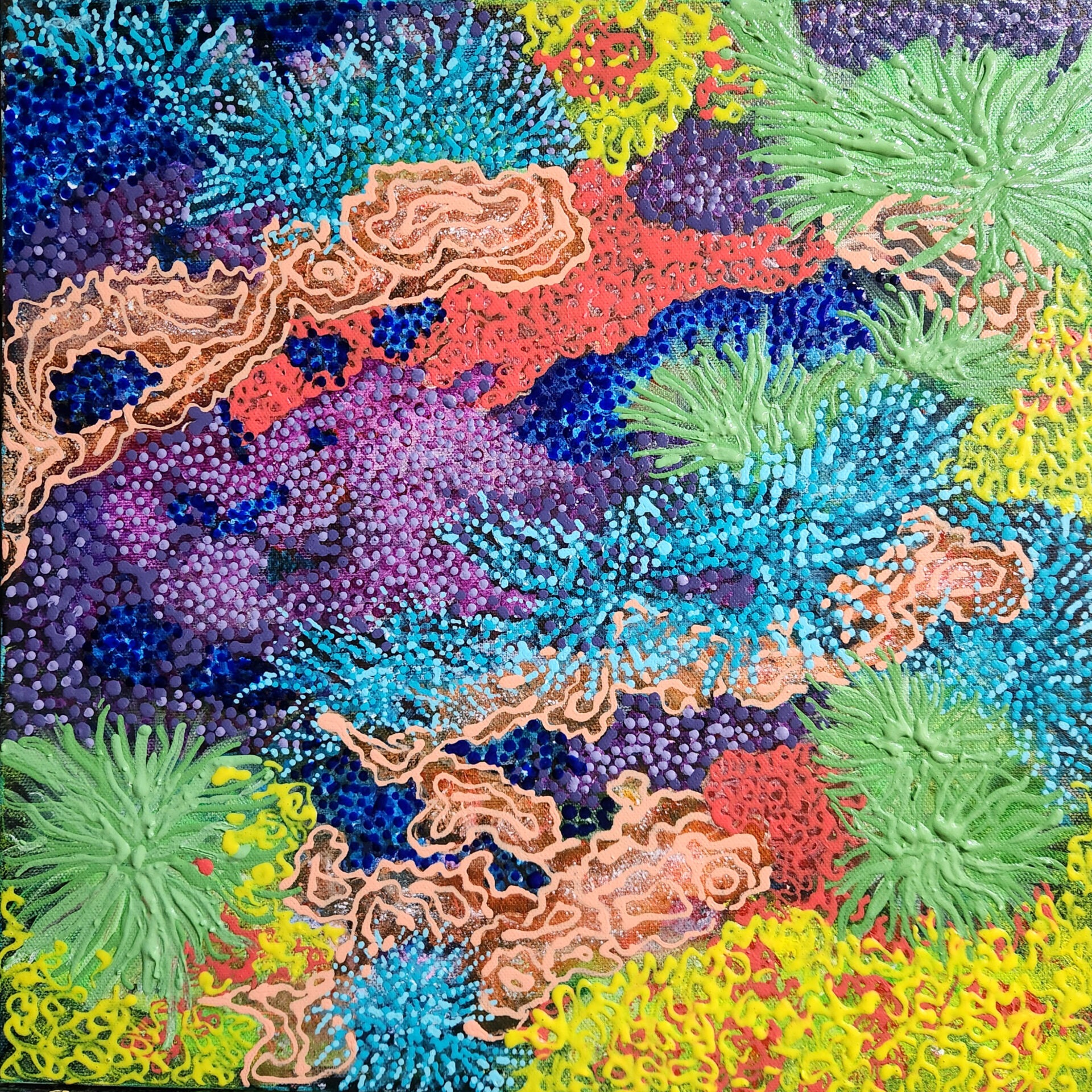
Coral Symphony 1 is a bold abstract painting inspired by coral reefs and botanical forms. Its colour, texture and renewing energy come from layering and exploration.
Abstract work often requires a willingness to try something before knowing whether it will work. One shape suggests another. One texture changes the balance. One colour creates a new problem and a new possibility.
This is also how learning AI has felt for me.
Vibe coding with Python is not about already knowing everything. It is about learning by building, testing, adjusting and seeing what happens. That process feels familiar because art also works this way. You make a mark, respond to it, make another, and slowly something begins to organise itself.
AI has made me more willing to experiment in daily systems. Instead of thinking, “This task is annoying, but I just have to keep doing it,” I can now ask, “Can I build something to reduce this?”
That question is powerful.
More Time for the Human Pleasures
The goal of automation is not to become a machine.
For me, the goal is almost the opposite. I want to automate more of the mundane tasks so I can have more time for the deeply human ones: painting, studying, teaching, writing, practising yoga, learning Ayurveda and continuing crochet.
Crochet matters here too. A hobby does not need to be monetised or optimised to be valuable. It gives the hands a different rhythm. It lets the mind rest in pattern and texture. It reminds me that making can be slow and pleasurable without needing to become a productivity project.
This is an important boundary. AI can help optimise life, but not every part of life needs to become optimisation.
Some freed time should remain free.
Everyday Abundance: A Symphony of Fruits
Art also depends on noticing ordinary abundance.
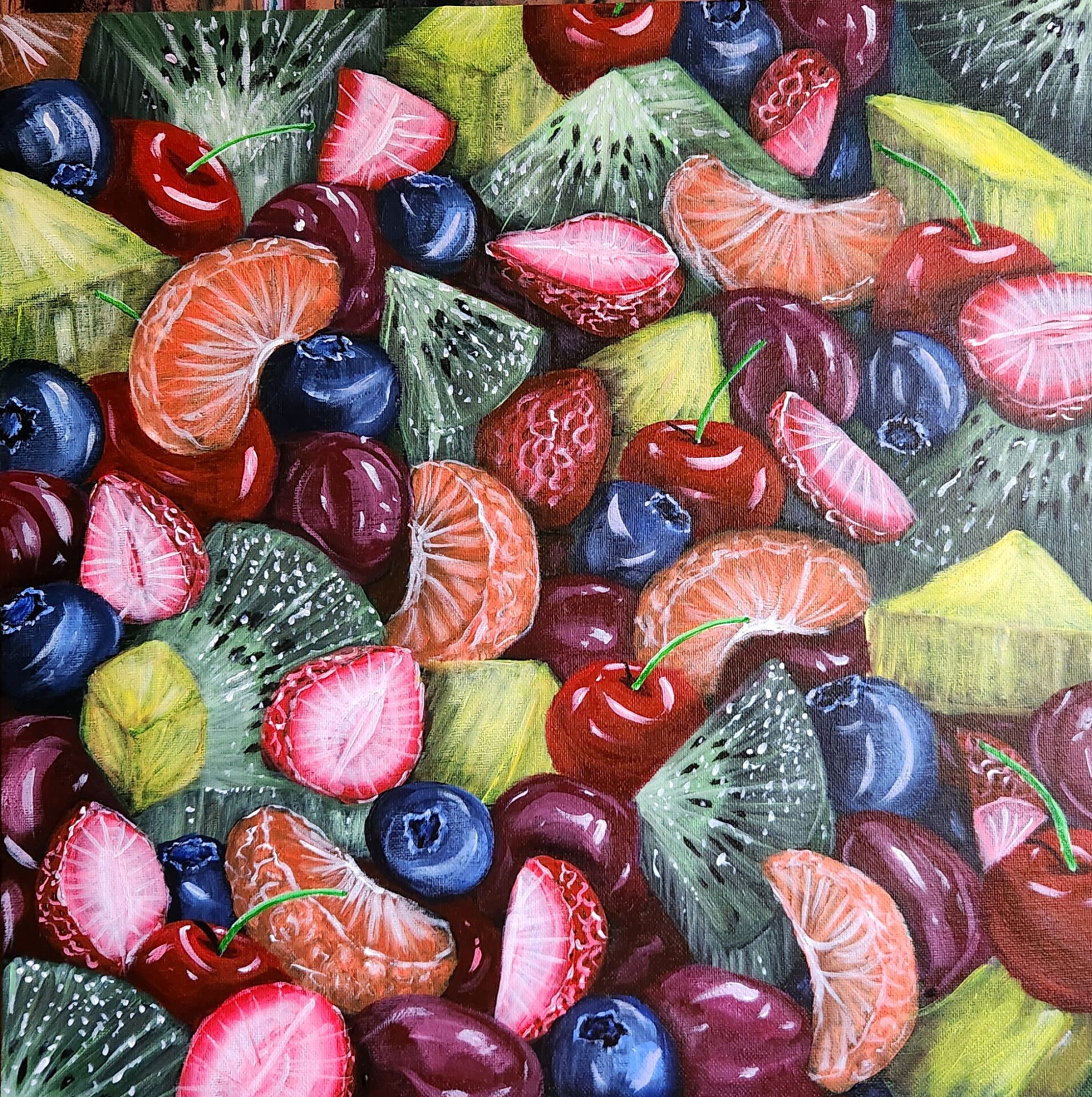
A Symphony of Fruits is a colourful still life of cherries, citrus, berries and kiwi. It celebrates abundance, freshness and small pleasures.
This type of painting reminds me that art does not always begin with a grand concept. Sometimes it begins with looking closely at what is already around us.
AI can support this by reducing the pressure to constantly manage everything manually. When the day is less consumed by admin, there is more room to notice. More room to pause. More room to see colour in fruit, light on water, patterns in home, or movement in fish.
That is a quiet but meaningful benefit.
AI gives time back, and time allows attention to return.
The Artist Still Has to Choose
I do not want to pretend that AI is magic without effort. It still requires judgement.
A tool can draft a description, but I must decide whether it sounds like me. It can suggest SEO keywords, but I must decide whether they match the artwork. It can organise data, but I must check whether the result makes sense. It can help code an app, but I still need to know what problem I am solving.
In art, this is even more important.
AI may assist the workflow, but the artist remains responsible for the choices: the story, the ethics, the tone, the final edit, the use of images, the relationship with collectors and the meaning behind the work.
For me, the best use of AI is not to outsource the soul of the practice. It is to reduce the parts that drain energy from it.
A New Kind of Studio Assistant
I am beginning to think of AI as a studio assistant for the whole creative life.
It can help with admin, content, finance, product listings, planning, summaries, drafts and simple apps. It can help me move faster through tasks that once consumed entire blocks of time. It can make complicated workflows feel more possible.
But the artist still enters the studio alone with the canvas.
And that is how it should be.
The exciting part is not that AI can do everything. The exciting part is that it can help me do more of what only I can do.
More painting. More learning. More writing. More crochet. More building. More attention for the ideas that keep arriving faster than I can catch them.
That is why I feel grateful.
AI is helping me make my life more organised, but the deeper gift is that it is helping me make more space for art.
Leave a Reply