

Insider Peek 21: Why I Keep Returning to Animals
There is something about animals that goes straight to my heart before my mind has time to explain it.
Big or small, docile or fierce, gentle or untamed, animals carry a kind of innocence that I find deeply moving. Even when they are powerful, even when they are predators, even when they look as if they could tear through the world without hesitation, there is still something honest about them. They do not pretend to be other than what they are.
Maybe that is why I love them so much.
Sometimes I think I love animals more than people. Not because people are unlovable, but because animals feel less complicated in the places where humans often become tangled. They do not perform politeness while hiding cruelty. They do not speak in one way and mean another. They are watchful, hungry, sleepy, playful, protective, afraid, curious, loyal, wild. Their emotions seem to move through the body directly.
There is an innocence in that directness.
My Wildlife Collection grew from this affection: a love for animals not as symbols alone, but as beings with presence. I am drawn to their eyes, their posture, their alertness, their softness, their strength, and the quiet mystery of a life that is not human but still feels emotionally close.
Painting animals lets me stay near that feeling.
The Honesty of the Animal Gaze
An animal’s gaze can hold so many things at once.
A tiger can look fierce and vulnerable in the same moment. A fox can seem shy, clever and watchful. A bear with a cub carries both strength and tenderness. A lion can feel noble without trying to be noble. A wolf pack can suggest belonging without needing words.
When I paint animals, I am not only painting fur, feathers, eyes or anatomy. I am trying to paint the moment of encounter. That little pause when the animal seems to look back.
This is different from painting a still object. With animals, there is always the feeling of another consciousness. Even in a painting, they seem to be deciding something. They may be resting, watching, guarding, moving or waiting, but they are never simply decorative to me.
I want the viewer to feel that presence too.
Not as a sentimental idea of animals, but as respect. A reminder that the world is full of lives we do not fully understand.
Fierce and Innocent: Eye of a Tiger
The tiger is often seen as a symbol of power, but what touches me most is not only the power.
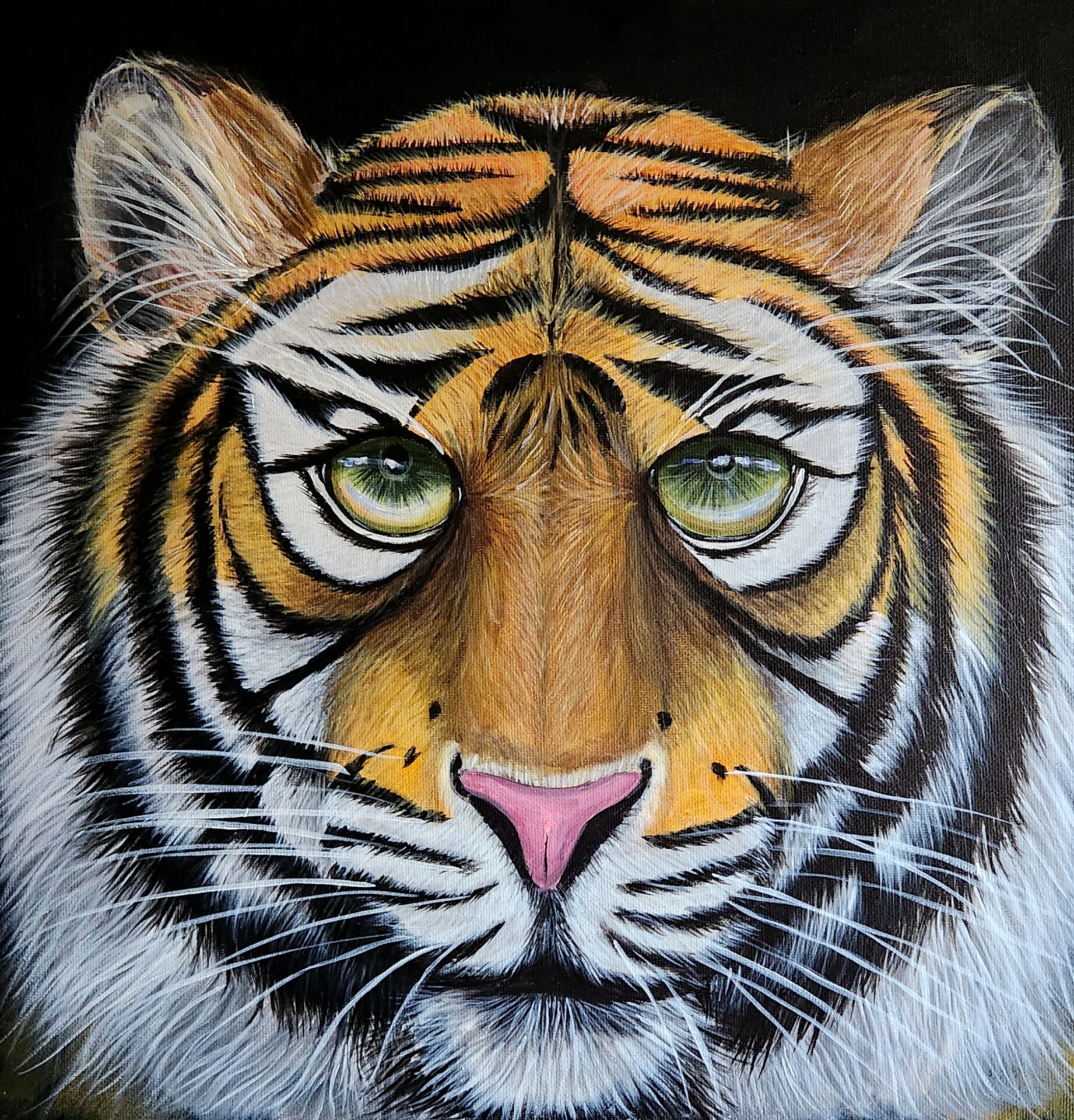
Eye of a Tiger is about directness. The tiger’s face fills the space. There is nowhere to hide from the gaze. The stripes, the orange, the white fur, the dark markings all carry visual force, but the eye is where the painting lives.
A tiger does not need to announce its strength. It simply has it.
That is what I find beautiful. The tiger is fierce, but not performative. It does not need approval. It does not apologise for being powerful. At the same time, there is a living softness behind the power. The animal is not an idea of danger. It is a creature with breath, hunger, instinct and life.
Painting a tiger asks me to respect both sides: the awe and the innocence.
If I only paint the fierceness, the animal becomes a symbol. If I only paint the softness, the wildness disappears. The truth is in the tension between them.
Small Animals, Quiet Wonder
I love the large animals, but I also love the smaller, quieter ones.
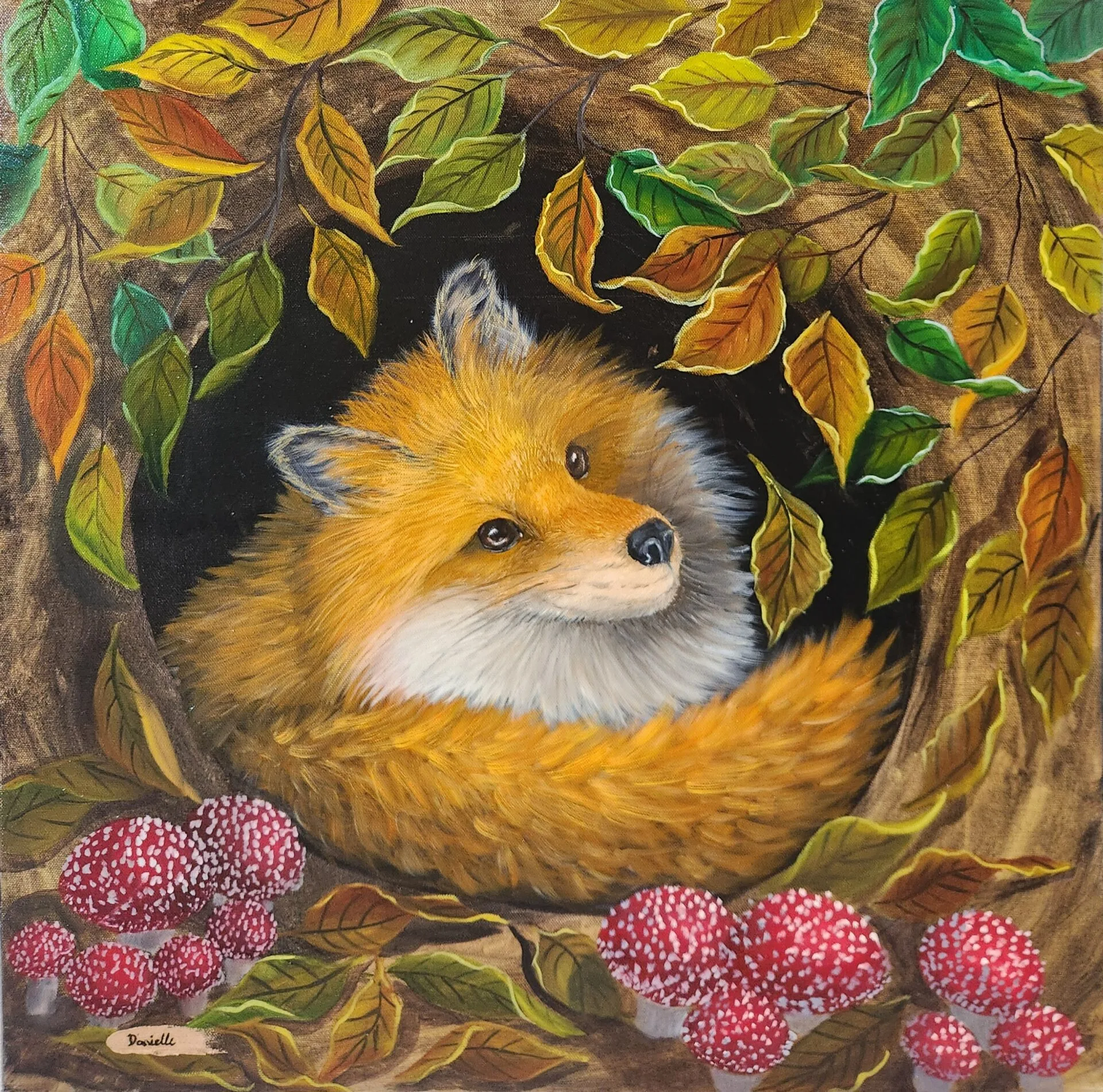
A small animal can carry a whole world in its posture. A fox tucked into a hollow, a bird pausing on a branch, a little creature looking out from shelter: these moments feel intimate. They remind me that wildness is not always dramatic. Sometimes it is hidden, delicate and easily missed.
Small animals often bring out a protective feeling in me. Their innocence feels more visible. They survive by listening, sensing, hiding, moving quickly, choosing the right moment. They are fragile, but not helpless. That combination is very moving.
In painting, small animals also ask for a different kind of attention. The drama may not come from scale or force. It may come from a tilt of the head, the curve of a back, the darkness of a hollow, or the feeling that the animal has noticed something we cannot see.
That quiet alertness is beautiful.
The Tenderness of Shelter: Forest Whispers
Some paintings begin with the feeling of finding a creature in its own little world.
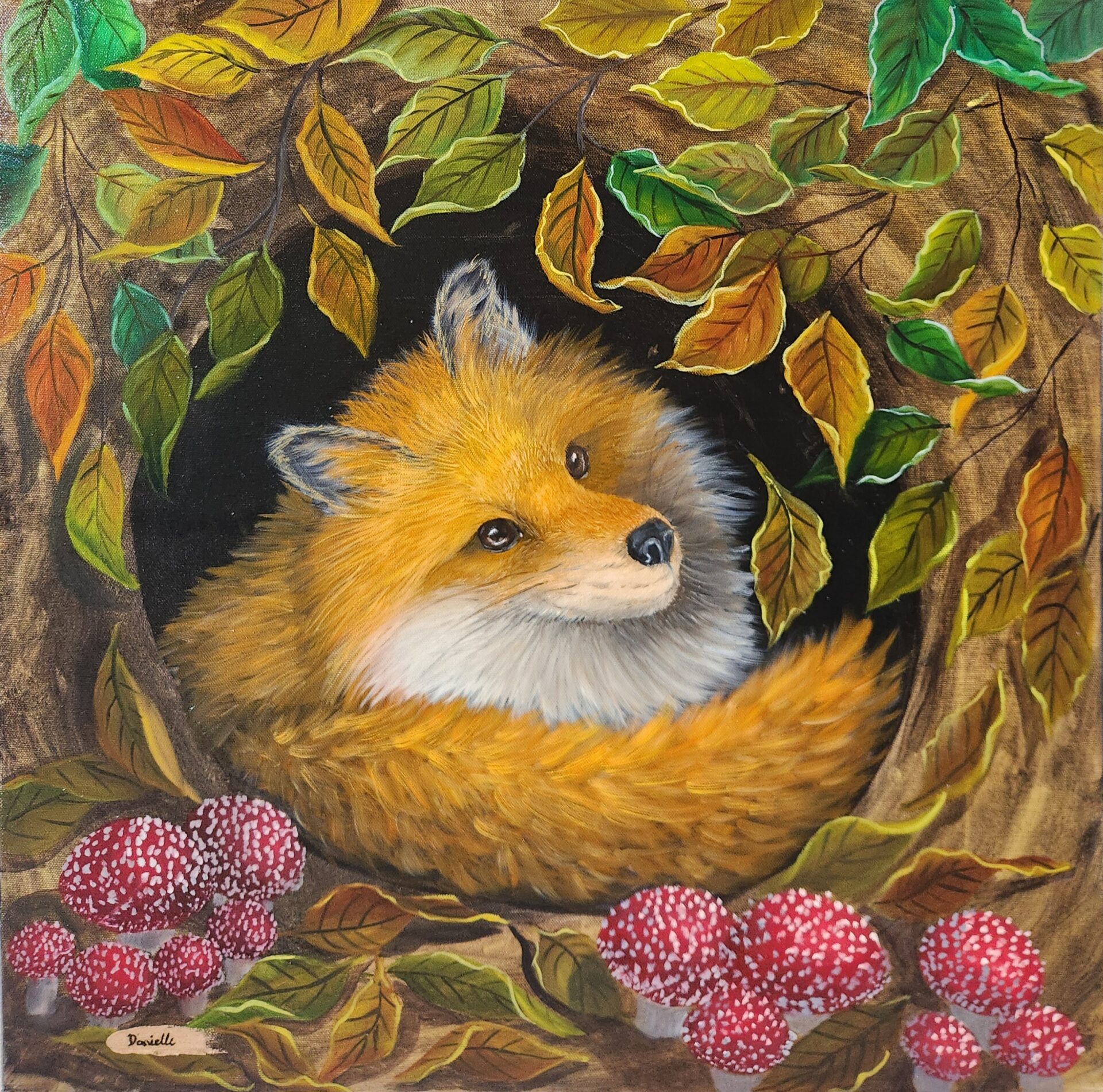
Forest Whispers has that feeling for me. The fox is nestled in a hollow, surrounded by the textures and colours of the forest. It is not a grand dramatic scene. It is a small encounter.
I love that kind of intimacy.
The fox feels watchful, but also sheltered. There is a sense that we are seeing something private, and that we should approach gently. The painting asks for softness from the viewer. It is not about owning the animal with our gaze. It is about pausing long enough to notice.
This is one of the reasons animals are so important in my work. They teach a different pace of looking. You cannot rush toward them. You have to earn the moment by becoming quiet.
Protection, Mothering and Trust
Animals often show tenderness without making it complicated.
A mother animal protecting her young does not need language to explain love. It is in the body: the placement of the adult near the young, the alertness, the sheltering shape, the readiness to defend. That kind of care feels ancient and immediate.
It moves me because it is so clear.
In human relationships, love can become tangled with expectation, fear, pride, misunderstanding or control. With animals, the protective instinct can appear more direct. A cub leans into the adult. The adult remains watchful. The bond is physical, practical and deeply emotional.
When I paint this kind of relationship, I am drawn to the balance between strength and gentleness. Protection is not only fierce. It can also be quiet, warm and steady.
Strength Beside Softness: Gentle Guardians
That balance appears strongly in a painting like this.
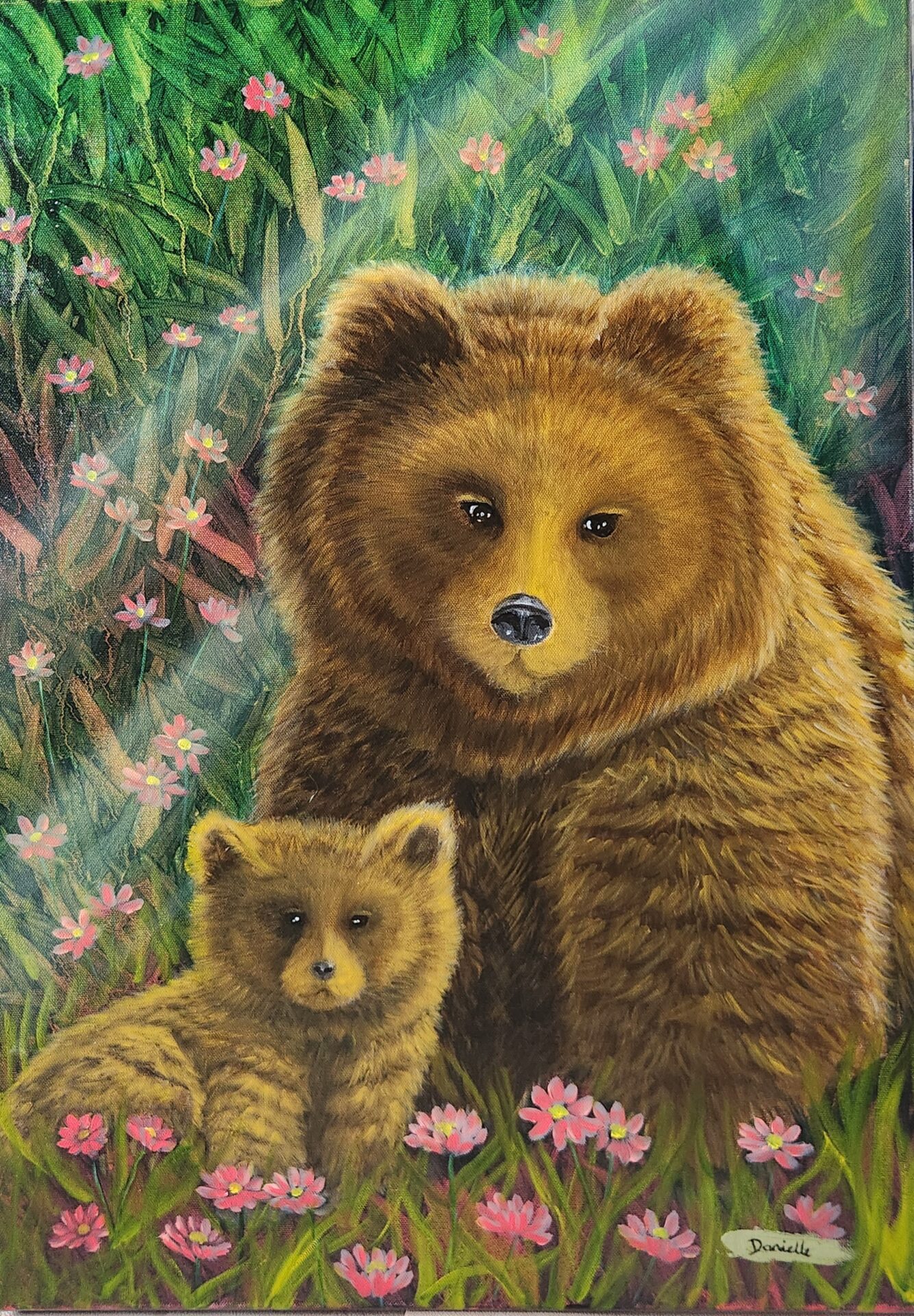
Gentle Guardians is not only about bears. It is about care.
The adult bear has weight and power, but the presence of the cub changes everything. The painting becomes less about dominance and more about guardianship. The strength is still there, but it is softened by responsibility.
That is something I love about animals. They remind us that fierceness and tenderness are not opposites. A creature can be powerful and gentle. Protective and innocent. Wild and loving.
The cub brings out the vulnerability of the scene. It makes the viewer aware of trust. Smallness beside strength. Softness beside muscle. The adult bear is not fierce for the sake of being fierce. The strength has purpose.
This kind of animal relationship feels deeply honest to me.
Why Animals Feel So Innocent
When I say I love the innocence of animals, I do not mean they are harmless.
Animals hunt, defend, compete, flee and survive. Nature is not always soft. But innocence does not mean harmlessness. To me, innocence means there is no pretence in them. They live according to instinct, need, fear, affection, curiosity and awareness.
A lion is not cruel for being a lion. A tiger is not vain for being beautiful. A fox is not deceptive in the human moral sense. A bear is not dramatic when it protects its cub.
They are themselves.
That self-being is what I find pure.
Humans often move through layers of performance. We learn to hide, calculate, impress, compare, defend and explain. Animals remind me of something more immediate. They bring me back to presence.
Perhaps that is why I feel so much affection for them. They offer a kind of emotional truth that does not need translation.
Young Wildness: Jungle Siblings
There is a special tenderness in young animals because their wildness is still soft around the edges.
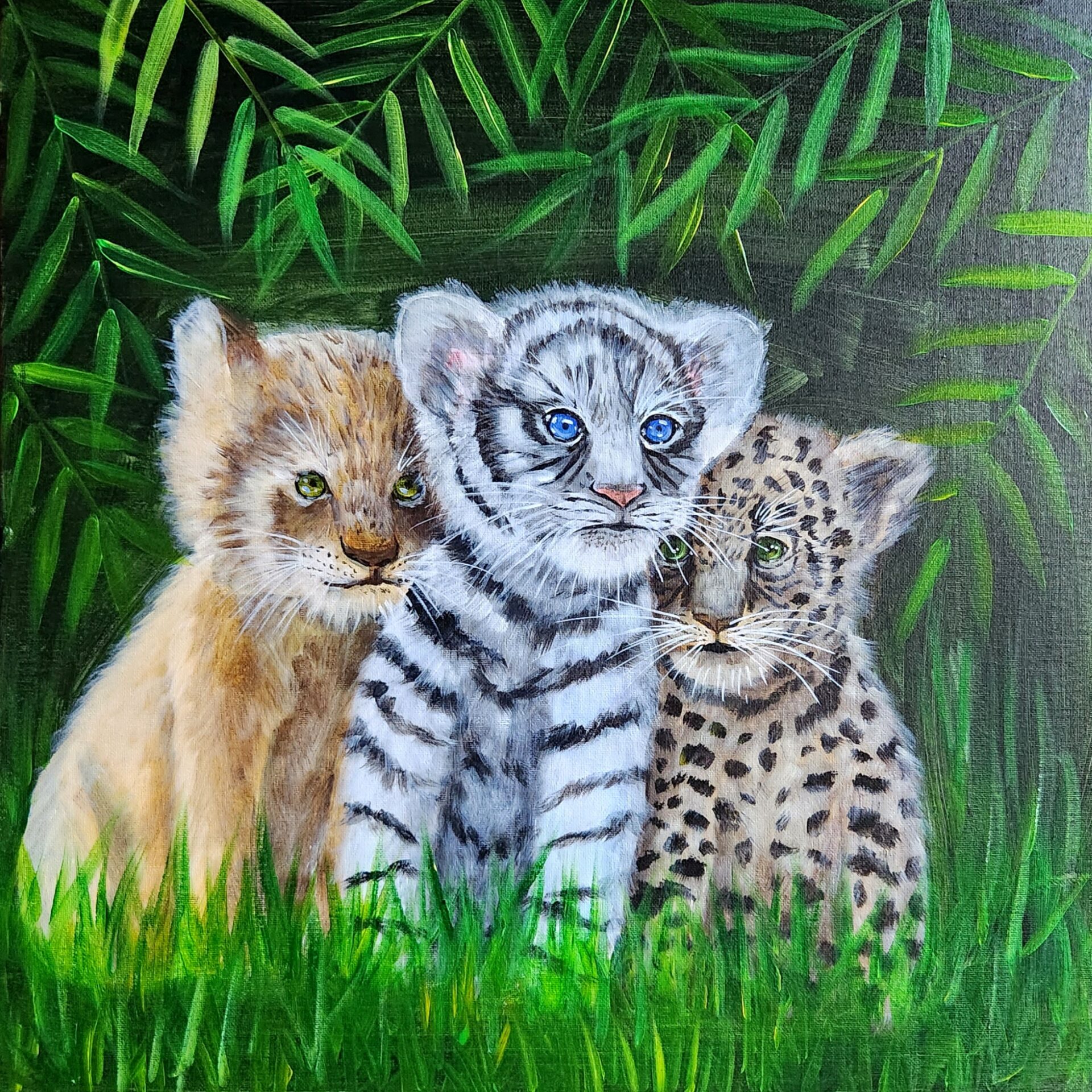
Jungle Siblings brings together young wild animals in a way that feels gentle and almost dreamlike. Lion, tiger and leopard cubs carry the future of fierceness, but here they still feel small, curious and open.
That contrast is what makes them so touching.
We know what they will become. We know the strength waiting inside them. But in this moment, they are still young. Their bodies are softer. Their faces are more open. Their presence carries wonder rather than command.
Painting cubs is not only about cuteness. It is about possibility. A young animal contains both innocence and future power. There is something sacred about that stage, before the world has fully hardened around survival.
It reminds me to look gently at beginnings.
The Solitary Animal
Not every animal painting is about family or togetherness.
Some animals carry solitude beautifully. A big cat resting alone, a lion holding its ground, a creature pausing in its own space: these paintings can feel meditative. The animal does not seem lonely. It seems complete.
I find that very moving too.
Solitude in animals feels different from isolation. It can look like self-possession. A creature resting without needing to perform. A body at ease in its own skin. A gaze that does not ask for permission.
Perhaps this is another reason I return to animals. They remind me that being alone does not have to mean being incomplete. There can be dignity in stillness. There can be fullness in resting.
A solitary animal can hold a whole emotional landscape.
Belonging Without Words: Run with the Pack
And then there are animals that remind me of belonging.
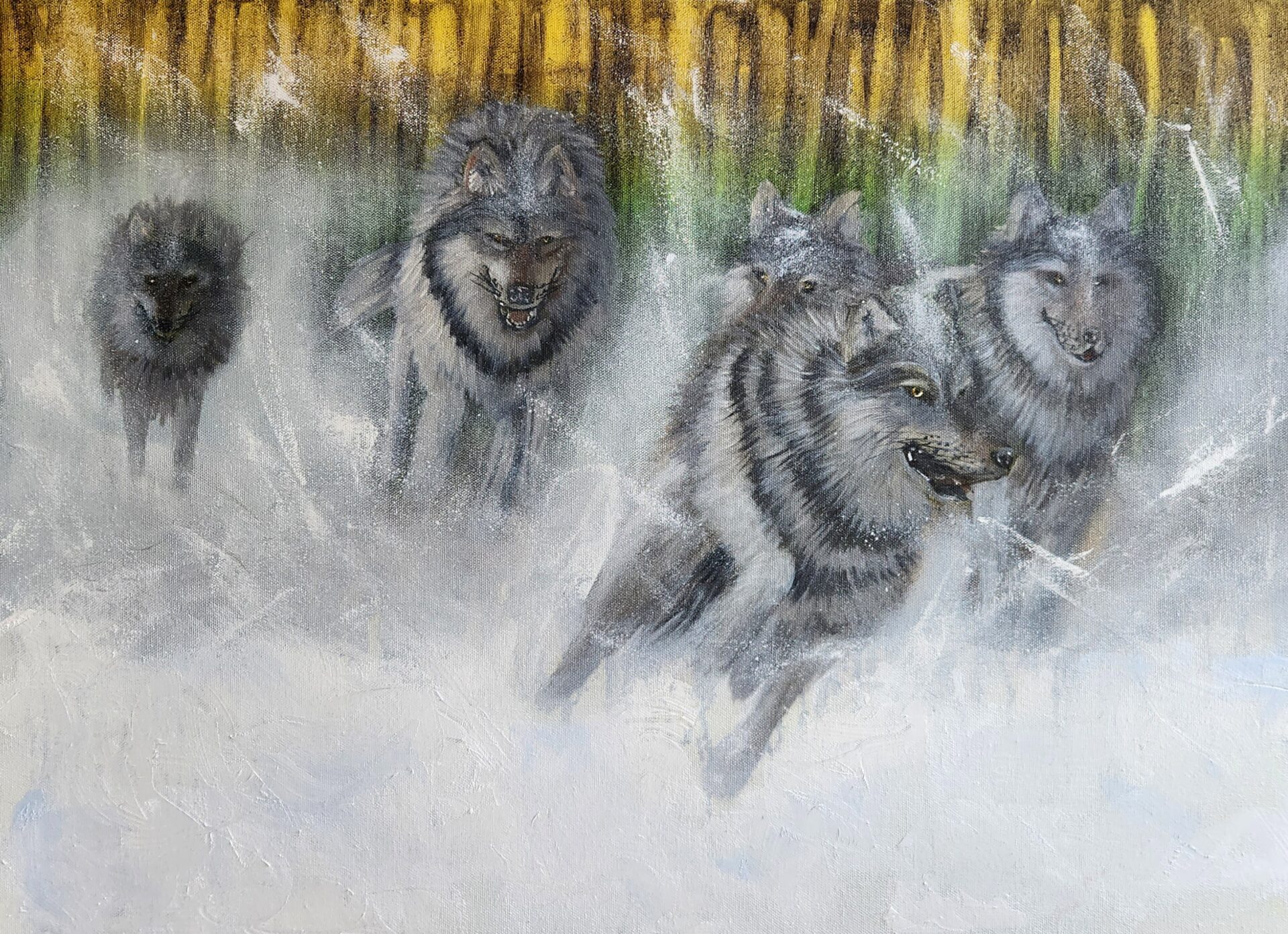
Run with the Pack carries a different emotional energy. The wolves are not still. They move together. There is water, motion, direction and the feeling of shared instinct.
A pack is not sentimental. It is practical, social and necessary. The wolves belong to one another through movement, sound, hierarchy, protection and survival. They do not need to explain the bond. It exists in the way they travel together.
I love that.
The painting makes me think about companionship without performance. No grand speeches. No polished appearances. Just bodies moving in rhythm, alert to the same world.
There is something honest in that kind of belonging.
Painting Animals as a Form of Love
When I paint animals, I am not trying to turn them into humans.
I do not want to make them cute only because cuteness is easy to love. I do not want to make fierce animals soft in a way that removes their nature. I do not want to use them only as symbols for human emotions, even though they often awaken human feelings in us.
I want to honour their animalness.
Their fur, gaze, muscles, stillness, alertness, vulnerability and power. Their separateness from us. Their mystery.
Love, for me, includes that respect. It does not require the animal to become more human in order to matter. It lets the animal remain other, and still beloved.
That is one of the gifts animals give me as an artist. They ask me to look without possessing. To care without controlling. To admire without reducing.
The Collection as a Heart Map
Looking at the Wildlife Collection together, I can see different kinds of love.
There is awe in the tiger. Tenderness in the bear and cub. Quiet wonder in the fox. Youthful innocence in the cub siblings. Strength in the lion. Restfulness in the jaguar. Belonging in the wolves.
Each painting holds a different doorway into why animals matter to me.
Some remind me of courage. Some remind me of softness. Some remind me of family, protection, instinct or solitude. Some simply make me feel that the world is larger, stranger and more beautiful than our human concerns.
That feeling is important.
It loosens the tightness of daily life. It reminds me that we share the earth with beings who do not live according to our schedules, ambitions or anxieties. They have their own rhythms. Their own intelligence. Their own innocence.
What Animals Keep Teaching Me
Animals keep teaching me to look more honestly.
They teach me that gentleness can live beside strength. That fierceness can be innocent. That small lives deserve attention. That protection can be tender. That belonging does not always need words. That beauty does not have to explain itself.
They also teach humility.
However much I love them, I cannot fully know them. I can observe, admire, study, paint and feel connected, but there is always mystery left. That mystery is part of the love.
Maybe that is why I keep returning to animals in my work. They let me paint feeling without overexplaining it. They let me explore innocence without making it weak. They let me hold power and tenderness in the same image.
And they remind me of a simpler truth: life does not need to be human to be precious.
I think that is the heart of this collection.
A love for animals big and small. Gentle and fierce. Watchful and playful. Solitary and protective. Wild and innocent.
A love that keeps looking back.
Leave a Reply