

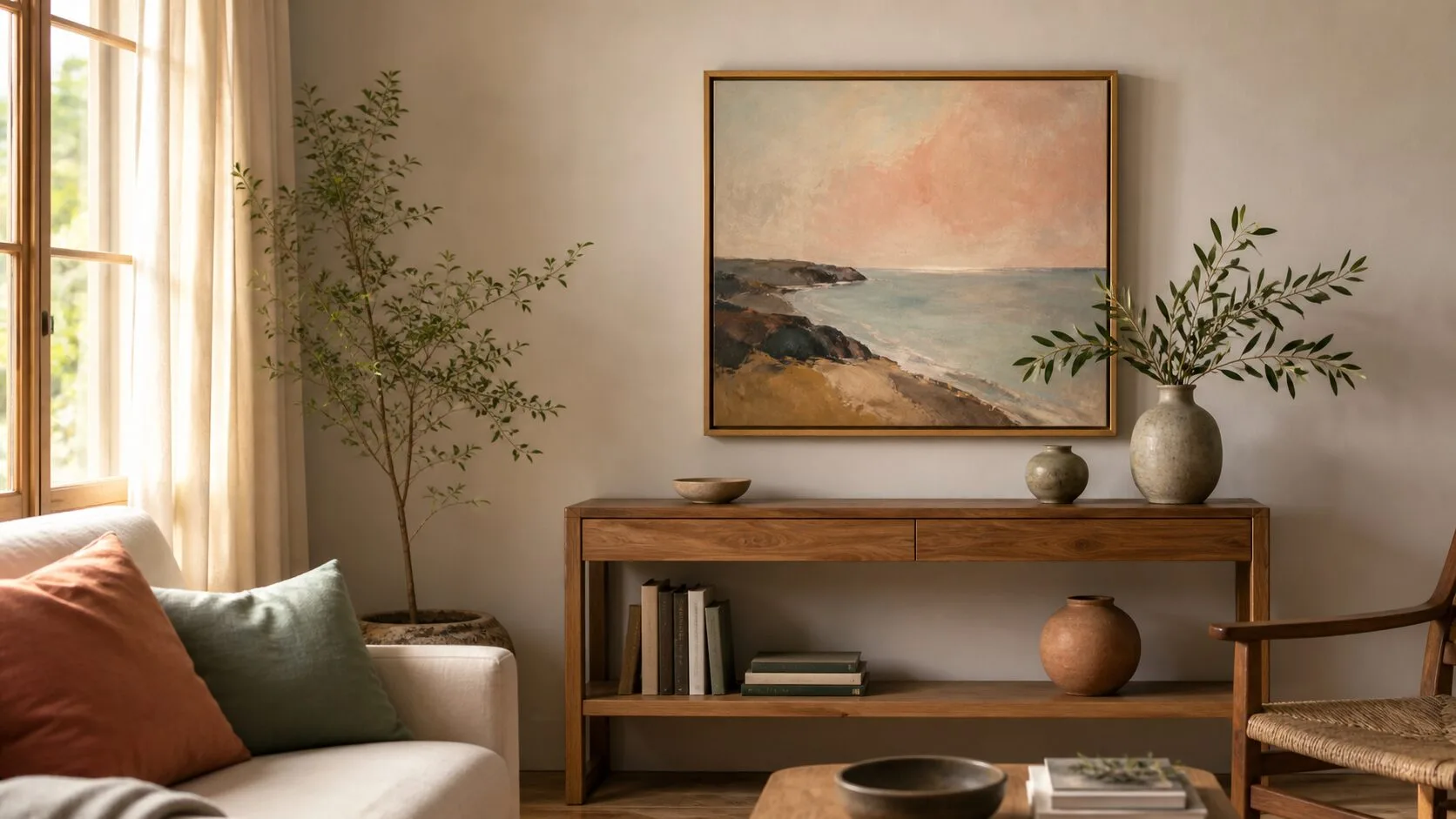
Original art changes a room in a way that is difficult to measure.
It is not only colour on a wall or a beautiful object placed above a sofa, console, shelf or bed. It is a presence. It carries the hand of another person, the decisions made in a studio, the hesitation before a mark and the layers that remain visible or quietly disappear underneath.
I think this is why collecting original art feels different from buying decoration. Decoration can complete a room. Original art can begin a relationship with it.
A collector may first be drawn to a painting because of colour, subject, size or mood. But the longer a painting lives with someone, the more it begins to change in small ways. Morning light catches one passage. Evening shadow softens another. A visitor notices something the owner had stopped consciously seeing.
This is the part of collecting that interests me most: not only how artwork is chosen, but how it is lived with.
Begin With Feeling, Not Just Space
It is practical to measure a wall. It is sensible to think about scale, framing, colour and placement. But I would not begin there.
I would begin with the feeling.
What do you want the artwork to bring into your daily life? Calm? Warmth? Movement? Memory? Freshness? A sense of arrival? A little humour? A reminder of nature? A moment of colour in a functional room?
A painting does not need to match everything in the home to belong there. Sometimes the best artwork creates a gentle contrast. A quiet room may need movement. A busy corner may need stillness. A neutral space may be lifted by a strong colour that appears nowhere else. A painting may work because it carries the emotional tone of the room, not because it repeats the exact palette of the cushions.
When collectors ask whether a piece will fit, I often think there are two kinds of fit.
There is visual fit: size, colour, proportion, frame and wall space.
Then there is emotional fit: the sense that this work belongs in your life.
Both matter, but emotional fit is the one that tends to last.
Let the Artwork Change the Room
A common mistake is treating art as the final accessory, something chosen only after every other design decision is complete. That can work, but it can also make the painting too obedient. Original art often has more to offer when the room is allowed to respond to it.
A painting might suggest a softer lamp, a quieter shelf arrangement, a plant nearby or more space around it. It might make one wall feel complete enough that fewer objects are needed elsewhere.
Living with original art is not about forcing the painting to serve the room. It is about allowing a conversation between the two.
This does not mean the whole home must be redesigned. Often the changes are modest. A vase moves. A stack of books shifts. A wall is left less crowded. A painting receives enough breathing room to be seen.
The room begins to listen back.
Calm as a Daily Companion: Serene
Some artworks are collected because they offer quiet.
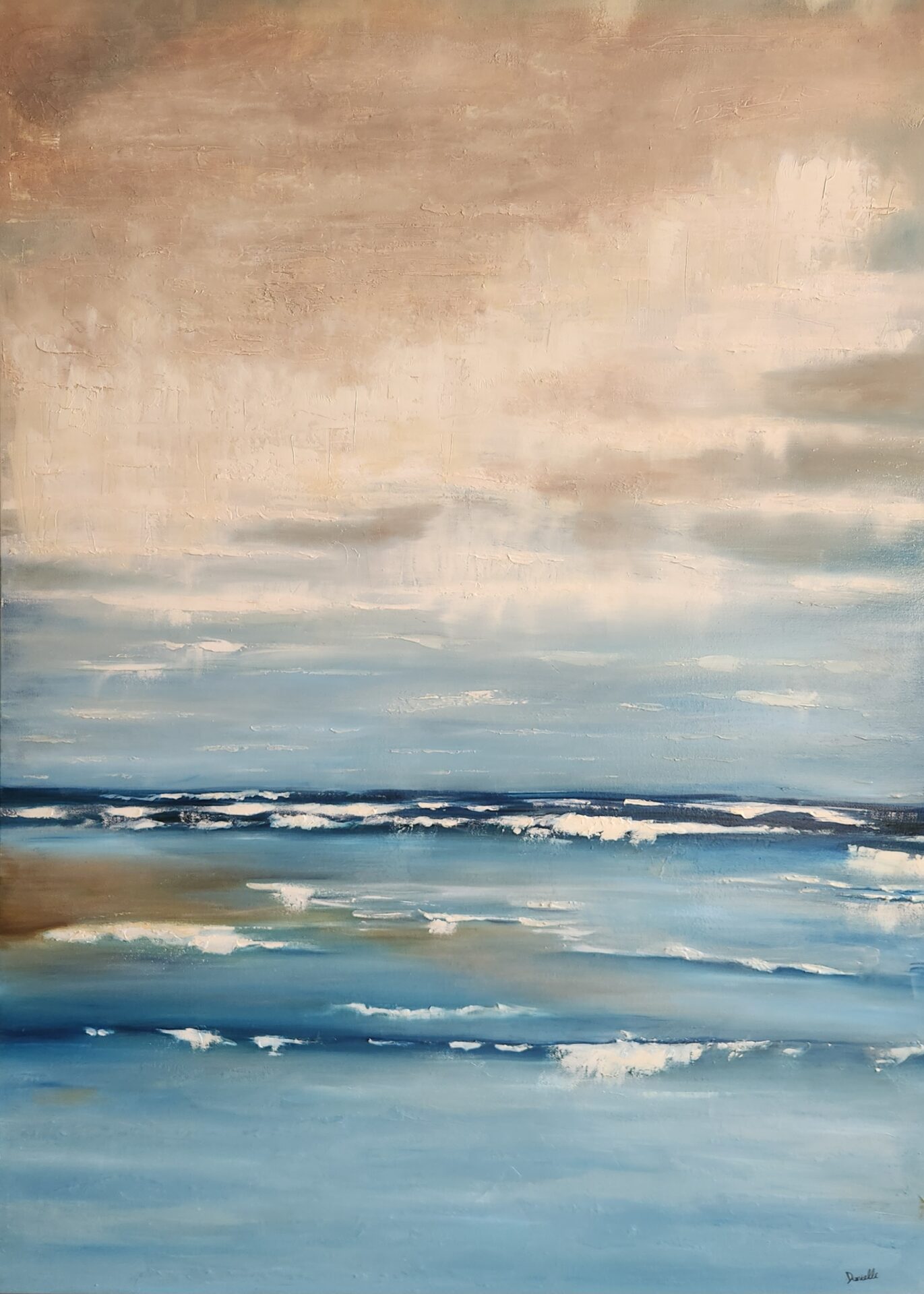
Serene is the kind of work that asks for breathing space. Its softened horizon, blue water and quiet atmosphere create a place for the eye to rest. In a home, a painting like this does not need a dramatic setting. It may work best where life naturally asks for exhale: a bedroom, reading area, meditation corner, study or quiet passageway.
When living with a calm painting, consider giving it less competition. Let nearby objects stay simple. Allow the wall around it to remain open. Choose lighting that does not glare across the surface. The painting’s strength is not loudness; it is the atmosphere it holds.
Collectors sometimes worry that quiet artworks will disappear in a room. But a painting does not have to shout to matter. Some works become important because they keep offering calm.
That kind of presence is subtle, but it can be deeply steadying.
Scale Is About Relationship
Scale is not only about whether a painting physically fits on a wall. It is about the relationship between the artwork, the furniture, the viewer and the rhythm of the room.
A small painting can feel intimate when placed where someone can come close to it. It may be perfect beside a desk, on a narrow wall, near a bookshelf or in a quiet corner where it rewards close looking. A large painting can anchor a room, but only if it has enough visual space to breathe. A medium painting may become the bridge between everyday objects and a larger atmosphere.
Before choosing a size, think about how the painting will be viewed.
Will you see it from across the room? Will you sit near it? Will it be something you pass every morning? Will visitors encounter it as they enter? Is it meant to be a focal point or a companion?
The same artwork can feel different depending on its role. A painting hung too high may feel disconnected from the body. A painting squeezed between shelves may feel more decorative than present. A piece placed at eye level, with enough space around it, can feel invited into the room.
This is one reason I like collectors to think about living with art rather than simply displaying it. Display can sound static. Living suggests relationship.
Colour Does Not Need to Match Perfectly
Many people feel safer choosing art that matches the existing room. There is nothing wrong with harmony, but matching too carefully can remove some of the life from a space.
A painting may belong because it echoes one colour in the room, but it may also belong because it introduces something unexpected. A muted room can hold a bright painting if the surrounding shapes are simple. A colourful room can hold a quieter artwork if the painting offers rest. A single repeated accent, such as a warm wood tone, soft green plant or blue ceramic object, may be enough to connect the artwork to the space.
Ask what the painting adds. Does it bring warmth, air, movement, depth, nature or a more personal note? If yes, it may not need to match every fabric or finish.
Homes become more interesting when they are not over-coordinated. Original art helps with that because it carries its own internal world.
Living With Movement: Dance of the Goldfish
Some paintings bring energy into a space.
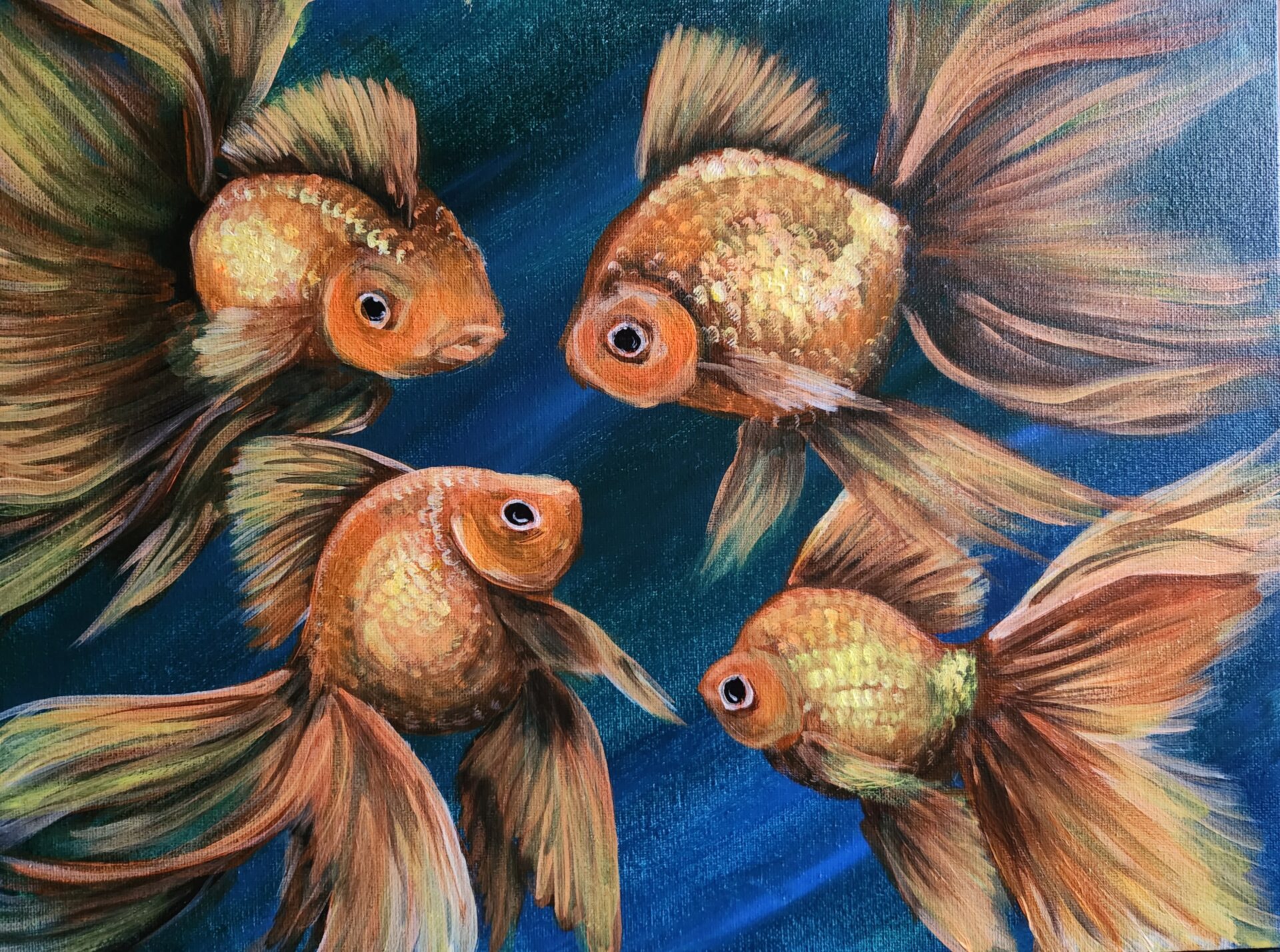
Dance of the Goldfish is a painting full of rhythm. The fish move through blue water with a feeling of connection and flow. In a home, a work like this can animate a room without making it feel restless, especially when it is given enough clear space around it.
Movement-based artworks can work beautifully in living rooms, dining spaces, hallways or areas where people gather. They bring life into shared spaces. The key is to notice how the surrounding room supports that movement. If the wall is already visually busy, the painting may feel crowded. If the furniture and objects nearby are calmer, the energy of the artwork can come forward.
A painting with movement also changes throughout the day. From a distance, it may read as colour and rhythm. Up close, the eye may begin following the fish, the water, the small shifts in edge and direction. This layered viewing is one of the pleasures of original art. It does not give itself all at once.
Think About Light, But Protect the Work
Light is one of the most beautiful ways a painting changes in a home, but it needs care.
Natural light can make colour feel alive. It can reveal texture and shift the mood of a painting throughout the day. But direct sunlight can damage artwork over time. Heat, humidity and harsh glare are not kind to original paintings.
When choosing placement, avoid direct sun if possible. Be careful with walls that receive strong afternoon light. Keep paintings away from damp areas, intense heat, air-conditioning vents, cooking steam and bathrooms with high moisture. If a room has strong light, consider UV-protective framing where appropriate, curtains, blinds or a different wall.
Good lighting does not have to be complicated. Soft, indirect light often works beautifully. A picture light or nearby lamp can help, but it should not create heat or glare. The aim is to let the painting be visible without making it perform under harsh conditions.
Caring for art is not preciousness for its own sake. It is a way of respecting the work so it can continue living with you for years.
Allow the Art to Gather Memory
A painting changes because the room changes around it.
A collector may remember when the piece first arrived, who noticed it, what season it was, what life felt like then. Over time, the painting becomes connected to birthdays, quiet mornings, conversations, work-from-home days, meals, pauses and ordinary rituals.
This is one of the reasons original art becomes personal. It is not only the artist’s story anymore. It becomes part of the collector’s story too.
A painting can mark a beginning: a new home, a new chapter, a recovery, a celebration, a decision to live with more beauty. It can also become a steady companion through less dramatic seasons. It watches life happen in the quiet way objects do.
This is why I do not think art in a home has to impress every visitor. It has to matter to the people who live with it.
Memory and Meaning: Shelf of Stories
Some artworks naturally invite this kind of personal connection.
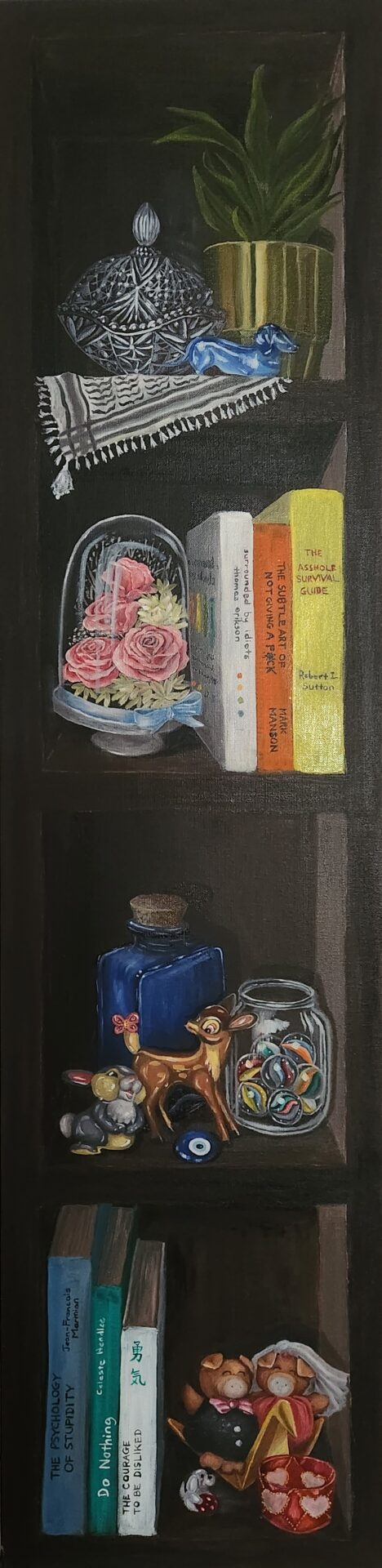
Shelf of Stories is about more than arranged objects. Books, keepsakes and plants become carriers of memory. They suggest the way a home collects evidence of a life: what we read, what we keep, what we place near us, what quietly comforts us.
A painting like this can sit beautifully near the objects it speaks to. It might belong close to a bookshelf, reading chair, writing desk or study. It may also work in a living room where its subject matter echoes the personal objects already present.
Still-life paintings often reward slower looking. At first, the viewer sees the arrangement. Later, they notice smaller relationships: the lean of a book, the softness of a plant, the rhythm of shapes across a shelf. In a collector’s home, those details can become familiar in the best way.
The artwork becomes another kept thing, but one that also reflects the act of keeping.
Rotate, Rehang and Re-See
A painting does not need to stay in the same place forever.
Collectors sometimes feel that once a work is hung, the decision is permanent. But homes are alive. Furniture moves. Light changes. Seasons shift. A room that once needed colour may later need calm. A painting that felt perfect in the living room may reveal a more intimate quality in a bedroom or study.
Rotating artwork can help you see it again.
Even moving a painting from one wall to another can change its voice. A work that felt decorative in a crowded space may feel powerful on a quieter wall. A small painting may become more precious when placed where it can be approached closely. A bold painting may feel more generous in a shared room.
Of course, rehang with care. Use proper hardware, check weight, avoid unstable hooks and ask for help with larger works. But do not assume that the first placement must be the final placement.
Living with art includes the freedom to keep discovering where it belongs.
Pair Art With Real Life, Not a Perfect Room
Many people wait for the perfect home before buying original art. They imagine they need the right renovation, furniture, wall, lighting or stage of life. But a home does not have to be finished before it can hold art. In fact, art often helps a home become itself.
A painting can bring personality into a rental, make a work corner feel less temporary, soften a practical dining area or turn a blank hallway into a place of pause. Original art belongs in real homes, not only ideal rooms. It can live among books, plants, laptops, daily movement and ordinary routines.
Sometimes the most beautiful placement is the one that lets art become part of life as it is.
Buy Slowly Enough to Listen
Collecting does not have to be rushed. It can be tempting to fill walls quickly, especially after moving into a new space, but original art benefits from slower choosing.
Notice what you return to. Which painting stays in your mind after you close the page? Which subject feels connected to your life? Which colour keeps calling you back? Which work feels like it would still matter in five years?
A collection built slowly can hold more personal meaning. The best collection is not necessarily the most expensive or impressive one. It is the one that feels honest.
Caring Is Part of the Relationship
Once a painting enters a home, care becomes part of the relationship.
Dust gently with a soft, dry cloth if appropriate. Avoid spraying cleaners near the surface. Do not hang original paintings in damp bathrooms or directly above heat sources. Keep artwork away from strong direct sunlight. If moving house, wrap and transport the work carefully. If damage occurs, seek professional advice rather than attempting a quick repair.
Care also means keeping records: artist, title, year, medium, dimensions, receipt and any certificate or correspondence. These details preserve the story of the work.
But beyond practical care, there is another kind: attention. Look at the painting sometimes. Not only when guests arrive. Notice how it meets the light. Notice what draws you now that you did not notice before.
Attention keeps the relationship alive.
What Collectors Give Back to the Work
Artists often think about what a painting gives to a collector: beauty, meaning, atmosphere, memory, companionship. But collectors also give something back to the work.
They give it a life beyond the studio.
A painting leaves the uncertainty of the making space and enters a room where people actually live. It becomes part of morning routines, celebrations, quiet evenings and ordinary glances. It is no longer only an artwork in progress, a listing or an image in a portfolio. It becomes a presence in someone’s world.
When someone chooses original art, they are continuing the story of the work. The artist begins the painting, but the collector continues its life.
A Home That Looks Back
Original art can make a home feel more awake.
Not because every wall is filled, and not because every room has been styled perfectly, but because something made with attention is now meeting the attention of the people who live there.
A painting can slow the eye, change the temperature of a room, hold memory, movement, calm or colour, and quietly mark a season of your life.
Living with original art is not about owning something impressive. It is about allowing beauty, handwork and meaning to become part of daily life.
Choose what speaks. Give it room. Protect it from harsh light and careless placement. Let it gather memory. Move it when it needs a new conversation. Look at it often enough that it can keep surprising you.
A painting does not stop changing when it leaves the studio. In a collector’s home, it begins another life.
Leave a Reply