
Insider Peek 27: Foodie Collection and the Memory of Taste
The Foodie Collection feels like a feast of memory.
At first glance, it is playful. Colourful gummy bears, donuts, cheesecake, jellos, chocolates, Nutella on toast, hamburgers, hotdogs, kueh, pau, luncheon meat. The subjects are familiar, cheerful and easy to love. They are the kinds of things that make people smile before they even begin to think too deeply about them.
But when I look at the Foodie Collection, I see more than appetite.
I see comfort. I see nostalgia. I see culture. I see childhood treats, festive foods, breakfast rituals, family tables, small indulgences and the private happiness of craving something specific. Food is never only food. It carries stories. It carries people. It carries place, memory, humour, tradition and the feeling of being alive in a body that can taste, smell, desire and enjoy.
That is what this series signifies to me.
It is about the emotional life of food.
Why Food Becomes Memory
Food has a strange power.
A taste can return us to a room we have not entered for years. A smell can bring back childhood more quickly than a photograph. A familiar snack can remind us of school days, family gatherings, late-night cravings, holidays, hawker stalls, birthday parties, kitchen counters, supermarket aisles or the person who used to buy it for us.
This is why food paintings interest me so much.
They are not only studies of colour and texture, although that part matters. Food gives an artist so much to explore: gloss, crumbs, cream, syrup, pastry, jelly, chocolate, steam, folds, layers, shine, softness, crispness and weight.
But beneath the visual surface is feeling.
A donut is a mood. A kueh is a memory. A jar of Nutella is a ritual. Luncheon meat can be funny, humble and deeply personal at the same time. A tray of chocolates can feel like celebration before anyone eats a single piece.
When I paint food, I am painting the moment just before it disappears.
That makes it tender.
Food is temporary. It is meant to be eaten. It melts, softens, cools, breaks, spills and vanishes. A painting holds it still, not to make it untouchable, but to say: this ordinary pleasure is worth noticing.
Nutella and the Comfort of a Familiar Ritual
Some foods become part of our daily rhythm.
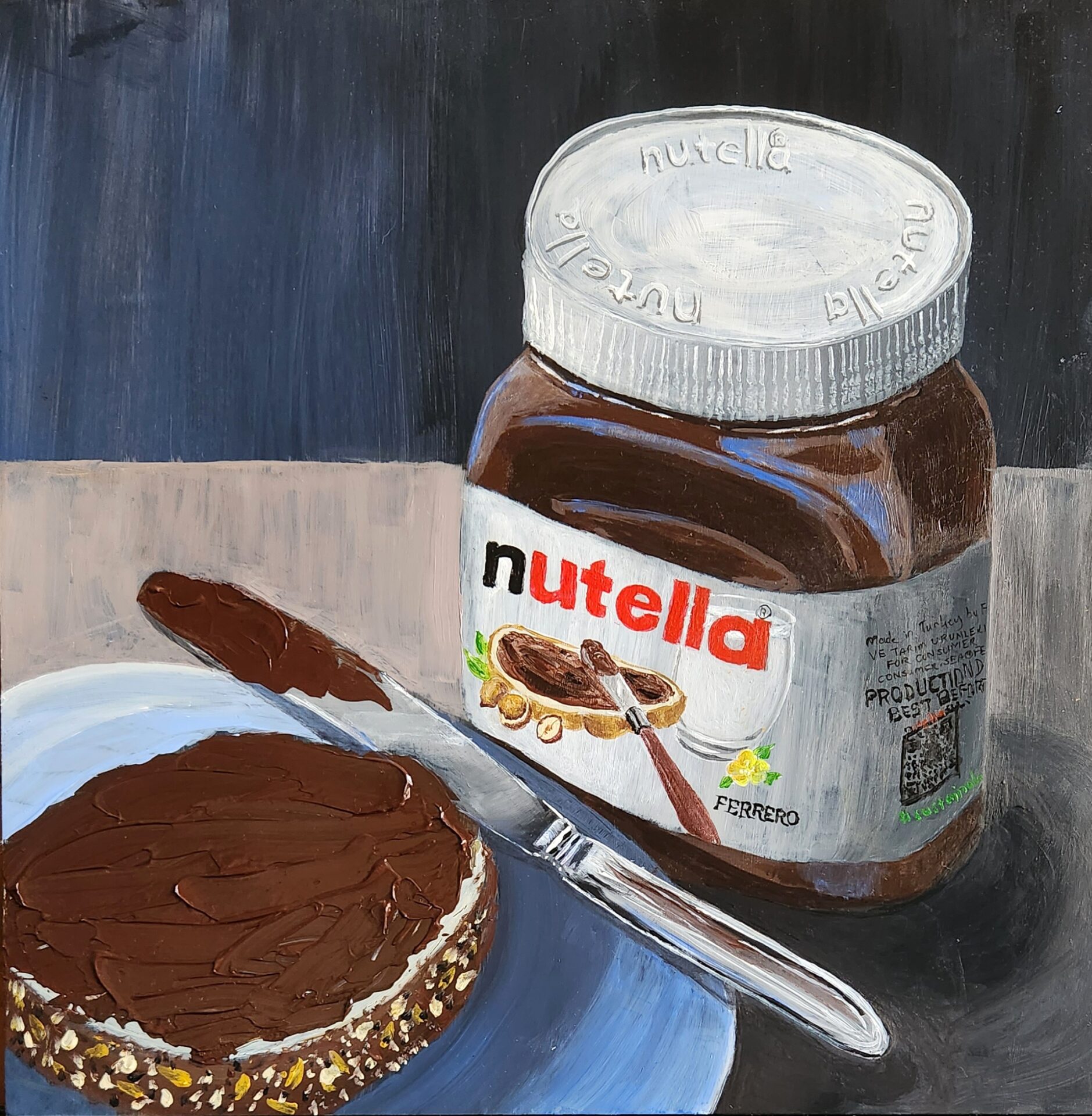
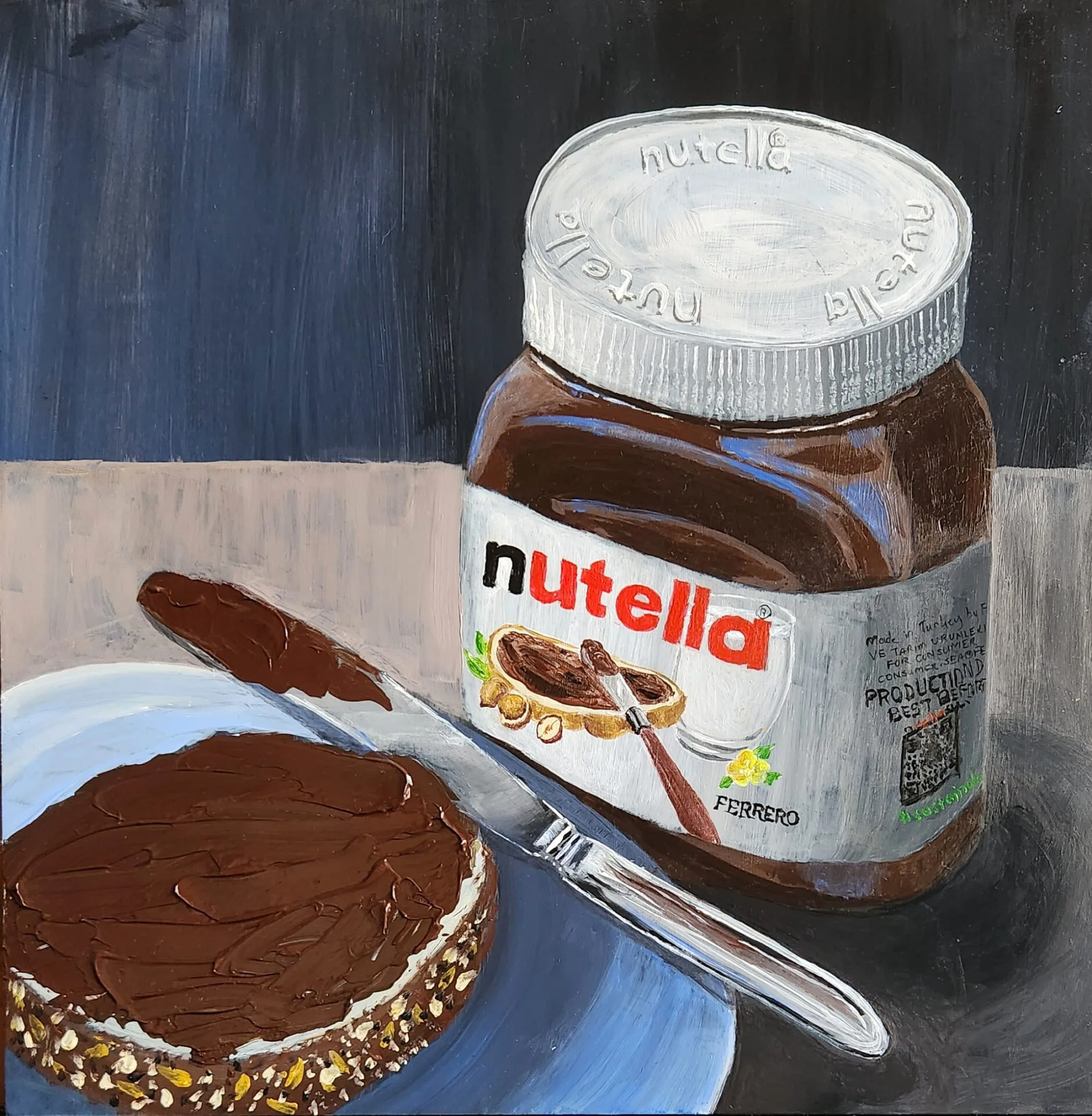
Gastronomic Reverie: A Visual Ode to Nutella is about that kind of familiar pleasure. A jar, a slice of bread, a knife, the glossy spread. Nothing here is grand in the formal sense, but the scene is instantly recognisable.
That recognition is powerful.
Many of us have foods that belong to certain times of day. Morning toast. A snack after school. Something sweet after a difficult day. A spoonful of comfort when we do not want to make life more complicated than necessary.
Nutella on toast is simple, but simplicity does not make it emotionally small. The rich brown spread, the crisp bread and the casual kitchen setting carry a feeling of ease. It is not a banquet. It is a small ritual.
And sometimes small rituals are what hold a day together.
Gummy Bears and the Joy of Play
Some foods are pure play.
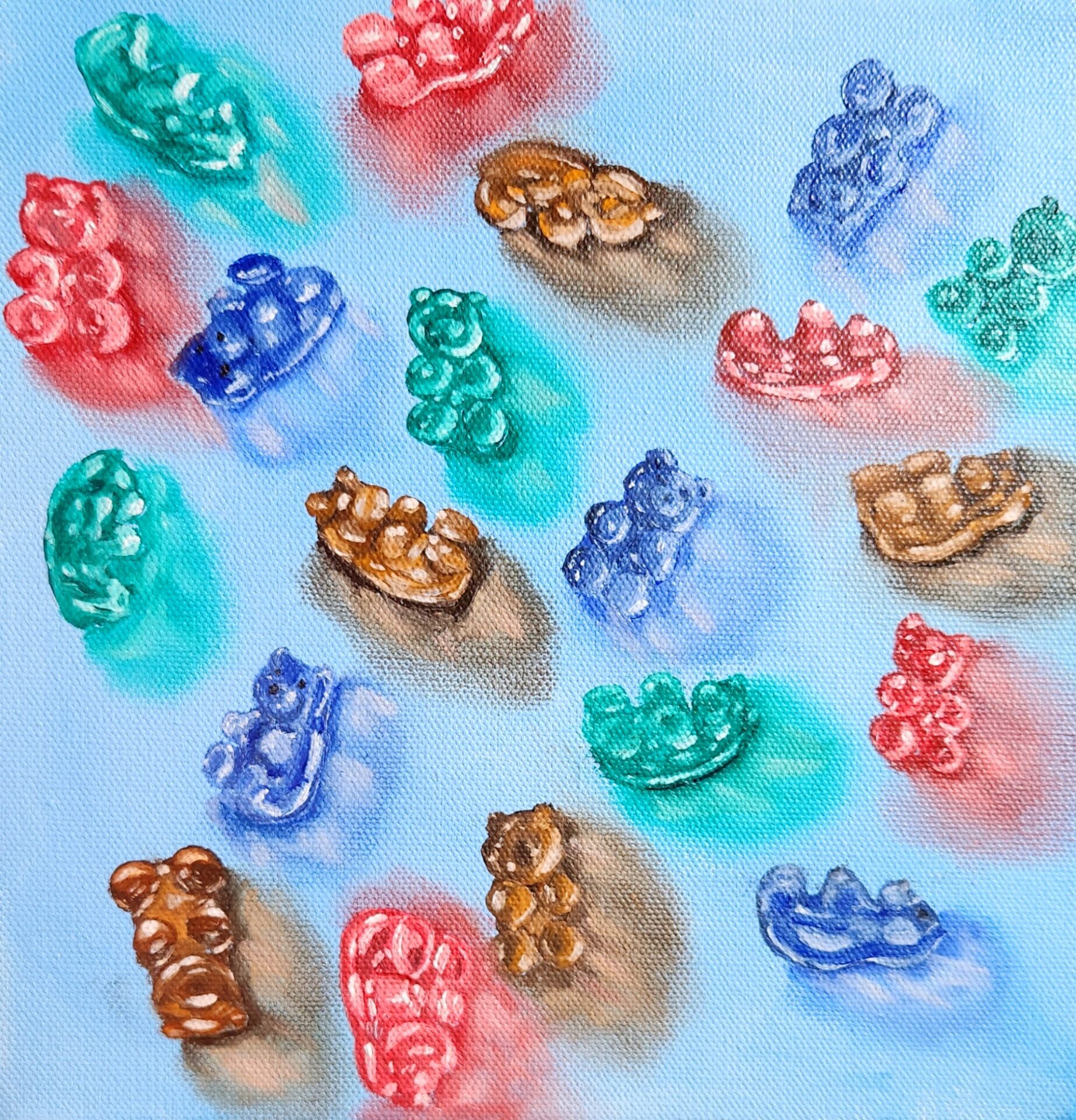
Gummy Chaos makes me smile because it does not pretend to be serious. The gummy bears are scattered across a soft blue background, bright little shapes of red, green, blue and gold. They feel cheerful, slightly mischievous and full of movement.
To paint gummy bears is to honour the kind of joy that does not need justification.
Not everything meaningful has to be solemn. Childhood treats carry their own emotional language. They remind us of party bags, cinema snacks, shared sweets, sticky fingers, bright colours and the delight of choosing one more piece.
Visually, they are also surprisingly interesting. Their translucent shine, rounded bodies and repeated shapes create rhythm. They are tiny sculptures of sugar and colour.
The title Gummy Chaos feels right because joy is not always arranged neatly. Sometimes it spills. Sometimes it scatters. Sometimes happiness looks like a handful of colourful sweets thrown into the day.
Cheesecake and the Elegance of Indulgence
Dessert can be playful, but it can also be elegant.
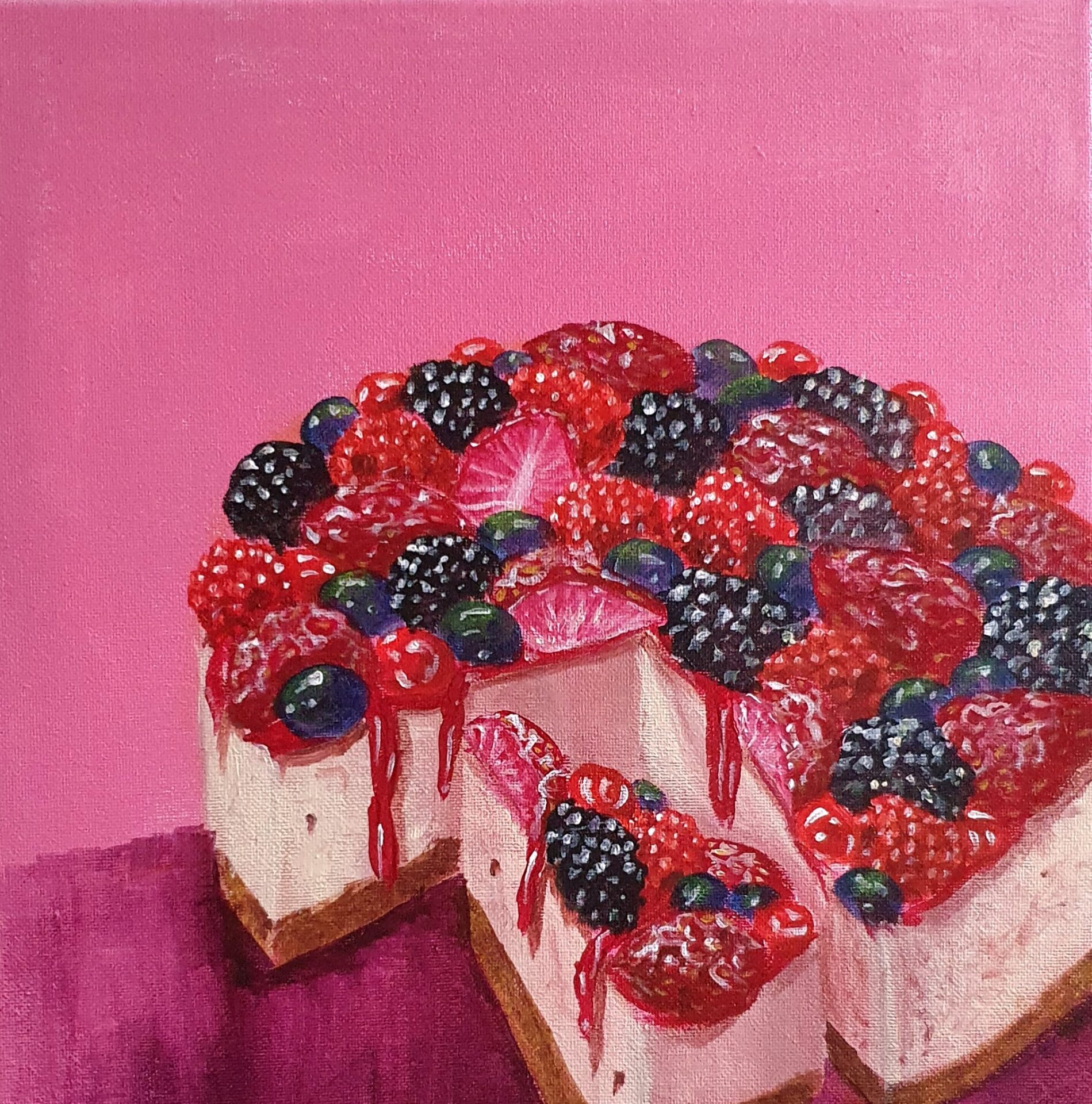
Berries Cheesecake has a more refined mood. The creamy body of the cake, the berry topping and the glossy surface create a sense of abundance without becoming excessive.
I enjoy painting desserts because they are built from contrast. Cream and fruit. Softness and tartness. Pale cake and jewel-like berries. Smooth surfaces and tiny seeds. A dessert is designed to be pleasurable, but it also has structure. It needs balance.
This painting makes me think of celebration, but not necessarily a loud one. It could be a birthday, a gathering, a quiet cafe moment, or the pleasure of ordering something beautiful simply because the day needs sweetness.
Food can be a form of kindness.
A small indulgence says: life is not only work, duty and endurance. There is also taste. There is also pleasure. There is also room for delight.
Donuts and the Colour of Craving
Craving is a very human thing.
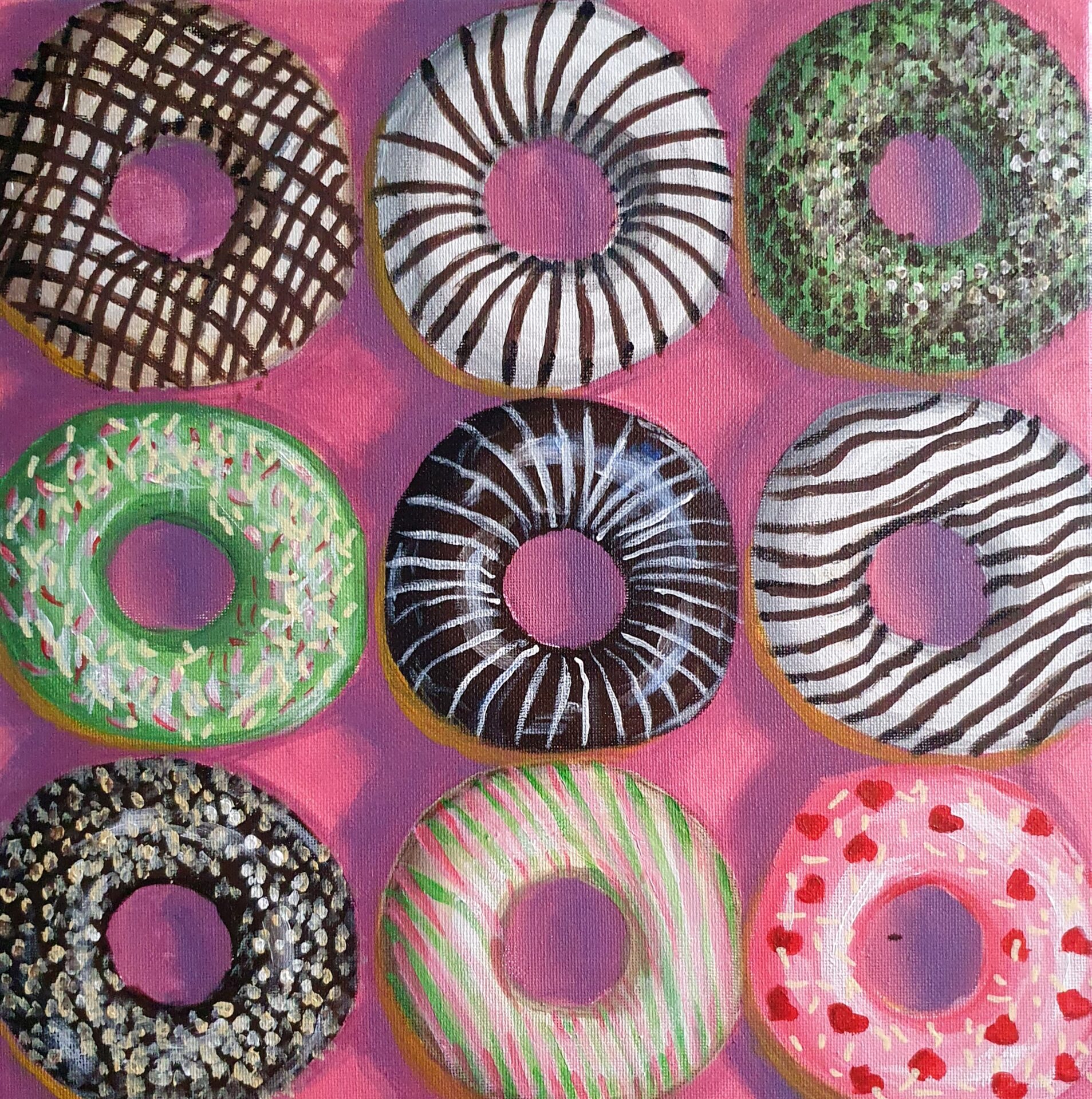
Craving for Some Donuts leans fully into brightness. The pink background, colourful glazes and playful toppings make the painting feel immediately joyful.
Donuts are funny because they are simple and extravagant at the same time. A ring of dough becomes a canvas for icing, sprinkles, stripes, chocolate and colour. Each one has personality. One may feel childish, another rich, another cheerful, another almost decorative.
Painting donuts lets me enjoy that variety.
There is also something honest about the word craving. It is not a polite word. It admits desire. It admits that sometimes the body and heart want sweetness, softness, colour or comfort.
In a world that often asks us to be disciplined and efficient, a donut painting says something different:
Pleasure has a place too.
Ang Ku Kueh and Food as Blessing
Some food carries tradition very clearly.
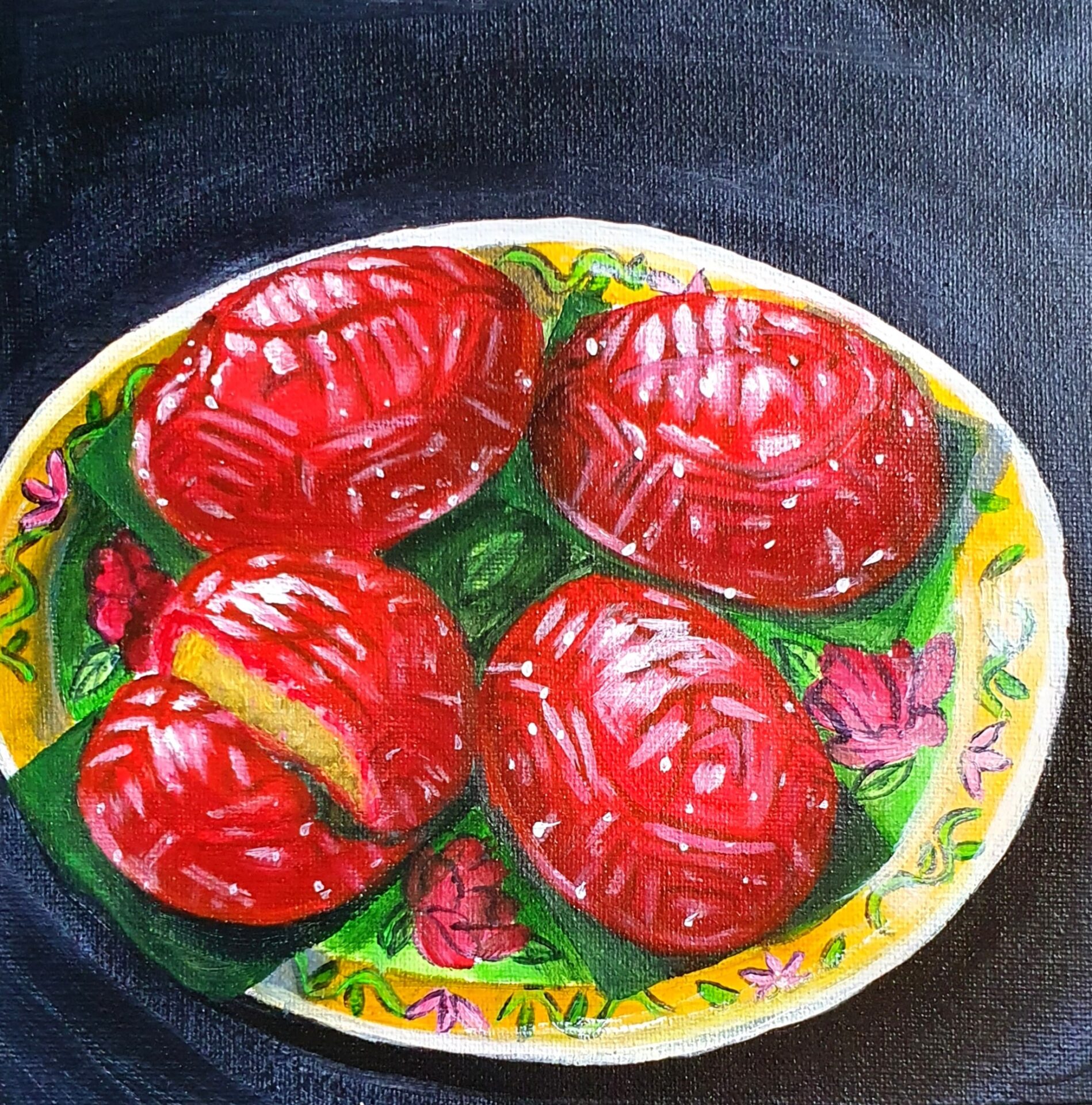
A Celebration of Tradition: Ang Ku Kueh is not only a painting of a sweet. It is a painting of meaning.
Ang ku kueh has a strong cultural presence. Its red colour, tortoise shape and festive associations connect it to blessings, longevity, auspiciousness and family occasions. It is food, but it is also a message. A wish. A marker of celebration.
This is one of the reasons heritage food is so moving to paint. The subject may be small, but it carries generations. It belongs to hands that made it, plates that held it, families that shared it, occasions that remembered it.
When I paint traditional food, I want to treat it with respect without making it stiff. These foods are not museum objects. They are alive in daily life. They are bought, offered, eaten, packed, shared and remembered.
A painting gives them a pause.
It lets us look at what culture has placed in our hands.
Kueh Lapis and the Patience of Layers
Layered food has its own rhythm.
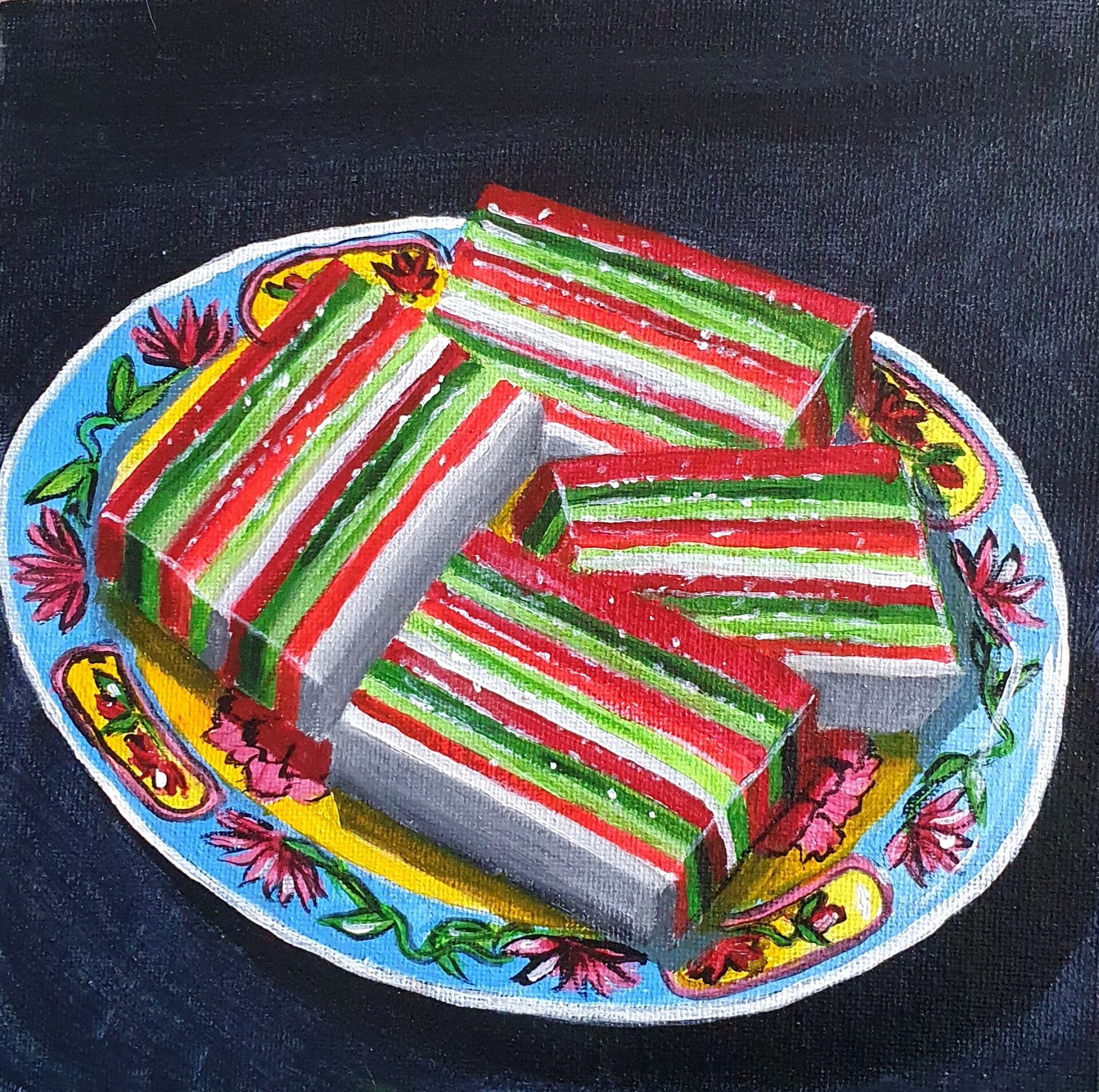
Layers of Tradition: Rainbow Lapis Delight speaks through repetition. Red, green and white bands stack into order. The slices sit on a decorative plate, simple and familiar, but visually full of rhythm.
I love the symbolism of layers.
Food like this is not rushed. It carries method, patience and sequence. Each layer depends on the one before it. That makes it a beautiful subject for thinking about tradition too. Culture is layered. Memory is layered. Family stories are layered. The foods we grow up with contain more than taste; they contain time.
The painting turns that layered patience into something visible.
It is colourful and cheerful, but beneath that is quiet labour. Someone had to make it. Someone had to know how. Someone had to pass the knowledge along.
That is the sweetness beneath the sweetness.
Char Siew Pau and Comfort Held in the Hands
Comfort food does not always need colour to be powerful.
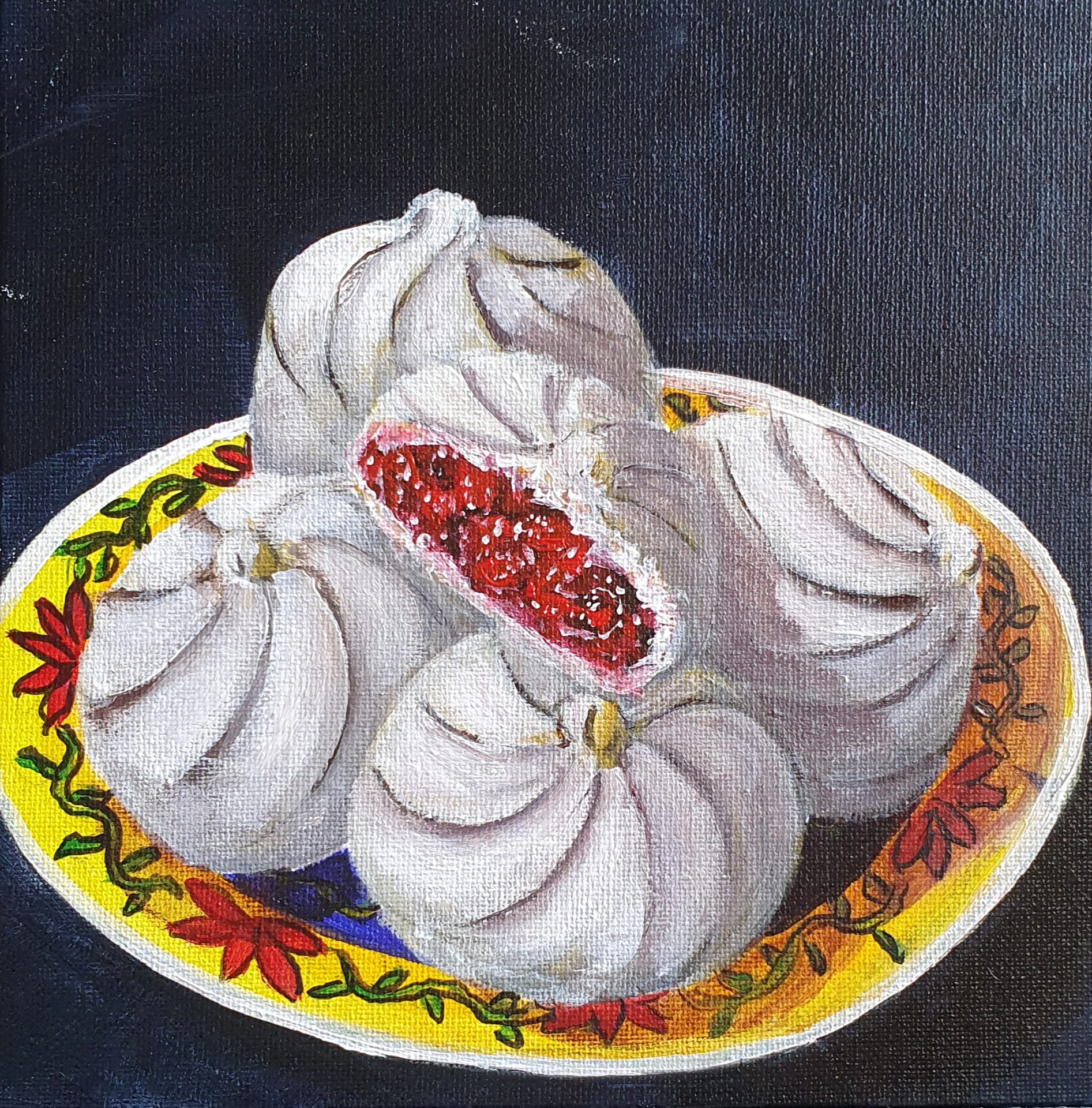
Delightful Char Siew Pau has a gentler kind of appeal. The soft bun, the folds, the darker filling, the plate: everything feels close to the hand and close to memory.
There is something very intimate about foods we can hold.
A pau is warm, portable and comforting. It belongs to breakfast, snacks, family tables, dim sum, takeaway bags and everyday appetite. It does not ask to be fancy. Its beauty is in familiarity.
As an artist, I enjoy giving this kind of humble subject the attention of a still life. When painted carefully, the folds become form. The filling becomes contrast. The plate becomes setting. The ordinary becomes worthy of looking at slowly.
That is one of the main ideas of the Foodie Collection.
Everyday food deserves affection.
The Hamburger and the Architecture of Appetite
Some foods are almost architectural.
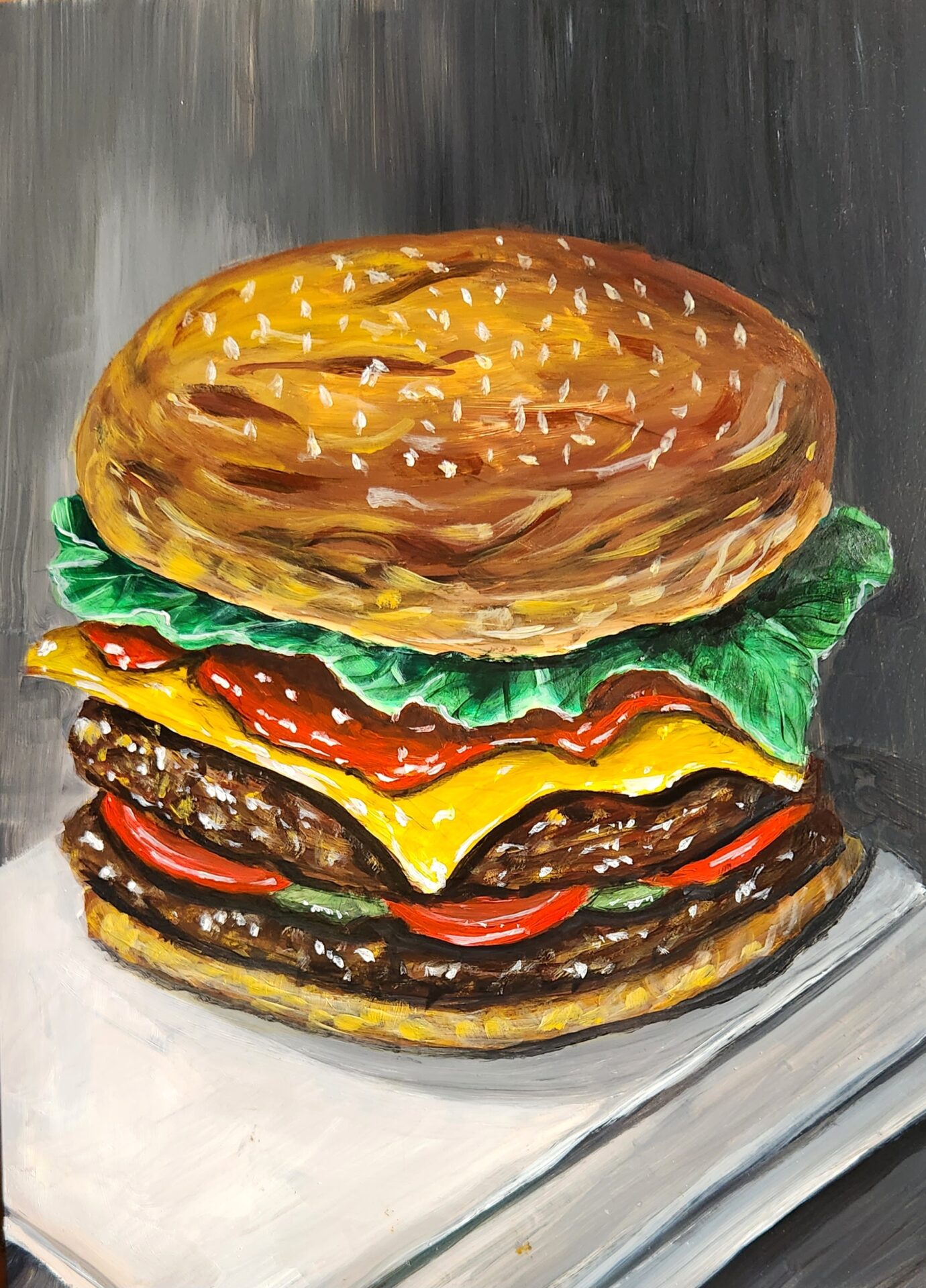
Gastronomic Reverie: A Visual Ode to the Classic Hamburger is playful because it treats a casual meal with seriousness, but not in a humourless way. A hamburger is built in layers: bun, patty, cheese, lettuce, sauce, texture, weight.
It has structure.
This makes it a fascinating subject. The ingredients stack together, each layer contributing colour and form. The result is familiar, but when painted closely, it becomes almost sculptural.
I like that shift.
A food we usually eat quickly becomes something we slow down to see. The painting asks: what happens if we look at this everyday meal with the same patience we might give to flowers, fruit or porcelain?
The answer is surprisingly warm.
We find design. We find appetite. We find cultural familiarity. We find the humour and comfort of food that does not pretend to be delicate.
Luncheon Meat and the Honesty of Personal Taste
Some food is personal in a way that is hard to explain.
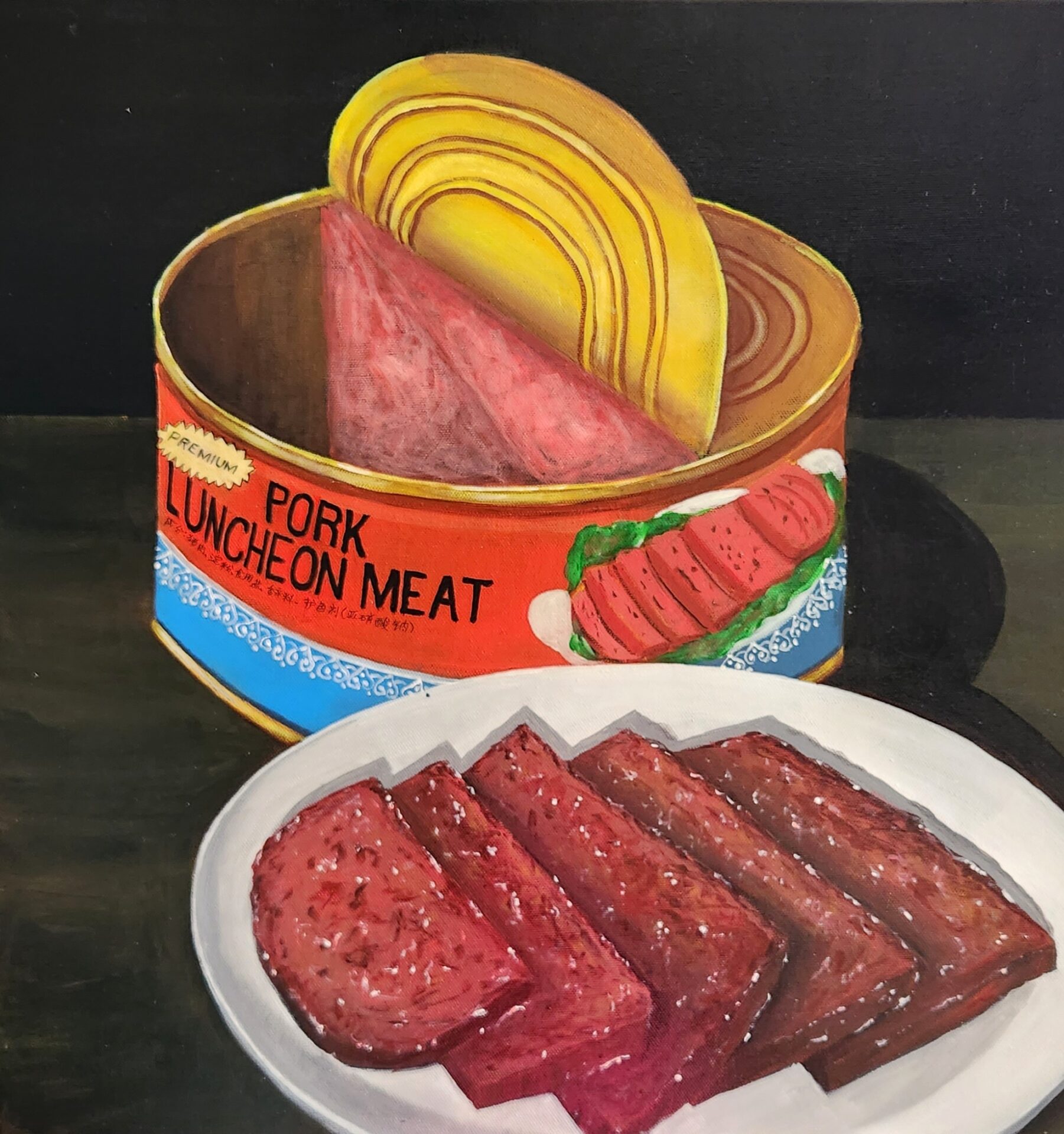
I Love Luncheon Meat is a good example of food as personality. It is not trying to impress anyone with glamour. It is direct, funny and sincere.
I love that.
There is a kind of honesty in painting foods that people actually crave, not only foods that look elegant in a fine dining setting. Luncheon meat carries memory for many people: simple meals, home cooking, rice, noodles, childhood, convenience, comfort, guilty pleasure, family taste.
Painting it carefully is a way of saying that personal foods matter.
Not every meaningful subject has to be universally poetic at first glance. Sometimes the poetry is in recognition. Someone sees the painting and laughs because they know exactly what it means. They know the taste. They know the smell. They know the feeling.
That recognition is connection.
Fancy Chocolates and Small Luxuries
Then there are foods that feel like little gifts.
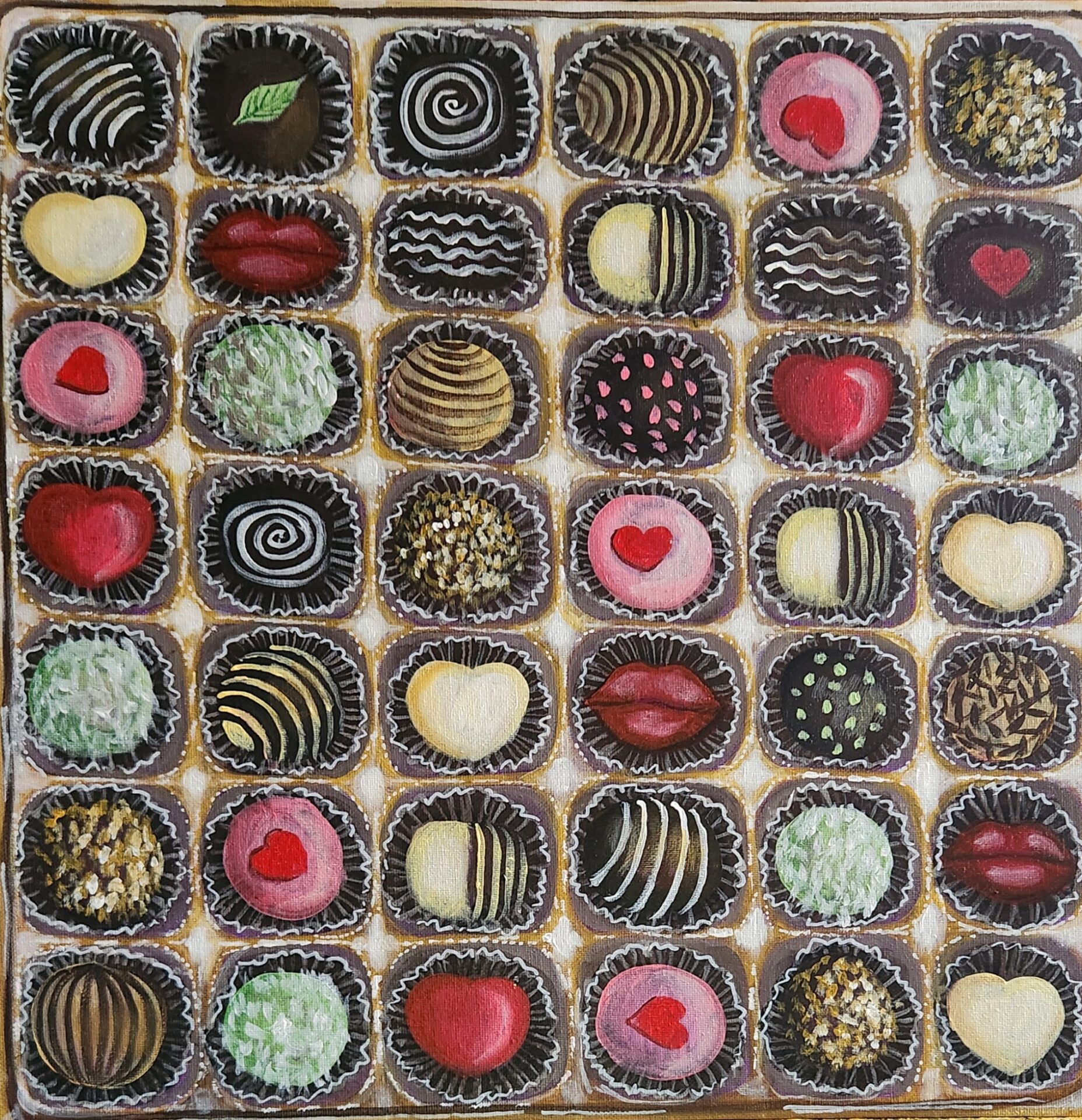
A Tray of Fancy Chocolates feels abundant in miniature. Each chocolate is its own small object of design. Different shapes, textures, wrappers and surfaces create a rhythm across the tray.
Chocolates are interesting because they often mark occasion. They can be gifts, treats, apologies, rewards, souvenirs or small ceremonies of pleasure. Even before eating them, we choose. We look. We decide which one to take.
There is anticipation in that choice.
As a painting, the tray becomes a study in variety. Each piece is small, but together they create richness. This is another kind of abundance: not one large feast, but many little pleasures gathered closely.
What the Foodie Collection Signifies
To me, the Foodie Collection signifies the joy of ordinary desire.
It is about appetite, but not only in the physical sense. It is about the appetite for colour, comfort, memory, culture, play and connection. It is about the foods that brighten a table, soften a hard day, mark a festival, carry childhood, or make someone say, I know that feeling.
Food connects us because everyone has a food story.
Some stories are sweet. Some are funny. Some are tied to family, place or tradition. Some are private cravings. Some are about celebration. Some are about survival and comfort. Some are about the foods we loved as children and still love now, even if our tastes have grown around them.
This collection gathers those stories without ranking them.
A heritage kueh can sit beside a hamburger. Nutella can sit beside ang ku kueh. Gummy bears can sit beside cheesecake. Luncheon meat can sit beside fancy chocolates.
That variety feels true to life.
Our appetites are layered. Our memories are mixed. Our tables hold more than one kind of meaning.
Food as Shared Language
Food is one of the most immediate ways people connect.
We ask, have you eaten? We offer snacks. We bring desserts. We cook for someone who is tired. We remember what people like. We celebrate with meals. We comfort ourselves with familiar tastes. We travel through food before we understand a place fully.
A food painting can hold some of that language.
It does not feed the body, but it can awaken memory. It can make a room feel warmer. It can start conversations. It can remind us of a taste, a person, a season, a table, a craving.
That is why I think food belongs in art.
Not only grand food. Not only rare food. Everyday food too. Especially everyday food.
Because everyday food is where much of life actually happens.
A Feast for the Eyes
The phrase “a feast for the eyes” is common, but I feel it deeply with this series.
Painting food allows me to enjoy surfaces: glossy chocolate, soft bread, shiny jelly, creamy cake, translucent gummy bears, powdered coconut, steamed dough, crisp lettuce, sliced luncheon meat. Each texture asks for a different kind of attention.
The challenge is to make the food feel present without becoming flat or decorative. I want the viewer to sense weight, softness, shine and taste. I want the painting to feel familiar enough to spark recognition, but attentive enough to transform the subject.
That transformation matters.
Art can take what we usually consume quickly and invite us to linger.
It can make us look again at what we thought we already knew.
The Sweetest and Most Nourishing Moments
The Foodie Collection is playful, but beneath the play is gratitude.
Gratitude for simple pleasures. Gratitude for culture. Gratitude for the foods that made childhood colourful. Gratitude for the meals that gather people. Gratitude for cravings that remind us we are human. Gratitude for the ordinary things that quietly carry emotional weight.
I do not think every painting has to be serious to be meaningful.
Sometimes meaning arrives through delight.
A gummy bear. A donut. A slice of kueh. A spoonful of Nutella. A warm pau. A bright cheesecake. A can of luncheon meat. A tray of chocolates.
These things may seem small, but small pleasures are not small when they help us feel connected to life.
That is what I wanted to honour in this collection.
The foods we love.
The memories they keep.
The joy they bring to a room.
The way something ordinary can become art when we pause long enough to see it.
Leave a Reply