

Insider Peek 17: Painting Koi, Movement, Symbolism and Water
There is something about koi that makes them feel both peaceful and alive at the same time. They do not rush in the way small fish dart. They do not pose in the way a still-life object might. They glide, turn, overlap, disappear under the dark parts of the pond, then return with a flash of orange, white, gold or shadow.
That quality is what draws me back to painting koi. They are moving, but not frantic. Decorative, but not empty. Symbolic, but still very much physical creatures with weight, pattern, direction and presence. When I paint koi, I am not only painting fish. I am painting the relationship between movement and stillness, between what rises to the surface and what remains below.
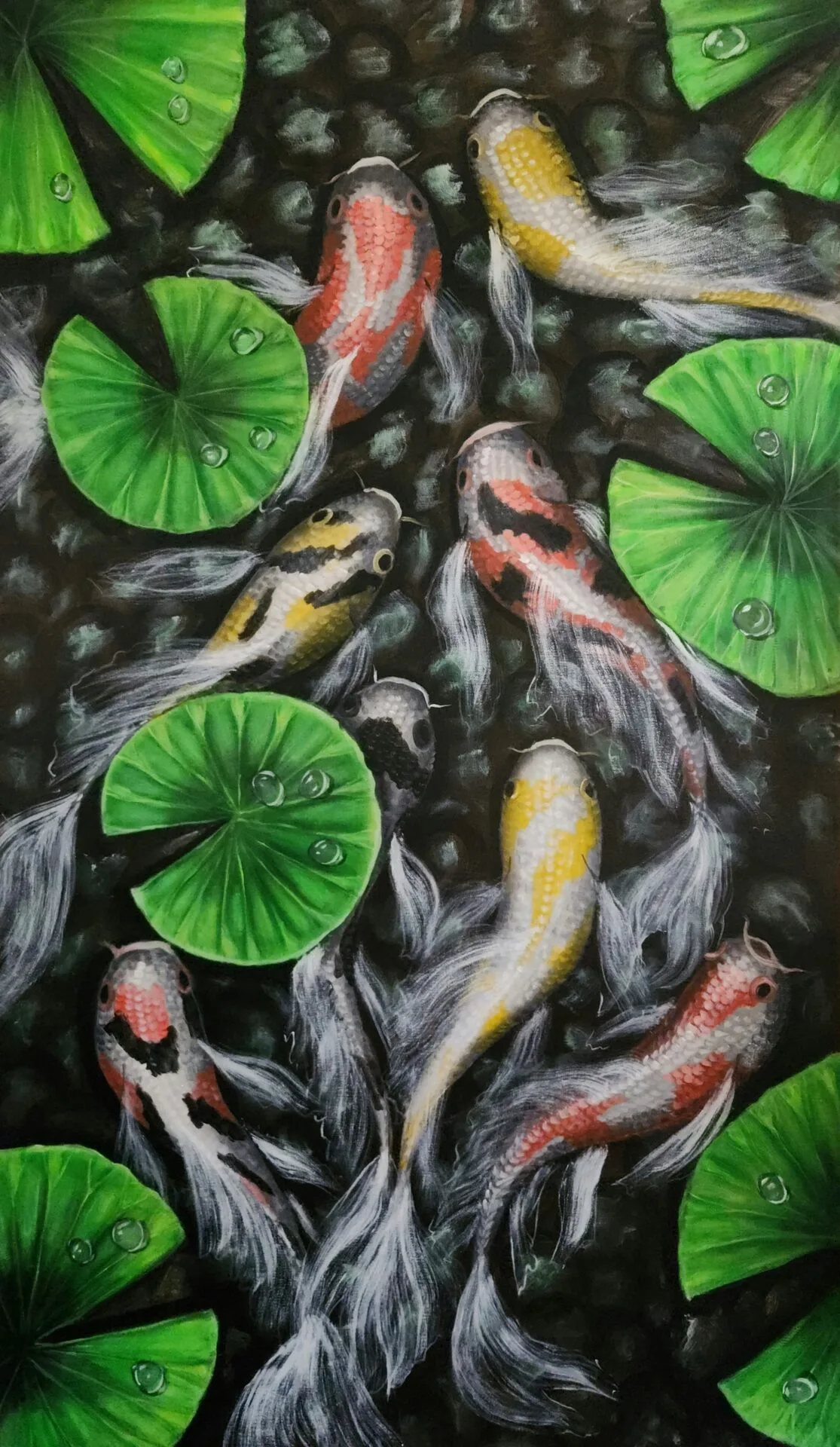
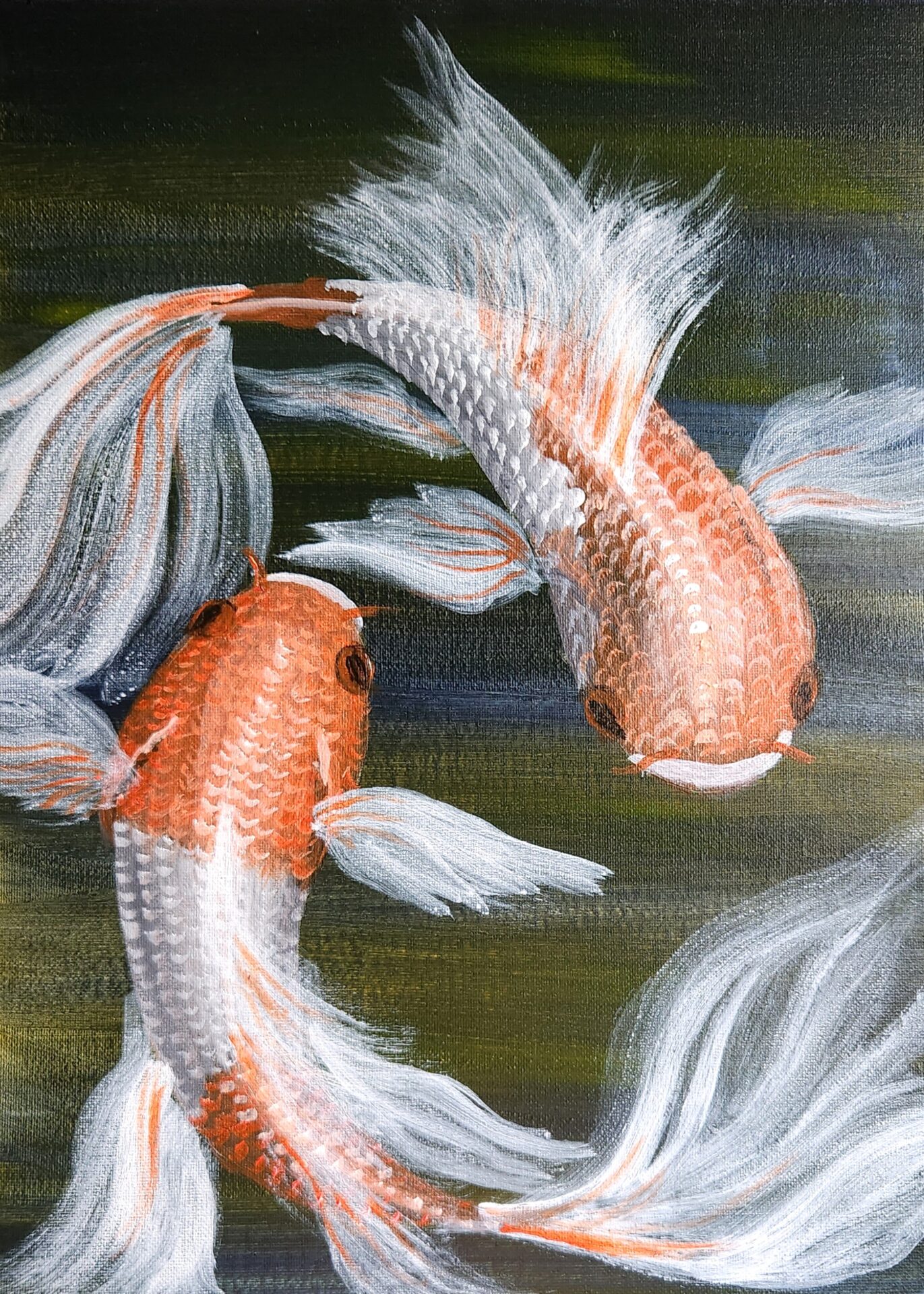
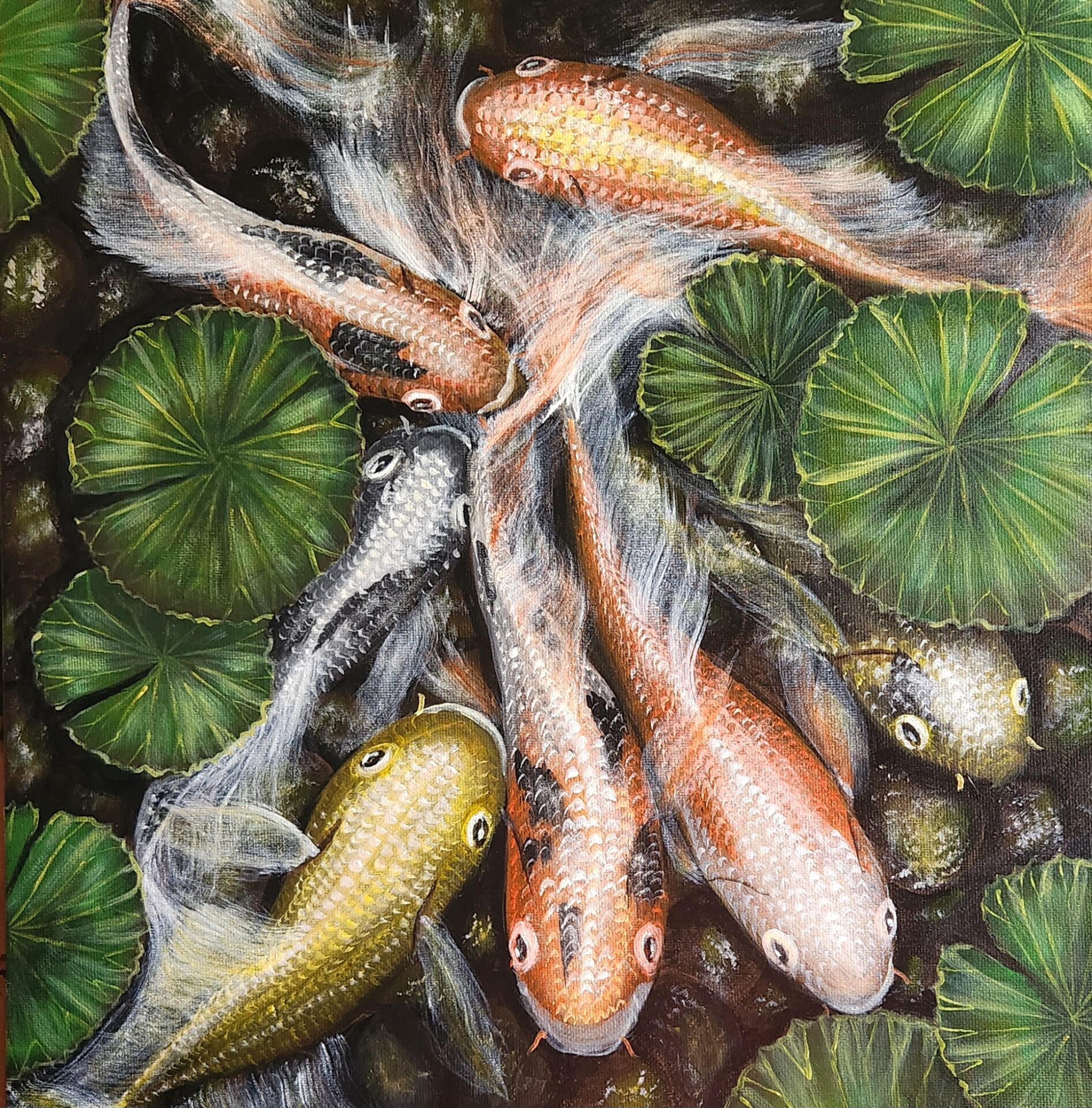
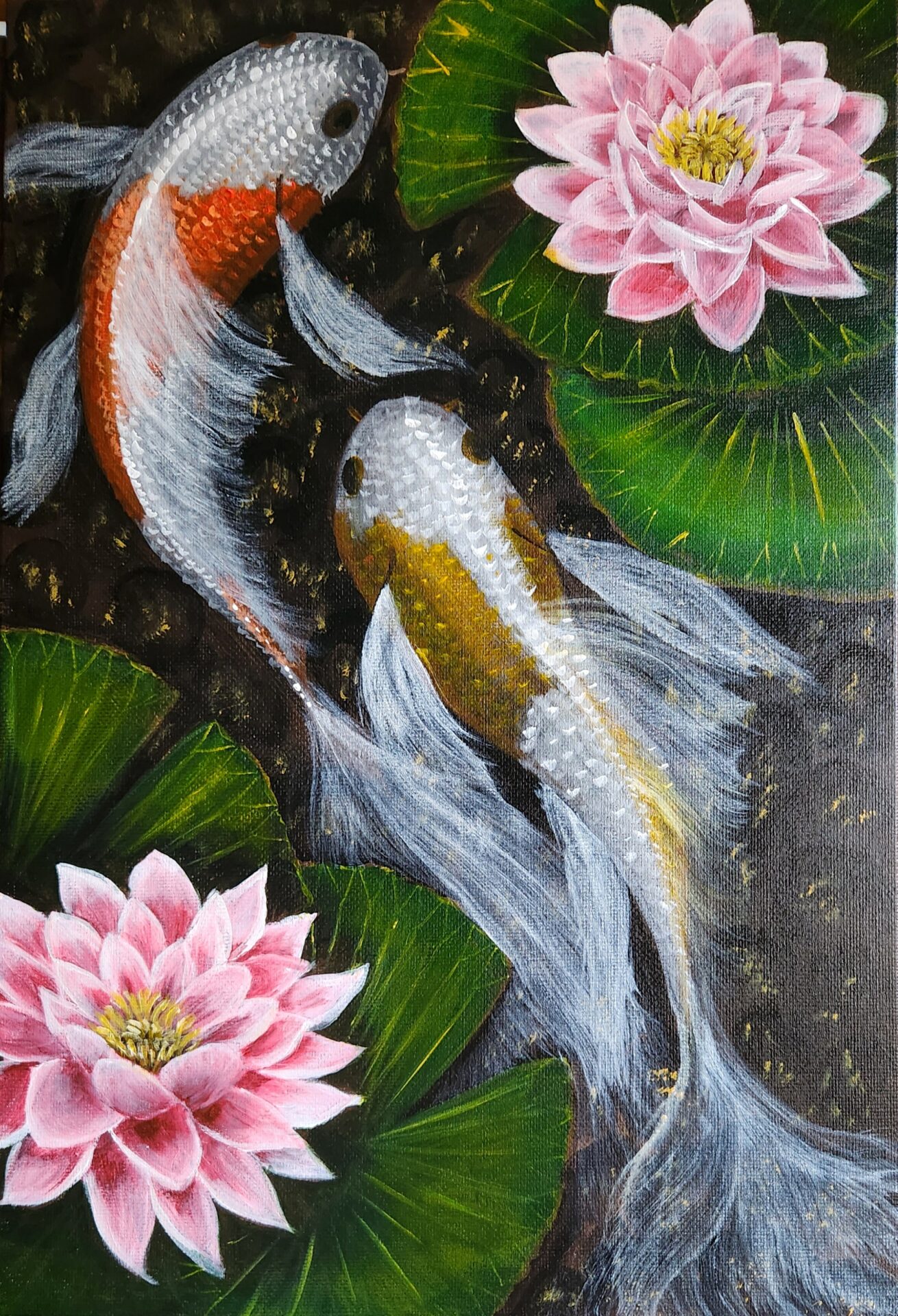
This is why koi have become such a meaningful subject in my body of work. In paintings like Tranquil Depth, Tranquil Depth: Ethereal Dance of the Kois 1, Tranquil Depth: Kois and Water Lilies 2 and Tranquil Depth: Kois and Water Lilies 3, the koi are never only central figures. They are part of a larger world made from water, lily pads, reflections, rhythm and quiet tension.
This Insider Peek is a closer look at that world: how I think about koi, why water matters so much, and how a painting can hold both calm and movement without becoming noisy.
Koi as a Subject That Refuses to Stay Still
Some subjects are still because they sit in front of you. A cup. A vase. A fruit. A flower arrangement. Even when light changes, the form remains relatively obedient. Koi are different. They are never quite where they were a moment ago.
That movement is not an inconvenience. It is the subject.
When I paint koi, I have to think less like a camera and more like memory. I am not trying to freeze one perfect second. I am trying to hold the feeling of watching them move through water. Their bodies bend into soft commas. Their fins trail like translucent fabric. Their markings shift as the light changes. Sometimes one fish becomes clear while another dissolves into shadow.
This creates a natural rhythm on the canvas. The viewer’s eye does not stop at one place. It follows the fish, then the water, then the lily pads, then the fish again. A good koi painting should not feel locked. It should feel as though it is still quietly circulating.
In Tranquil Depth: Ethereal Dance of the Kois 1, the title already hints at this sense of movement. The koi are not arranged like ornaments. They are in relation to each other. Their shapes create a gentle visual conversation, almost like dancers crossing paths.
The Symbolism of Koi Without Losing the Fish
Koi are often associated with perseverance, resilience, good fortune, transformation and the ability to move through difficulty. Those meanings are beautiful, and I understand why people are drawn to them. But as an artist, I try not to let symbolism flatten the subject.
A koi is not only a symbol. It is also a living body. It has a spine, a direction, a pattern, a softness, a surface that catches light. If I paint only the idea of resilience, the fish becomes decorative shorthand. If I paint only the anatomy, the work may become accurate but emotionally thin.
The interesting space is between the two.
I want the koi to carry symbolic weight while still feeling observed. The viewer should sense the larger meaning, but also believe in the fish as a creature moving through water. That balance matters to me because much of my art sits in that same tension: beauty with feeling, calm with undercurrents, decoration with presence.
In Tranquil Depth, the koi are surrounded by lily pads and water droplets. There is abundance, but also depth. The pond is not just a pretty background. It becomes a place of passage, concealment and reflection. The fish appear to move through a layered environment, which makes the symbolism feel embodied rather than pasted on top.

Painting Water as a Living Space
Water is one of the most important parts of a koi painting, but it is also one of the easiest parts to over-explain. If every ripple is painted too literally, the water can become stiff. If the water is too vague, the fish may look pasted onto the surface rather than suspended in it.
I think of water as a living space. It has surface, depth, temperature and mood. It reflects what is above it and hides what is below it. It can be transparent in one area and opaque in another. It can make a koi look bright, then suddenly muted.
When painting water, I often think in layers. The first layers establish the general tone and movement. Later layers help decide what comes forward and what recedes. A darker area might make a pale koi glow. A green lily pad might interrupt the flow in a useful way. A small highlight might suggest the surface catching light.
This is where painting water becomes close to painting emotion. Not because water has to represent sadness or calm in a direct way, but because water changes how everything is felt. The same koi in clear bright water feels different from the same koi moving through a deep, shadowed pond.
In Tranquil Depth: Kois and Water Lilies 2, the water lilies and lily pads help slow the eye down. They give the painting resting points. Without them, the koi might feel too unanchored. With them, the movement has contrast: the fish glide while the leaves hold space.
The Role of Lily Pads and Negative Space
Lily pads are not just decorative additions. They shape the entire composition. They create pauses. They hide parts of the water. They make the koi feel as though they are moving through a real pond rather than floating in an empty field of colour.
Compositionally, lily pads help me control the rhythm. A large pad can slow the painting down. A cluster of smaller pads can create pattern. A shadow between pads can become a path for the eye to travel. The circular shapes also contrast beautifully with the long curves of the koi bodies.
Negative space matters here too. A pond scene can easily become crowded because there are so many lovely things to paint: fish, leaves, reflections, water droplets, shadows, highlights. But if everything is equally important, the painting becomes restless. The eye needs somewhere to breathe.
That is why I often think of the quiet areas as active parts of the painting. A darker patch of water is not empty. It gives depth. A soft area of green is not unfinished. It allows the koi to move. The spaces between the main elements are part of the emotional rhythm.
Tranquil Depth: Kois and Water Lilies 3 continues this conversation. The koi are present, but the surrounding water and lilies create the atmosphere. The painting is not only about the fish. It is about the world that lets the fish appear.
Colour: Calm Does Not Mean Pale
People sometimes imagine calm paintings as pale, soft or almost empty. I do enjoy quiet palettes, but calm does not always mean muted. Koi often bring strong colour into a painting: orange, gold, white, black, red. The challenge is to let that colour feel alive without making the whole work shout.
This is where surrounding tones become important. A warm orange koi can become more luminous against cool green water. A white body can glow when placed near deeper shadows. A small patch of red can guide the eye if it is used carefully.
I also think about how colour moves. A bright fish in one corner may need an echo elsewhere. A lily pad may need a subtle warm note so it does not feel disconnected. A shadow may need a hint of blue or green so it belongs to the pond rather than becoming a flat dark patch.
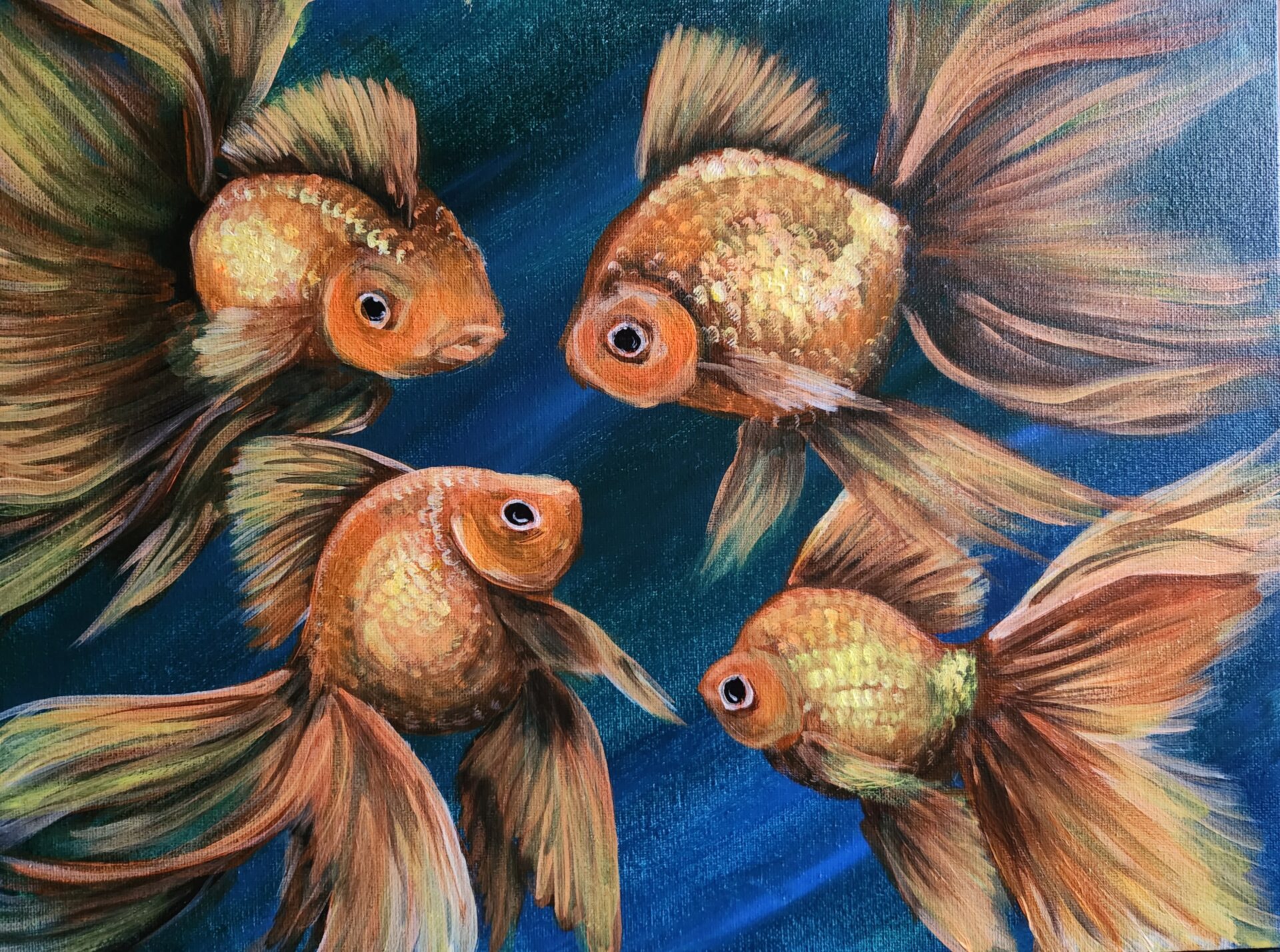
The fish paintings elsewhere in my work also help me understand this. Dance of the Goldfish has a different energy from the koi works. It feels more lively, more decorative, more openly rhythmic. The blue water and goldfish bodies create a sense of movement that is playful and bright.
By contrast, the koi paintings feel more meditative. They are slower. Their movement is still present, but it asks the viewer to stay with the surface longer. Both approaches teach me something about painting fish: colour can create joy, but it can also create depth, silence and contemplation.
Why Koi Belong in My Wider Body of Work
Koi may seem like a very specific subject, but they connect naturally to many themes that run through my art: animals, nature, water, gentleness, resilience, pattern and emotional atmosphere.
I am often interested in creatures that hold personality without needing to be humanised too much. Cats do this in one way. Birds do this in another. Fish do it through movement, colour and environment. They do not give us facial expressions in the same way, so the feeling has to come from body language, spacing, rhythm and setting.
Water also connects the koi works to other marine and underwater paintings. A piece like Jelly Fish explores a more dreamlike underwater glow, while Snorkeling in Tioman brings in memory, travel, coral and the feeling of being immersed in a watery world. These works are different from the koi paintings, but they share a fascination with suspension and quiet movement.
The koi paintings sit somewhere between observation and reflection. They are not purely realistic pond studies, and they are not purely symbolic images. They are my way of paying attention to a subject that keeps changing while still carrying a strong emotional centre.
The Slow Work Behind a Peaceful Painting
Peaceful paintings are not always peaceful to make. Sometimes the calmest-looking work requires the most adjustment. A koi body may need to be shifted slightly so the movement feels natural. A lily pad may be too dominant. A dark area may flatten the water. A highlight may suddenly make the whole pond feel believable.
There is a lot of looking, stepping back, returning, softening and correcting. I may need to decide which details matter and which details are only noise. In a water painting, this is especially important because the surface can become busy very quickly.
A calm painting needs discipline. It asks me not to paint every beautiful thing with equal intensity. It asks me to choose. Where should the eye enter? Where should it rest? Where should it travel next? What can remain suggested instead of fully described?
This is one of the hidden lessons of painting koi. Movement becomes believable not because everything is moving, but because the composition knows where stillness belongs.
What I Hope Viewers Feel
When someone looks at one of my koi paintings, I hope they feel invited to pause. Not forced into a grand interpretation. Not told what to feel. Simply invited.
I hope the fish lead the eye gently through the painting. I hope the water gives a sense of depth. I hope the lily pads offer rest. I hope the colours feel alive but not overwhelming. Most of all, I hope the painting creates that strange and lovely feeling of watching something move quietly while your own mind begins to settle.
That is the gift of koi as a subject. They are never entirely still, but they are not anxious. They move with an ease that feels almost like trust. Painting them reminds me that flow is not the same as rushing. Movement can be calm. Depth can be gentle. Beauty can have weight.
And perhaps that is why I continue returning to them.
In the end, painting koi is not only about fish or ponds. It is about learning how to paint what cannot be held for long: a turn of the body, a flash of colour, a ripple that has already changed, a moment of quiet that keeps moving even after we look away.
Leave a Reply