

A Simple Practice for Comfort, Strength, and Calm Without Getting Down on the Floor
Some days, the floor is not the right place to begin.
That may be because of knee pain, hip discomfort, dizziness, fatigue, pregnancy, recovery after illness, a small living space, or simply the honest feeling that getting down and up again would take more energy than you have available. It may also be because you are at work, travelling, caring for someone, or wearing clothes that make a mat practice impractical. Yoga does not disappear on those days. It only asks to be adapted.
Chair yoga can be a kind and intelligent way to keep the body in conversation with the breath. It can offer movement without making the floor a requirement. It can support steadiness when balance feels uncertain. It can give the nervous system a familiar rhythm when life feels scattered. Most importantly, it reminds us that yoga is not measured by how low we can go, how long we can hold a shape, or how closely we resemble a photograph of a posture.
In yoga therapy, the question is not, “Can I do the full pose?” The more useful question is, “What version of this practice helps me listen, soften, strengthen, or settle today?” A chair can become part of that answer.
This Finding Calm practice is for days when floor-based yoga is not accessible or not appropriate. It offers seated movements, simple breath awareness, and a few supported standing options for those who want them. Please treat every suggestion as an invitation, not an instruction to push through. If you are managing pain, dizziness, surgery recovery, a medical condition, or a high-risk pregnancy, work with a qualified healthcare professional and adapt with care.
Why Chair Yoga Belongs in a Real Practice
There is sometimes a quiet misunderstanding that chair yoga is a smaller or lesser form of yoga. I do not see it that way.
A chair can make practice more available. It can reduce the effort of transitioning between the floor and standing. It can help someone notice the spine, ribs, shoulders, feet, and breath without also worrying about balance or pressure on the joints. It can allow a person to practise at a desk, beside a bed, in a community room, or at home on a day when energy is limited.
Accessibility is not a compromise in yoga. It is part of the intelligence of the practice.
The body changes from season to season and sometimes from morning to evening. A practice that was easy last year may not be useful today. A shape that feels nourishing in a class may not be wise after a sleepless night. A chair gives us another way in. It says: begin here, with what is available.
Chair yoga can support several gentle intentions:
- easing stiffness from long sitting
- improving awareness of posture and breath
- encouraging circulation through simple movement
- building confidence with supported balance
- calming the nervous system through rhythm and repetition
- preserving energy while still offering the body attention
It is not a cure for pain, anxiety, poor sleep, or any medical condition. But it can be a steady supportive practice, especially when it is done slowly and with respect for your own limits.
Setting Up Your Chair Practice
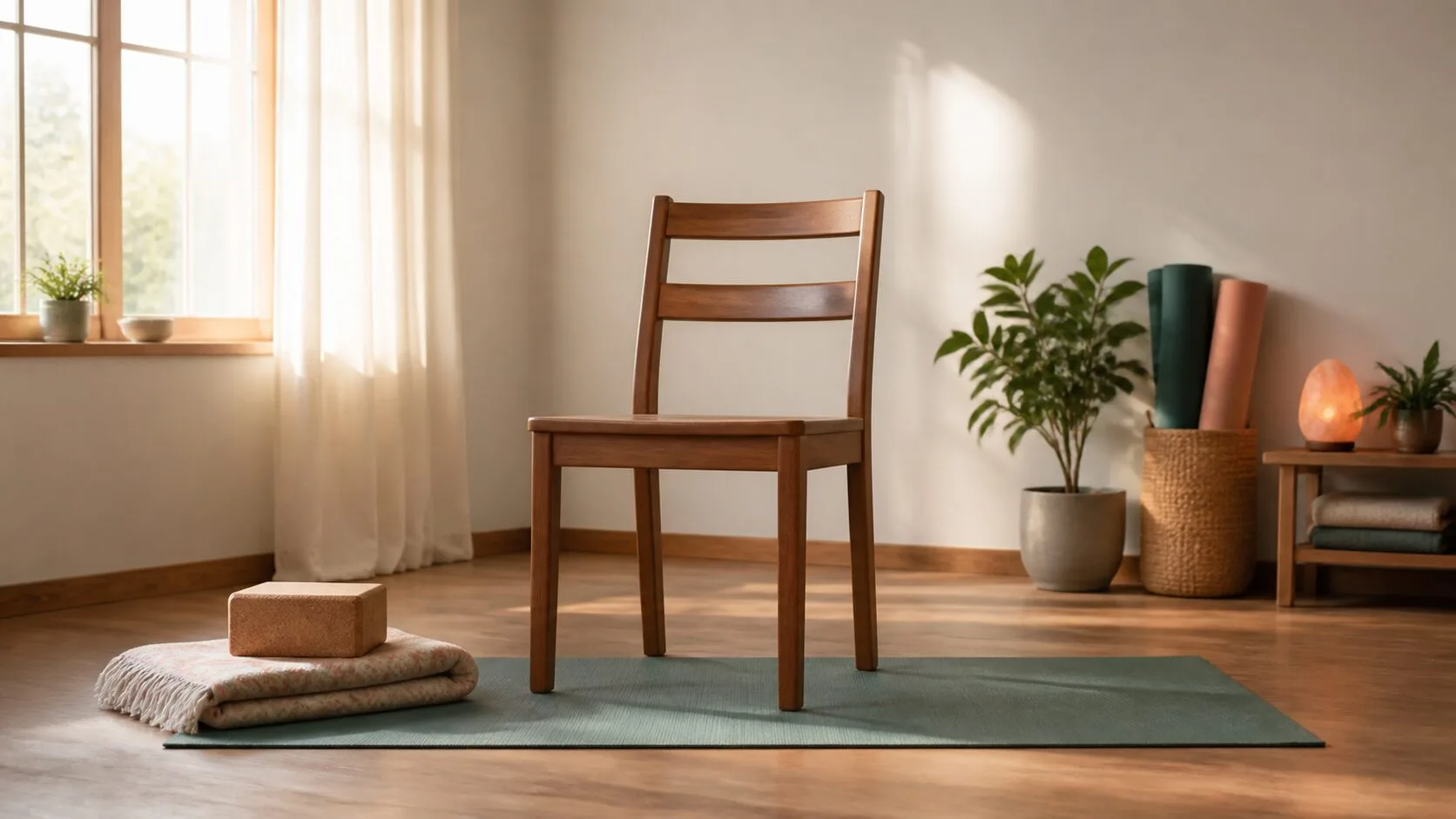
Choose a stable chair without wheels if possible. A dining chair usually works well. If the chair has arms, notice whether they restrict your movement; they may be useful for support, but they can also make some movements awkward. Place the chair on a non-slip surface. If your feet do not reach the ground comfortably, place a folded towel, yoga block, or sturdy book under them.
Sit near the front half of the chair so your spine can rise naturally, but not so far forward that you feel unstable. Let both feet rest on the floor, about hip-width apart. You can place your hands on your thighs, hold the sides of the chair, or rest one hand over the belly and one over the chest.
Before moving, take a moment to arrive. Feel the contact between your body and the chair. Notice the weight of your feet. Let your eyes rest on one point, or close them if that feels safe. You do not need to breathe in a special way. Begin by noticing the breath you already have.
A useful rule for chair yoga is this: comfort is information. If a movement creates sharp pain, pressure, numbness, breath-holding, or a sense of strain, make it smaller or leave it out. Yoga does not need to win an argument with your body.

A Gentle Chair Yoga Sequence
You can move through the full sequence in about fifteen to twenty minutes, or choose only two or three parts. On low-energy days, even five minutes can be enough.
1. Seated Arrival
Sit with both feet grounded and your hands resting where they feel comfortable. Notice the chair beneath you. Notice the room around you. Let the shoulders drop a little, not by forcing them down, but by giving them permission to stop working quite so hard.
Take three to five natural breaths. If it helps, silently name the inhale as “receiving” and the exhale as “settling.” If words feel like too much, simply feel the movement of breath in the ribs or belly.
This first step matters. It tells the nervous system that practice is not another task to rush through.
2. Foot and Ankle Awakening
Keep your heels on the floor and lift your toes. Then place the toes down and lift the heels. Move slowly several times, as if you are waking the feet rather than exercising them.
Next, extend one leg slightly forward and circle the ankle a few times in each direction. Keep the movement small if the knee or hip is sensitive. Repeat on the other side.
The feet are part of grounding. Even in a seated practice, they help us feel where we are.
3. Seated Cat and Cow
Place your hands on your thighs. As you inhale, gently broaden the chest and let the spine lengthen. As you exhale, soften the belly and round the back slightly, allowing the chin to move a little toward the chest.
Keep the movement comfortable. You are not trying to create a dramatic arch or collapse. Think of the spine moving like a quiet wave.
Repeat five to eight times. If coordinating with the breath feels complicated, let the body move first and allow the breath to follow.
4. Shoulder Circles and Arm Sweeps
Circle the shoulders slowly. Lift them toward the ears, roll them back, and let them settle. Try a few circles in the other direction. Notice if one shoulder wants to move differently from the other.
Then, if it is comfortable, sweep the arms out to the sides and up only as high as the shoulders allow. The hands do not need to reach overhead. Exhale and lower the arms. Repeat several times.
For tender shoulders, keep the hands on the thighs and imagine the collarbones widening with the inhale. Visualising movement can be a legitimate adaptation when the body needs rest.
5. Seated Side Bend
Hold the side of the chair with your right hand. Inhale and lengthen through the spine. As you exhale, reach your left arm slightly out or up and lean a little to the right. Keep both sitting bones grounded. Avoid collapsing into the side body.
Stay for one or two easy breaths, then return to centre. Repeat on the other side.
A side bend does not need to be large to be useful. Sometimes the most calming version is the one where you feel more space between the ribs without losing steadiness.
6. Gentle Seated Twist
Sit tall with both feet grounded. Place your right hand on your left thigh and your left hand on the chair beside or behind you. Turn gently toward the left. Keep the neck soft; the head does not have to turn far.
Take one or two comfortable breaths. Return to centre and repeat on the other side.
Twists should feel spacious, not squeezed. If you have spinal concerns, osteoporosis, pregnancy, abdominal discomfort, or recent surgery, keep this very small or skip it.
7. Seated Forward Rest
Widen your feet slightly. Rest your hands on your thighs. Slowly hinge forward from the hips only as far as feels easy. You may rest your forearms on your thighs. Keep the head supported by the spine rather than dropping heavily.
If leaning forward is uncomfortable, stay upright and place your hands over the belly. The intention is quietening, not depth.
Take three breaths. Then press gently through the feet and roll up slowly, lifting the head last if it lowered at all.
8. Supported Standing Option
If standing is appropriate for you today, come behind the chair and hold the backrest with both hands. Stand with feet hip-width apart. Feel the chair as a support, not a test.
Try slow heel raises. Lift both heels a little as you inhale, then lower them as you exhale. Repeat five times. Keep the movement small and controlled.
Then try a supported side step. Step one foot gently to the side and bring it back. Repeat a few times, then change sides. This can help wake the hips and legs without needing the floor.
If standing is not right today, skip this section completely. Seated practice is still practice.
9. Seated Closing Breath
Return to sitting. Rest the hands on the thighs or over the heart. Notice how the body feels now compared with the beginning. You do not have to feel peaceful for the practice to count. You may simply feel more aware, a little warmer, or clearer about what you need next.
Let the exhale become slightly softer. There is no need to lengthen or hold the breath. If counting is calming, inhale for a natural count of three and exhale for a natural count of three or four. If counting creates effort, let it go.
Stay for one minute if you can. Let the chair hold you.
Making the Practice Yours
The most useful chair yoga practice is the one you can actually return to. That may mean practising for ten minutes in the morning, doing two movements during a work break, or using seated breath awareness before bed. It may mean keeping a chair near your mat even when you plan to practise on the floor, so support is available before you need it.
You can also choose a theme for each practice:
- for stiffness: focus on feet, shoulders, and seated cat and cow
- for anxious energy: move slowly and repeat the closing breath
- for fatigue: stay seated and keep the arms low
- for balance confidence: include supported standing near the chair
- for desk tension: add side bends and shoulder circles during the day
A yoga therapy approach honours the person, not just the posture. Two people may need completely different versions of the same movement. One may need strength and steadiness. Another may need softness and permission to do less. Another may need a practice that fits into a caregiving schedule or a small apartment. The chair helps the practice meet real life.
A Note on Safety and Self-Trust
Chair yoga is generally gentle, but gentle does not mean automatically right for everyone. Move slowly if you have blood pressure concerns, vertigo, joint instability, persistent pain, or a condition that affects balance. Avoid holding the breath. Come out of any movement that creates dizziness, nausea, sharp pain, tingling, or unusual discomfort.
If you are practising after surgery, injury, childbirth, or a flare-up of symptoms, get personal guidance before trying new movements. Online articles can offer ideas, but they cannot see your body, your history, or your day.
Self-trust grows when we stop overriding small signals. The body often whispers before it shouts. Chair yoga gives us a quieter place to listen.
When the Chair Becomes a Teacher
There is something beautiful about a practice that removes the performance of yoga. A chair does not ask us to prove flexibility. It does not care whether we look graceful. It simply offers support.
From that support, we can become curious again. How does the breath move when the spine lengthens? What happens to the shoulders when the feet feel grounded? Can a small movement done with attention be more nourishing than a large movement done with strain?
These are the questions that bring yoga back to its deeper purpose. Not display. Not achievement. Relationship.
On days when the floor is not available, the practice is not lost. It may become more honest. It may become more compassionate. It may become something you can weave into ordinary life: at the edge of the bed, at the dining table, between appointments, beside a window in the afternoon light.
If you would like support adapting yoga to your body, energy, and season of life, you can explore the Yoga and Wellness page or use the book a private session to enquire about working together.
For now, begin with a chair, both feet, and one kind breath.
That is enough of a doorway.
Leave a Reply