

Finding Calm 10: Perimenopause and Yoga Asana Support
Perimenopause can make the body feel unfamiliar in very ordinary moments.
A night of broken sleep may change the whole next day. Heat may rise suddenly. The joints may feel stiffer in the morning. The mind may feel foggy. Moods may move faster than expected. Energy may arrive in waves rather than in a steady line.
Yoga cannot remove perimenopause, and it should not be treated as a cure for symptoms that deserve medical care. But yoga can offer a practical way to support the body through change. The right asana, practised gently and adapted well, may help with steadiness, mobility, rest, circulation, grounding and nervous system care.
The important word is may.
A posture that feels calming for one person may feel irritating for another. A strong practice that once felt wonderful may become too heating during a season of hot flushes or poor sleep. A restorative posture may feel deeply supportive one day and too still on another. Perimenopause asks us to listen more closely rather than follow a fixed sequence blindly.
This guide is a practical map: common perimenopause experiences, yoga postures that may support them, and how to adapt the practice safely.
A Safety Note Before Practice
Perimenopause is a normal life transition, but difficult symptoms do not have to be endured silently. Speak with a qualified healthcare professional if symptoms affect sleep, mood, work, relationships, bleeding patterns, pelvic health, sexual wellbeing or daily functioning. Heavy bleeding, bleeding after menopause, chest pain, fainting, severe mood changes, new neurological symptoms or anything that feels alarming should be assessed promptly.
This article is educational and not medical advice. Yoga can sit alongside appropriate healthcare, but it does not replace diagnosis, treatment, pelvic health physiotherapy, mental health care, medication or hormone therapy when those are appropriate.
The NHS overview of menopause notes symptoms such as hot flushes, sleep difficulty, mood changes and vaginal or urinary symptoms. ACOG also describes the menopause transition as a time when periods and symptoms may change. These references are reminders that perimenopause is not only an emotional experience; it is a real physiological transition that deserves proper support.
In yoga, the safest approach is to choose practices that leave you steadier afterward, not depleted.
How to Choose the Right Asana
Instead of asking, “Which pose fixes this symptom?” I prefer to ask, “Which kind of posture might support this state today?”
That small shift matters.
Yoga therapy looks at the person, not only the symptom. Hot flushes, for example, may call for cooling, slower practice. But if someone is also exhausted, the practice may need more rest. If someone feels anxious during stillness, gentle movement may be a better starting point than a long restorative hold.
A useful practice begins with three questions:
- What is strongest today: heat, fatigue, anxiety, stiffness, sadness, agitation, heaviness or poor sleep?
- Do I need movement, rest, strength, cooling, grounding or spaciousness?
- What can I practise without forcing, holding the breath or overriding discomfort?
The following sections offer possibilities, not prescriptions.
Quick Asana Support Map
| Perimenopause experience | Asanas that may support | How to practise |
|---|---|---|
| Hot flushes or overheating | Supported Child’s Pose, Legs on a Chair, Reclined Bound Angle with support | Keep the room cool, move slowly, avoid strong breathwork and long heated flows. |
| Sleep disruption | Legs on a Chair, Supported Forward Fold, Constructive Rest | Practise in low light, use props, keep breathing natural and soft. |
| Anxiety or emotional surges | Mountain Pose, Seated Cat-Cow, Supported Bridge, Legs on a Chair | Choose grounding and rhythm; keep eyes open if that feels safer. |
| Fatigue | Chair Yoga, Constructive Rest, Gentle Side Bends | Keep practice short and supportive; stop before depletion. |
| Joint stiffness | Cat-Cow, Shoulder Circles, Low Lunge with support, Supine Twist | Warm up gradually and avoid forcing range of motion. |
| Brain fog | Mountain Pose, Chair-supported Warrior, Gentle Flow, Balance near wall | Use simple sequences and steady breathing; avoid complexity. |
| Pelvic floor or core changes | Bridge, Chair Pose at wall, Cat-Cow, Breath awareness | Avoid aggressive squeezing; seek pelvic health guidance for symptoms. |
| Low mood or heaviness | Supported Backbend, Gentle Standing Poses, Walking Meditation | Choose mild opening and movement without pushing intensity. |
For Hot Flushes and Overheating
When the body already feels hot, strong yoga can sometimes add too much fire. Heated rooms, rapid flows, long holds, intense core work and forceful breathing may not be ideal during a hot flush phase.
Cooling does not have to mean doing nothing.
Try Legs on a Chair. Lie on your back with the calves resting on a chair, sofa or bed. Support the head if needed. Let the arms rest by the sides or on the belly. Stay for three to seven minutes, breathing naturally. This shape can feel grounding without demanding effort.
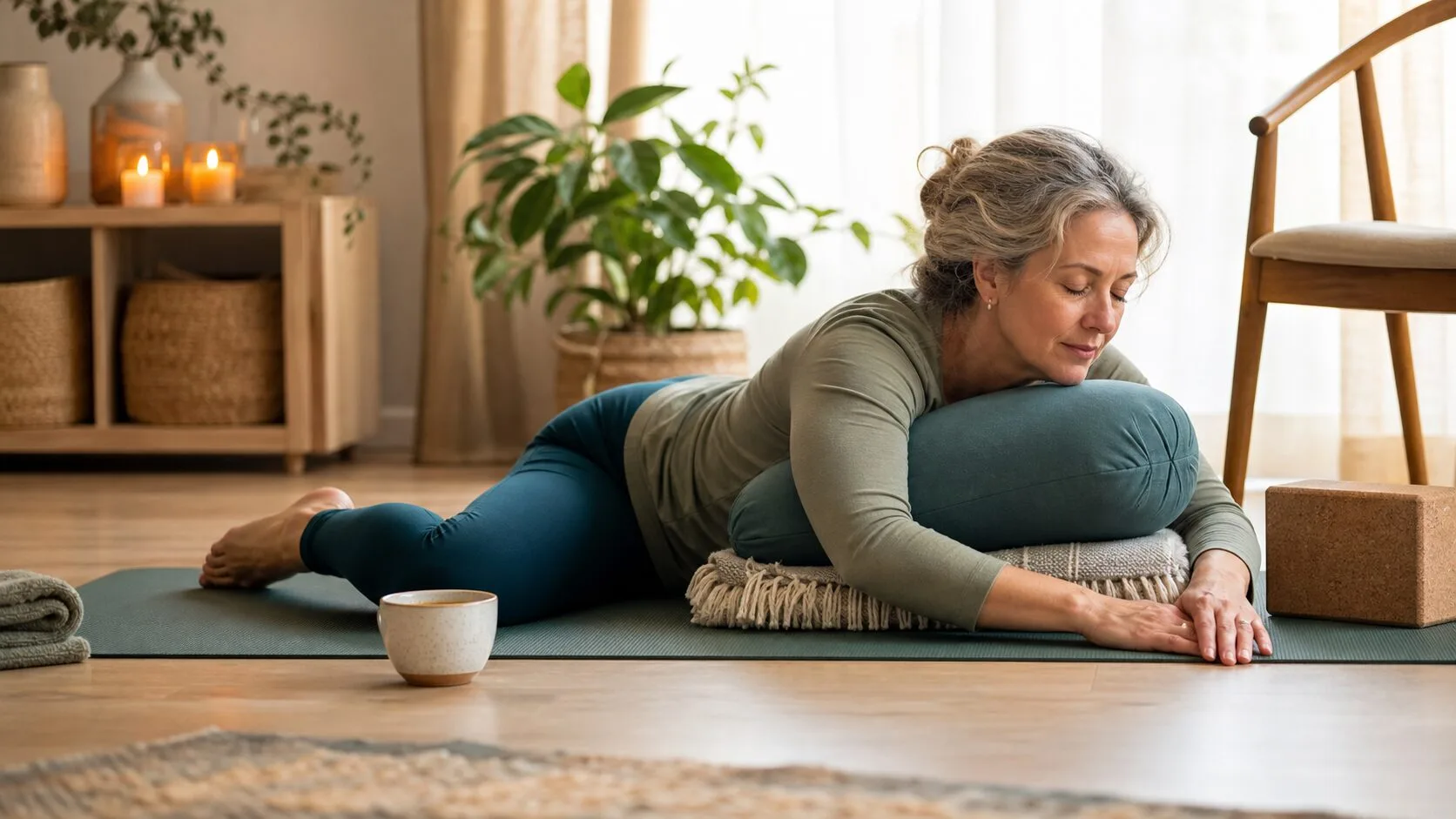
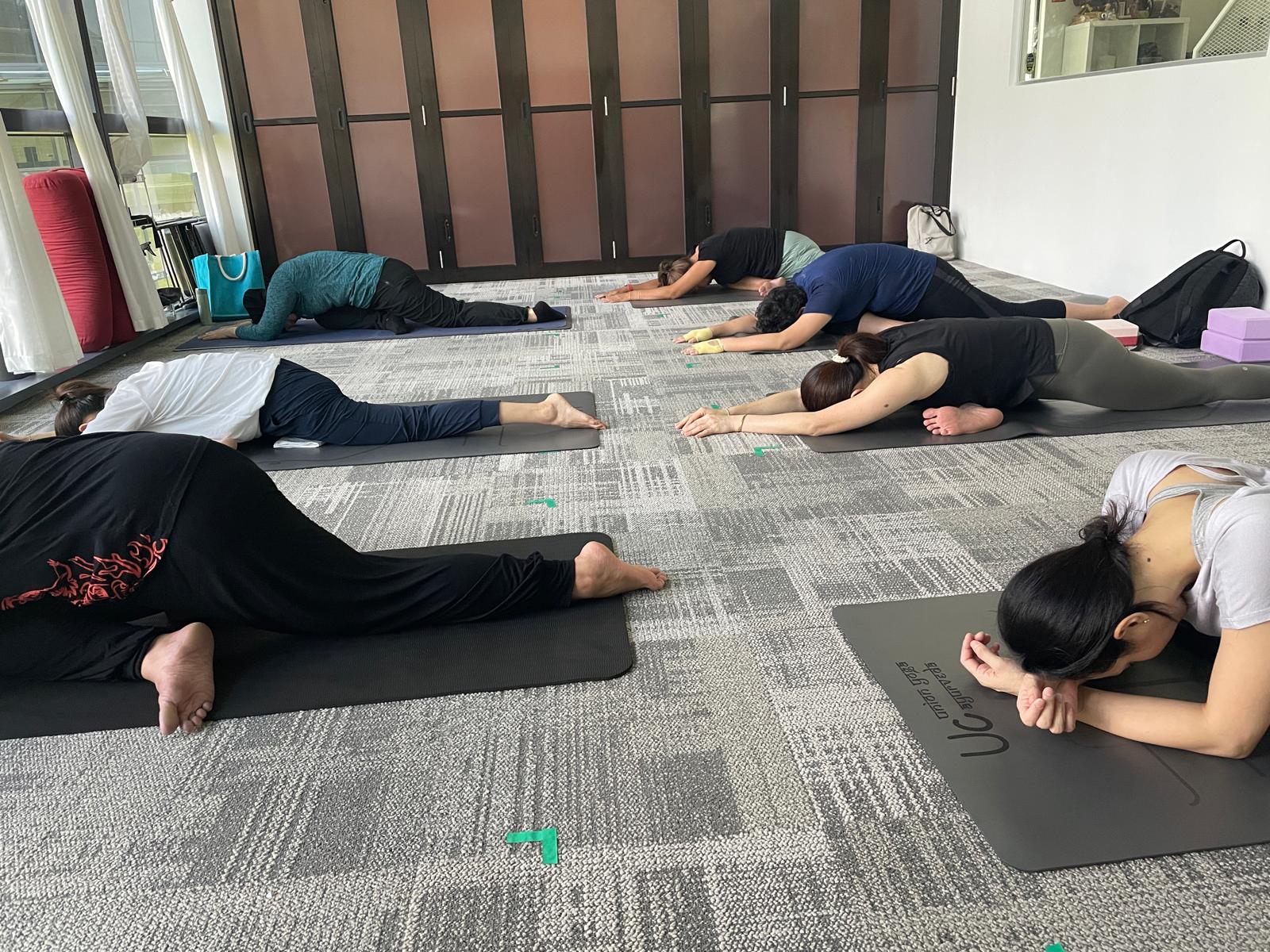
Try Supported Child’s Pose if knees and hips allow it. Place a bolster or pillows under the torso and rest the body forward. If the floor is not accessible, take a seated version with pillows on the lap. The intention is quiet support, not deep stretching.
Try Reclined Bound Angle with support only if it feels comfortable. Place blocks or pillows under the knees so the inner thighs are not pulling. If this posture feels too exposed or too intense, choose legs on a chair instead.
For heat, the practice principle is simple: reduce intensity, increase support, and give the body permission to cool down.
For Sleep Disruption and Night Waking
Sleep disruption can make perimenopause feel much harder. When the body is tired, even small things can feel more intense.
An evening practice should not become another task.
Try Constructive Rest. Lie on the back with knees bent and feet on the floor, or place the calves on a chair. Let the hands rest on the belly, ribs or thighs. Feel the weight of the body. Stay for five minutes.
Try a Supported Forward Fold. Sit on a chair or cushion and place pillows on the thighs. Fold only as far as feels restful. Let the forehead rest if possible. If forward folding does not suit your body, stay upright with the back supported.
Try Legs on a Chair before bed or after waking in the night. Keep the practice boring in the best way. No ambitious stretching. No performance. Just support, breath and gravity.
If sleep does not come immediately, the practice has not failed. Rest still matters.
For Anxiety, Irritability and Emotional Swings
Hormonal changes, poor sleep and life stress can make the nervous system feel more reactive. Yoga can be helpful when it gives the body a steady rhythm.
Try Mountain Pose with the feet grounded. Stand near a wall if balance feels uncertain. Feel the soles of the feet. Let the knees soften slightly. Notice the back of the body. Stay for five slow breaths.
Try Seated Cat-Cow. Sit on a chair with feet grounded. Inhale and gently broaden the chest. Exhale and round the back slightly. Repeat five to eight times. The movement gives the mind something simple to follow.
Try Supported Bridge if lying down is comfortable. Place a block or firm cushion under the sacrum, not the lower back. Keep the height low. This can create a gentle opening across the front body without making the practice too active.
For anxiety, avoid forcing the breath. If closing the eyes makes you feel less steady, keep them open. Orient to the room. Feel the feet. Let yoga be grounding rather than inward in a way that feels too intense.
For Fatigue and Low Energy
Fatigue does not always need more stimulation. Sometimes it needs intelligent pacing.
Try Chair Yoga. Sit with both feet on the floor. Move through shoulder circles, seated side bends, ankle movements and seated cat-cow. Keep the arms low if lifting them feels tiring.
Try Half Sun Breath seated. Inhale and open the arms only as wide as comfortable. Exhale and return the hands to the thighs. Repeat three to five times. This can bring a little circulation and breath awareness without becoming a workout.
Try Constructive Rest when even gentle movement feels like too much. Rest is not a lesser practice. During perimenopause, learning when to stop can be just as important as learning what to do.
If fatigue is persistent, severe or unusual, it is worth discussing it with a healthcare professional. Yoga can support energy management, but it should not be used to dismiss symptoms that need assessment.
For Joint Stiffness and Aches
Some people notice more stiffness, joint discomfort or a slower warm-up during perimenopause. The answer is usually not to force flexibility.
Begin with movement that is small, rhythmic and kind.
Try Cat-Cow on hands and knees, seated on a chair, or standing with hands on a wall. Move gently through the spine. Let the breath be natural.
Try Shoulder Circles and Arm Sweeps. Circle the shoulders slowly, then lift the arms only as high as feels easy. This can help upper back and shoulder stiffness without strain.
Try Supported Low Lunge with hands on blocks or a chair, if the knees and hips tolerate it. Keep the stance short. Think of creating space rather than pushing into the front hip.
Try a Supine Twist with support. Let the knees move gently to one side, supported by a pillow. Keep the twist mild.
For stiffness, the practice principle is warmth before range. Move first. Stretch later, if it still feels useful.
For Brain Fog and Scattered Attention
Brain fog can make complicated sequences feel frustrating. This is not a failure of discipline. It may simply be a day for simpler practice.
Try Mountain Pose into Chair-supported Warrior. Stand near a chair. Step one foot back slightly and keep one hand on the chair for support. Bend the front knee only a little. Return to standing. Repeat on the other side.
Try a short three-pose rhythm: Mountain Pose, gentle side bend, seated rest. Repeat two or three rounds. Keep the pattern predictable.
Try Balance near a wall. Lift one heel, then the other. Or stand with one foot slightly in front of the other. Balance work can bring attention into the present, but it should feel safe and steady.
For brain fog, simplicity is medicine. Let the practice be clear enough that the mind can follow without effort.
For Pelvic Floor, Core and Changing Support
Perimenopause may bring pelvic or urinary symptoms for some people. Yoga can support awareness, posture and gentle strength, but it is not a replacement for pelvic health care.
Try Bridge Pose with care. Lie on the back, knees bent. Press through the feet and lift the pelvis only to a comfortable height. Lower slowly. Repeat three to six times. If this creates pressure, pain or breath-holding, stop.
Try Chair Pose at the wall. Stand with the back near a wall and bend the knees slightly, as if beginning to sit. Keep the effort moderate. This can support legs and hips without needing a deep squat.
Try Cat-Cow with breath awareness. Notice whether the belly, jaw or inner thighs are gripping. The pelvic floor needs coordination, not constant squeezing.
If you have urinary leakage, pelvic heaviness, pain, prolapse symptoms or concerns after childbirth or surgery, a pelvic health physiotherapist can be very helpful.
For Low Mood and Heaviness
Low mood can need tenderness. It can also sometimes benefit from gentle movement and mild opening.
Try Supported Backbend over a rolled blanket placed across the upper back, not the lower back. Keep the head supported. Let the chest open softly. Stay for one to three minutes if comfortable.
Try Gentle Standing Poses with support: Mountain Pose, supported Warrior, small side bends, or slow step-backs. Keep the pace steady.
Try Walking Meditation. This is not a classic mat asana, but it can be yoga when done with attention. Walk slowly. Feel the feet. Notice the breath. Let the eyes receive the room or the outdoor space.
For low mood, the aim is not to force cheerfulness. It is to create a little movement, a little space, and a little contact with the body.
A 15-Minute Perimenopause Practice
Here is a simple sequence that can be adjusted.
Start in Seated Arrival for one minute. Feel the feet and sitting bones. Notice your energy without judging it.
Move into Seated Cat-Cow for eight rounds.
Add Shoulder Circles and Side Bends for two minutes.
Come to standing for Mountain Pose and Chair-supported Warrior on each side.
Return to the floor or chair for Supported Forward Fold.
Finish with Legs on a Chair or Constructive Rest for five minutes.
If you are hot, reduce standing work. If you are tired, stay seated. If you are anxious, keep the eyes open and use the wall or chair. If you are stiff, move slowly before holding anything.
The sequence is not the point. Responsiveness is the point.
How to Know if the Practice Helped
After practice, ask one question: do I feel more supported than when I began?
Not perfect. Not symptom-free. More supported.
You might notice steadier breathing, less jaw tension, warmer joints, clearer attention, softer mood, or a sense that the body is less foreign. Some days the only benefit may be that you paused and listened.
That counts.
If a practice increases heat, agitation, pain, dizziness, fatigue or emotional distress, it needs to be changed. Yoga should not become another place where you override yourself.
If you would like support building a practice that fits your body and your real life, you can visit my Yoga and Wellness page or book a private session.
Perimenopause may ask for different asanas on different days.
That is not inconsistency.
That is listening.
Related Reading
- Finding Calm 9: Yoga and Perimenopause
- Finding Calm 7: Chair Yoga for Days When the Floor Is Not Accessible
- Finding Calm Through Gentle Breath Awareness
- Yoga and Wellness with Danielle


Leave a Reply