

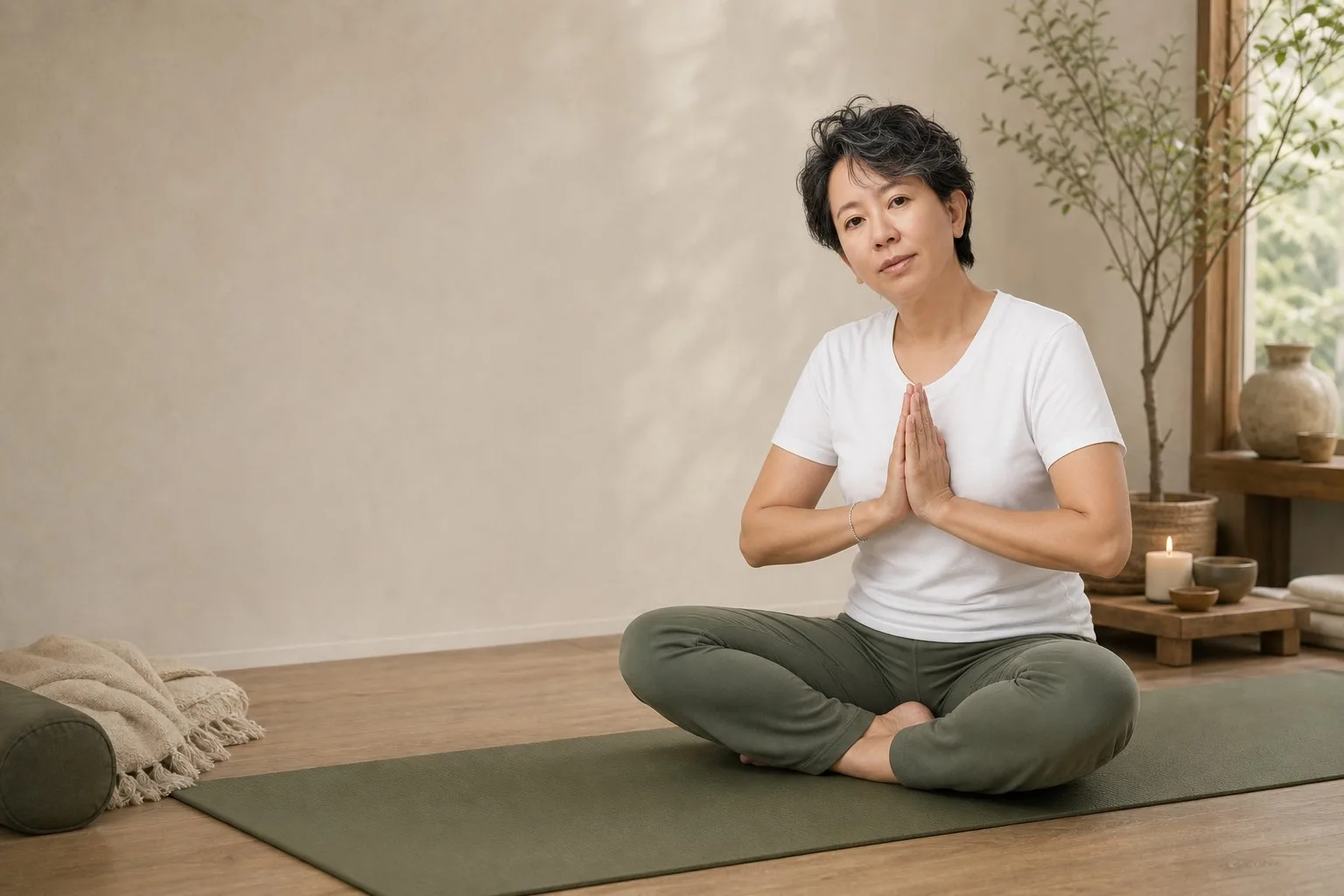
Finding Calm 9: Yoga and Perimenopause
Perimenopause can feel like living in a body that has started changing the rules without first explaining them.
Sleep may become lighter. Heat may arrive suddenly. Moods may feel less predictable. The menstrual cycle may change in timing, flow or intensity. Energy can rise and drop in ways that feel unfamiliar. A practice that once felt easy may suddenly feel too strong, while rest may become both more necessary and harder to access.
This can be unsettling.
It can also be a season that asks for a new kind of listening.
Yoga cannot stop perimenopause, and it should not be presented as a treatment for symptoms that deserve medical care. But a gentle, well-adapted yoga practice can support awareness, steadiness, mobility, rest and self-trust. It can give the body a place to be heard without being judged. It can help us ask better questions: What is changing? What supports me now? What needs to soften? What needs strength? What needs professional guidance?
This Finding Calm article is not a medical prescription. It is a compassionate yoga therapy reflection for a transition that many people move through quietly, sometimes without enough language or support.
What Perimenopause Can Feel Like
Perimenopause is the transition leading toward menopause. During this time, hormone levels can fluctuate and periods may become irregular before eventually stopping. Experiences vary widely. Some people move through this stage with mild changes. Others experience symptoms that affect sleep, work, relationships, mood, body confidence and daily life.
Commonly discussed symptoms include hot flushes, night sweats, sleep disturbance, mood changes, brain fog, cycle changes, vaginal or urinary symptoms, joint discomfort and shifts in energy. Not everyone experiences all of these, and symptoms can have other causes too. That is why it is important to seek medical advice for symptoms that are intense, unusual, worrying or affecting quality of life.
From a yoga perspective, the most useful starting point is not to force the body back into an old rhythm. It is to notice the rhythm that is here now.
That can be emotionally tender.
Many of us build identity around what the body used to do. We may remember the stronger practice, the easier sleep, the more predictable energy, the feeling of being able to push through. Perimenopause can interrupt that story. It can make the body feel less controllable.
Yoga can offer a different story: not control, but relationship.
A Practice That Changes With You
A yoga practice for perimenopause does not have to be smaller in a defeated way. It may simply become more intelligent.
Some days may still welcome strength, standing poses, balance work and flowing movement. Other days may need seated practice, supported shapes, shorter sessions, cooling breath awareness, or rest. A therapeutic approach does not assume that one sequence will be right every day.
The key is responsiveness.
Instead of asking, “What should I be able to do?” we might ask:
- How did I sleep?
- Is my body hot, heavy, anxious, depleted or steady?
- Do I need movement, rest or both?
- Would effort help me feel grounded, or would it add strain?
- Can I practise in a way that leaves me better resourced afterward?
These questions make yoga less about performance and more about care.
During perimenopause, this matters. The body may already feel unpredictable. A practice that demands the same output every day can become another source of pressure. A practice that adapts can become a place of trust.
Cooling the Urge to Push
Many people arrive at midlife with a long history of pushing through.
Pushing through work. Pushing through caregiving. Pushing through emotional labour. Pushing through tiredness. Pushing through discomfort because there is always one more thing to do.
Perimenopause often makes this habit more visible.
The body may no longer tolerate the same level of overextension. Sleep disruption can reduce resilience. Hot flushes or anxiety can make strong practices feel less appealing. Joint discomfort or fatigue may ask for a slower entry into movement.
This does not mean you are weak.
It may mean the body is asking for a different agreement.
In yoga, that agreement might look like beginning with five minutes instead of forcing an hour. It might mean using props earlier. It might mean choosing a chair practice, skipping breath retention, taking longer rests, or ending before exhaustion. It might mean accepting that consistency can be built through smaller practices.
A wise practice does not punish the body for changing.
Gentle Movement for Stiffness and Mood
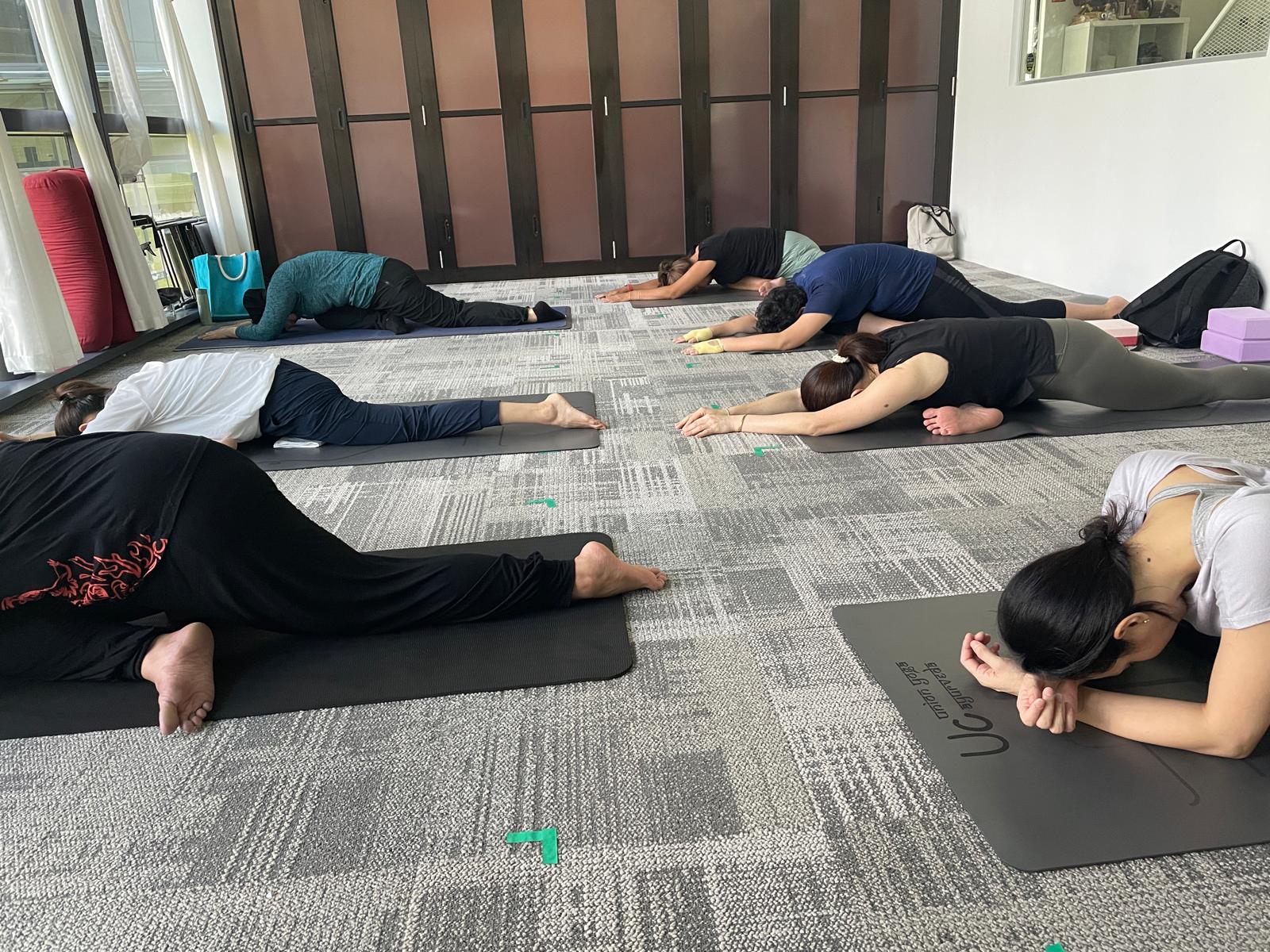
Movement can be supportive during perimenopause, especially when the body feels stiff, heavy, restless or disconnected. It does not need to be complicated.
A simple practice might begin with the feet. Standing near a wall or chair, feel the soles of the feet and slowly shift weight from side to side. Notice whether the breath changes when the body becomes more grounded.
From there, try slow shoulder circles, gentle side bends, seated or standing cat and cow, easy hip circles, and supported lunges if they suit your body. Keep the movement smooth rather than forceful. Let the joints warm gradually.
Strength also matters in midlife, but it should be introduced intelligently. Chair-supported squats, wall push-ups, slow standing balance, and mindful transitions from sitting to standing can be useful for many people. These are not dramatic postures, but they build relationship with the body in practical ways.
The aim is not to leave the practice depleted.
The aim is to feel more present, steady and inhabitable.
Restorative Yoga When Sleep Is Frayed
Sleep changes can be one of the most frustrating parts of perimenopause. Night sweats, waking at odd hours, active thoughts, or a lighter sleep pattern can make the next day feel harder before it has even begun.
Yoga cannot guarantee better sleep, but restorative practice may help create conditions for rest.
Try a short evening practice with dimmer light and fewer demands. Place the calves on a chair while lying on the back, or lie on one side with a pillow between the knees. Support the head and neck well. If lying down feels uncomfortable, sit with the back supported and feet grounded.
Let the breath be natural. Avoid strong breath control late at night, especially if it makes you feel alert or anxious. Instead, notice the body’s contact with support. Feel the back of the body. Let the jaw soften. Let the hands rest.
You might use a phrase such as:
Breathing in, I am here.
Breathing out, I do not have to solve everything now.
If sleep does not come easily, the practice has not failed. Rest is still meaningful even when it does not immediately become sleep.
Breath Awareness Without Forcing
Breath practices are often recommended for calm, but perimenopause is a good time to be careful with intensity.
Strong breathing techniques, long breath holds, rapid breathing, or rigid ratios may not suit everyone. If you experience anxiety, dizziness, hot flushes, respiratory conditions, cardiovascular concerns or panic symptoms, breath practices should be gentle and adapted.
Start with awareness rather than control.
Sit or lie in a supported position. Notice where the breath is easiest to feel. It may be the ribs, belly, nostrils, back body or the subtle movement of the chest. Let the breath stay ordinary.
If it feels supportive, allow the exhale to soften slightly. Do not push it. Do not empty the lungs aggressively. Simply notice whether the body can release a little unnecessary effort.
If breath focus makes you more anxious, choose another anchor. Feel the feet. Look around the room. Hold a blanket. Move the hands slowly. Yoga gives us many doorways into presence.
Heat, Cooling and Self-Compassion
Hot flushes and night sweats can be physically uncomfortable and emotionally frustrating. They can also bring a feeling of exposure, especially when they happen in public or interrupt sleep.
A yoga practice can become more heat-sensitive.
That may mean avoiding very heated rooms, intense flows or strong breathwork when the body already feels hot. It may mean practising near a fan, wearing layers, keeping water nearby, choosing slower transitions, or placing cooling pauses between movements.
Forward folds, supported rest, gentle side bends, quiet seated practice and slow exhalations may feel helpful for some people. Others may prefer walking, stretching or simply lying with legs supported. There is no universal cooling sequence that fits everyone.
The emotional piece matters too.
When heat rises, it can help to remove the layer of self-criticism. The body is not embarrassing you on purpose. It is moving through a physiological transition. A compassionate practice might be as simple as pausing, feeling the feet, and saying internally: This is uncomfortable, and I can be kind to myself here.
Pelvic Floor, Core and Change
Perimenopause and menopause can bring changes related to pelvic health, including urinary symptoms, pelvic floor changes or vaginal dryness for some people. These concerns are common, but they are also personal, and they deserve appropriate care.
Yoga can support body awareness, posture, breathing and gentle strength, but it is not a substitute for pelvic health assessment when symptoms are significant. A pelvic health physiotherapist or qualified healthcare professional may be very helpful.
In yoga practice, avoid assuming that stronger squeezing is always better. The pelvic floor needs coordination, not only effort. Breath, posture, relaxation and appropriate strengthening all matter.
Simple awareness can begin with noticing how the pelvis rests in sitting, how the breath moves through the lower ribs and belly, and whether the abdomen, jaw or inner thighs are gripping unnecessarily. Gentle bridges, supported squats, side-lying leg work or chair-based strength may be useful for some bodies, but they should be adapted to the individual.
The body is not a problem to fix. It is a relationship to understand.
A Short Perimenopause-Supportive Practice
This practice can take ten to fifteen minutes. Use only what suits you.
Begin seated on a chair, cushion or mat. Feel the feet or sitting bones. Let the shoulders settle. Take three natural breaths without trying to deepen them.
Move into gentle cat and cow, either seated or on hands and knees. Keep the movement small and smooth. Let the spine respond rather than perform.
Add slow shoulder circles. Then reach one arm up or out for a gentle side bend. Repeat on the other side.
If standing feels good, come to a wall or chair. Practise five slow sit-to-stand movements or supported mini squats. Move carefully and stop before fatigue.
Return to sitting or lying down. Place one hand on the belly and one on the heart, or rest both hands on the thighs. Notice what changed.
End with one minute of supported stillness.
That is enough.
A practice does not need to be long to be respectful.
When to Seek More Support
Perimenopause is natural, but that does not mean every symptom should simply be endured.
If symptoms affect sleep, mental health, work, relationships, bleeding patterns, sexual wellbeing, daily functioning or quality of life, it is worth speaking with a qualified healthcare professional. Heavy bleeding, bleeding after menopause, severe mood changes, chest pain, fainting, new neurological symptoms or anything that feels alarming should be assessed promptly.
Yoga can sit alongside appropriate medical care. It does not have to compete with it.
Sometimes the most empowering choice is not to manage everything alone.
The Yoga of Changing Honestly
Perimenopause can bring grief, frustration, relief, curiosity, confusion and strength. It may feel like a threshold. It may feel like a disruption. It may feel like both.
Yoga gives us a way to meet change without pretending it is easy.
On the mat, we practise noticing. We practise adjusting. We practise resting before collapse. We practise strength without punishment. We practise listening when the body speaks in unfamiliar ways.
This is not about becoming perfectly calm through perimenopause.
It is about becoming more honest and more compassionate with the body that is carrying you through it.
If you would like support building a practice that fits your body and your real life, you can visit my Yoga and Wellness page or book a private session.
Perimenopause may change the practice.
But it does not take yoga away.
It may bring yoga closer to what it was always meant to be: a relationship with the body as it is now.
Leave a Reply