

Finding Calm 13: Yoga for Back Pain
Understanding the Type of Pain Before Choosing the Pose
Back pain can make the body feel suddenly unfamiliar.
A simple movement like getting out of bed, reaching for something, sitting at a desk, carrying groceries or turning in the car may become uncomfortable. Sometimes the pain is dull and heavy. Sometimes it is sharp. Sometimes it stays in one place. Sometimes it travels down the leg or wraps around the ribs. Sometimes it is not dramatic, but it is constant enough to change the whole mood of the day.
Yoga can support many people with back pain, but it has to be chosen wisely.
The question is not, “Which yoga pose cures back pain?”
The better question is, “What kind of back pain is this, and what kind of movement might the body tolerate today?”
That distinction matters. A back that feels stiff from sitting may benefit from gentle mobility. A back with nerve pain down the leg may need a more cautious approach. A back recovering from a strain may need short, simple movements before deeper stretching. A back linked to stress may need breath, support and nervous system care as much as asana.
This Finding Calm article is a practical guide to common types of back pain and gentle asanas that may support them.
It is not a replacement for medical assessment.
It is a way to begin listening more carefully.
A Safety Note Before Practice
Back pain is common, and many episodes improve with time, appropriate movement and self-care. But some symptoms need medical attention. Please seek urgent care if back pain comes with loss of bladder or bowel control, numbness around the groin or saddle area, weakness or numbness in both legs, severe pain after trauma, fever, unexplained weight loss, cancer history, infection risk, pain that is rapidly worsening, or pain that feels unusual and alarming.
See a qualified healthcare professional if the pain does not improve, keeps returning, travels down the leg with numbness or weakness, affects daily activities, disturbs sleep, or if you are worried. Back pain can involve muscles, joints, discs, nerves, bones, inflammatory conditions, pelvic health, stress and other factors. A yoga teacher should not diagnose the cause.
This article is educational and not medical advice. Practise gently, avoid movements that increase symptoms, and stop if pain becomes sharp, radiating, electrical, worsening or frightening.
In yoga for back pain, the aim is not to perform more.
The aim is to move in a way that helps the body feel safer.
The First Principle: Pain Is Information
Pain is not always a sign that damage is happening, but it is always information worth respecting.
Some discomfort may come from stiffness, weakness, fear of movement, poor sleep, stress, prolonged sitting, sudden overload or unfamiliar activity. But pain can also signal an injury or condition that needs assessment. This is why yoga for back pain should be curious rather than aggressive.
Before choosing a pose, ask:
- Where is the pain: lower back, upper back, one side, both sides, centre, ribs, pelvis or down the leg?
- What is the quality: dull, sharp, burning, pulling, cramping, tingling, numb, heavy or electrical?
- What makes it worse: bending forward, bending backward, twisting, sitting, standing, walking, coughing or lying down?
- What makes it better: movement, rest, heat, support, walking, gentle stretching or changing position?
- Is this new, severe, linked to trauma, or accompanied by symptoms that need medical care?
The answers help guide the practice.
A pose that feels wonderful for one type of back pain may irritate another. A deep forward fold may soothe someone with general back tension, but it may aggravate a person whose symptoms worsen with flexion. A strong backbend may feel freeing for one person and too compressive for another. Even Child’s Pose, often presented as universally restful, is not comfortable for everyone.
Yoga therapy begins with the person, not the pose.
A Quick Back Pain and Asana Map
| Type of back pain or pattern | Asanas that may support | Practise this way |
|---|---|---|
| Stiff low back from sitting | Cat-Cow, Pelvic Tilts, Low Lunge with support, Constructive Rest | Move gently and often; avoid forcing deep stretches. |
| Muscle strain or guarded back | Crocodile Rest, Pelvic Tilts, Legs on a Chair, Supported Child’s Pose | Keep movements small and pain-free; prioritise reassurance and ease. |
| Chronic nonspecific low back pain | Cat-Cow, Bridge, Bird Dog, Chair-supported Warrior, Gentle Flow | Build gradual strength, mobility and confidence. |
| Sciatica or nerve-like symptoms | Legs on a Chair, gentle nerve-friendly movement, supported rest | Avoid aggressive hamstring stretching and seek assessment if symptoms persist. |
| Upper back tension | Seated Cat-Cow, Thread the Needle at wall, supported chest opening, shoulder rolls | Mobilise the ribs and shoulders without yanking the neck. |
| Stress-related back tension | Restorative rest, longer exhale, Supported Forward Fold, Constructive Rest | Include breath and nervous system care, not only stretching. |
| SI or pelvic area discomfort | Bridge with block, Constructive Rest, gentle hip stability work | Avoid asymmetrical extremes if they irritate symptoms. |
| Morning stiffness | Supine Knee Rocks, Cat-Cow, gentle standing movement | Start small before asking the spine for large movement. |
This table offers possibilities, not prescriptions.
The safest practice is the one that reduces threat, supports function and leaves you steadier afterward.
Type 1: Stiff Low Back From Sitting
A stiff low back from sitting is very common.
Long hours at a desk, driving, working on a laptop, scrolling on the sofa or staying in one position for too long can make the back feel compressed and dull. The hips may feel tight. The hamstrings may feel short. The spine may feel reluctant to move.
For this pattern, gentle movement often helps more than one dramatic stretch.
Try:
- Cat-Cow.
- Pelvic Tilts.
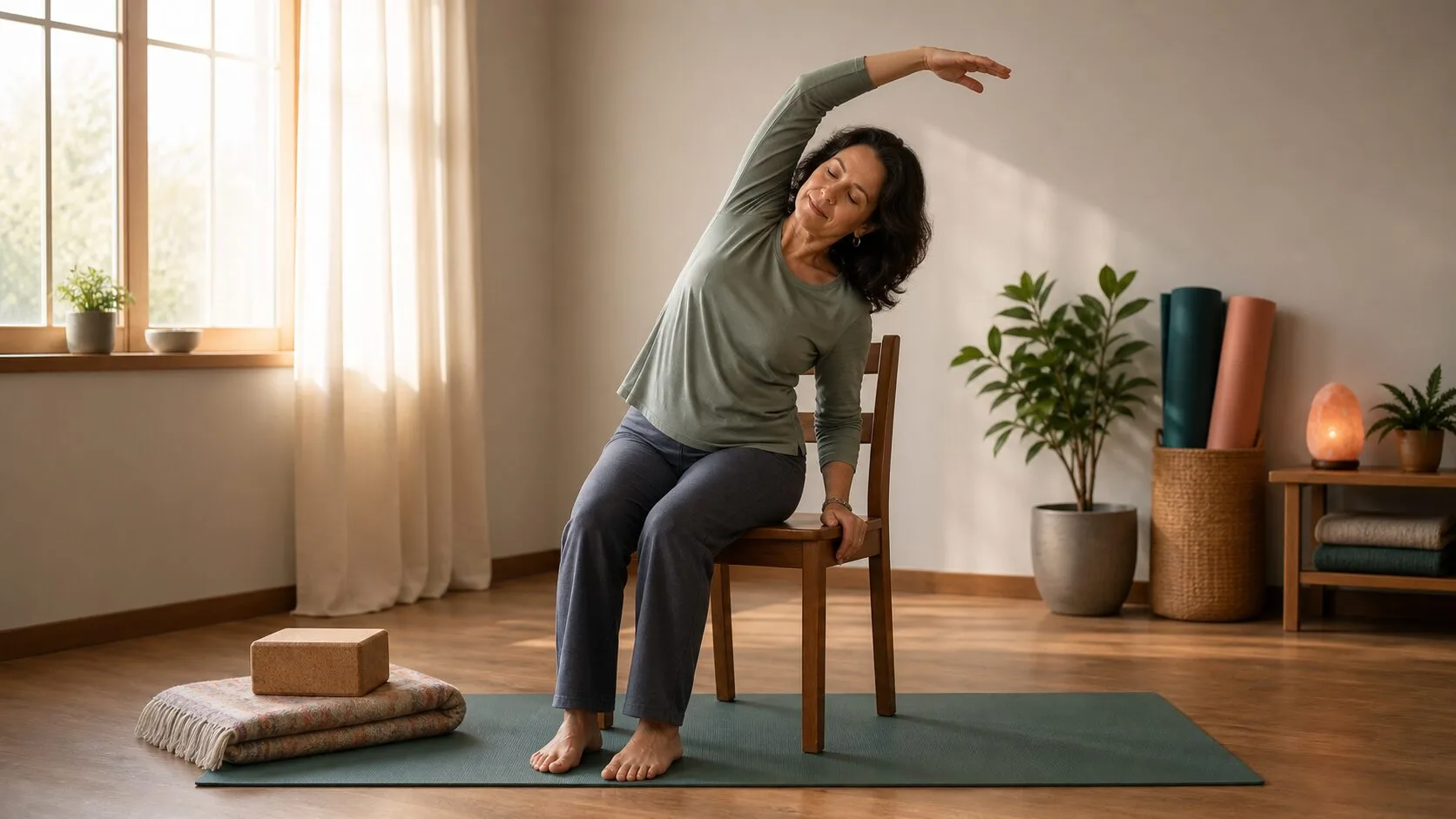
- Seated Side Bends.
- Low Lunge with hands on blocks or a chair.
- Constructive Rest.
Cat-Cow can be practised on hands and knees, or seated on a chair. Move slowly between rounding and lengthening the spine. The aim is to remind the back that it can move in a safe range.
Pelvic Tilts are useful because they are small. Lie on the back with knees bent. Gently rock the pelvis so the lower back moves toward and away from the floor. This can help the lower back soften without demanding a big posture.
A supported Low Lunge may help when the front of the hips feels tight from sitting. Keep the hands on blocks, a chair or the front thigh. Do not sink aggressively into the pelvis. Think of creating space, not forcing range.
For sitting-related stiffness, the real practice may be frequency.
Five minutes several times a day may help more than one intense session after many hours of stillness.
Type 2: Muscle Strain or a Guarded Back
A muscle strain may arrive after lifting, twisting, gardening, exercise, carrying something awkward, or simply moving in a way the body was not prepared for.
The back may feel protective. Muscles may tighten around the area. The body may be afraid of movement.
In this situation, avoid the temptation to stretch hard immediately. A guarded back often needs reassurance first.
Try:
- Crocodile Rest.
- Legs on a Chair.
- Small Pelvic Tilts.
- Supported Child’s Pose if comfortable.
- Slow walking if tolerated.
Crocodile Rest is simple. Lie on the belly with the forehead resting on stacked hands, or use a pillow under the chest if needed. Let the breath move into the back body. If lying on the belly is uncomfortable, skip it.
Legs on a Chair can reduce effort. Lie on the back with calves supported on a chair or sofa. Let the knees bend. Stay for a few minutes and notice whether the back feels less guarded.
Small Pelvic Tilts can reintroduce movement without asking too much. Keep the movement tiny and stop before pain increases.
For a guarded back, the nervous system needs to know that movement can be safe again. This is not achieved by forcing.
It is achieved by small success, repeated gently.
Type 3: Chronic Nonspecific Low Back Pain
Chronic nonspecific low back pain means the pain has lasted longer or keeps returning, but there may not be one simple structural explanation.
This can be frustrating. People often want one exact cause and one exact fix. But long-term back pain is often influenced by many factors: strength, mobility, sleep, stress, fear of movement, workload, posture habits, previous injury, inflammation, general health and emotional strain.
For chronic low back pain, gentle yoga may support mobility, strength, confidence and body awareness. The practice should not only stretch. It should gradually rebuild trust in movement.
Try:
- Cat-Cow.
- Bridge Pose.
- Bird Dog.
- Chair-supported Warrior.
- Supine Twist in a small range.
- Gentle Flow with rest.
Bridge Pose can be useful when practised steadily. Lie on the back with knees bent and feet hip-width apart. Press the feet into the floor and lift the hips a little. Lower slowly. Repeat five to eight times. Avoid pushing into a high backbend.
Bird Dog can build gentle back and core coordination. From hands and knees, extend one leg back without twisting the pelvis. If that feels stable, extend the opposite arm. Keep the movement slow. A smaller version, extending only the leg or only the arm, is enough.
Chair-supported Warrior can help restore confidence in standing. Use a chair or wall for balance. Keep the stance moderate and the breath steady.
For chronic back pain, progress matters more than intensity.
The body needs consistency, not punishment.
Type 4: Sciatica or Nerve-Like Symptoms
Sciatica is often described as pain travelling from the lower back or buttock down the leg. It may feel sharp, burning, tingling, numb or electrical. It may worsen with sitting, coughing, bending or certain movements.
This is a situation where caution is important.
Aggressive hamstring stretching can irritate nerve symptoms in some people. Deep forward folds, strong seated stretches, intense twists or forcing the leg straight may make symptoms worse.
Try gentler options:
- Legs on a Chair.
- Constructive Rest.
- Small Knee Rocks.
- Gentle Cat-Cow.
- Supported standing with short walks if tolerated.
If symptoms travel down the leg, include numbness or weakness, or do not improve, seek assessment from a healthcare professional or physiotherapist.
In yoga, a useful rule is this: symptoms should not spread farther down the leg during practice. If pain moves from the back into the buttock, calf or foot, or tingling increases, stop and choose a more neutral rest position.
For nerve-like pain, less is often wiser.
The body does not need a dramatic stretch.
It needs space, patience and the right professional guidance if symptoms persist.
Type 5: Upper Back and Shoulder Tension
Not all back pain is in the lower back.
Upper back tension may sit between the shoulder blades, around the ribs, neck or upper spine. It can be linked to desk work, stress, breathing patterns, carrying bags, phone use, driving, breast weight, poor sleep positions or emotional tension.
For upper back tension, it can help to mobilise the ribs and shoulders, not only stretch the neck.
Try:
- Seated Cat-Cow.
- Shoulder Rolls.
- Thread the Needle at the wall.
- Supported Chest Opening.
- Gentle Side Bends.
Thread the Needle at the wall is kinder than forcing the floor version. Stand facing a wall. Place one forearm on the wall and gently turn the chest away, creating a mild rotation through the upper back. Keep the neck relaxed. Repeat on the other side.
For Supported Chest Opening, lie back over a folded blanket placed lengthwise along the spine, or sit with the back supported by a bolster. Keep the opening mild. The goal is breath and space, not a dramatic arch.
Upper back tension often responds well to small practices during the day.
A few shoulder rolls, side bends and breaths between tasks can prevent tension from becoming a hard shell.
Type 6: Stress-Related Back Tension
Stress can live in the back.
The body may brace without us noticing. The shoulders lift. The lower back grips. The breath becomes shallow. The jaw tightens. The muscles hold a quiet readiness, as if preparing for something that never fully arrives.
For stress-related back pain, stretching alone may not be enough. The practice should also include nervous system care.
Try:
- Constructive Rest.
- Supported Forward Fold.
- Legs on a Chair.
- Gentle Breath Awareness.
- Slow Cat-Cow.
Supported Forward Fold can be done seated with the head and arms resting on a chair or cushions. This gives the body a place to yield. If forward folding feels too enclosed, choose Legs on a Chair instead.
Breath awareness should be gentle. Notice the breath rather than controlling it. If it feels comfortable, let the exhale become slightly longer. If breath focus increases anxiety, return to physical anchors such as the feet, hands or support beneath the body.
Stress-related pain asks for kindness.
Not because the pain is imagined.
Because the body has been working hard.
Type 7: SI or Pelvic Area Discomfort
Some back pain is felt around the sacroiliac joints, pelvis or one side of the lower back. It may feel worse with asymmetrical positions, long strides, certain twists, standing on one leg, pregnancy or postpartum changes, hypermobility, or prolonged sitting.
This area can be sensitive to extremes.
Very deep lunges, strong pigeon pose, wide asymmetrical stretches or forcing one hip open may irritate symptoms for some people. A steadier practice may focus on gentle stability.
Try:
- Constructive Rest.
- Bridge Pose with a block or cushion between the thighs.
- Small Knee Rocks.
- Chair Pose at the wall.
- Cat-Cow in a small range.
Bridge with a block between the thighs can encourage symmetrical engagement. Lift only to a comfortable height. Lower slowly. Avoid clenching hard.
Chair Pose at the wall can build gentle hip and leg support. Stand with the back against a wall and bend the knees slightly. Keep the effort mild and the breath steady.
For pelvic or SI discomfort, avoid chasing sensation.
The most useful practice may be the one that feels almost boringly stable.
Type 8: Morning Stiffness
Morning stiffness can make the back feel older than the rest of you.
The body may need time to warm up. The first few movements may feel wooden. There may be stiffness in the hips, spine or hamstrings.
Start small.
Try:
- Supine Knee Rocks.
- Pelvic Tilts.
- Cat-Cow.
- Gentle Standing Roll-Down only if comfortable.
- Mountain Pose with slow arm movements.
Supine Knee Rocks are simple. Lie on the back with knees bent and feet on the floor. Let both knees move a little side to side, staying within a comfortable range. This can bring gentle rotation to the lower back without force.
Cat-Cow can help the spine explore flexion and extension gradually.
If morning stiffness is severe, persistent, associated with inflammatory symptoms, or improves dramatically only after prolonged movement, seek medical guidance. Some forms of back pain are inflammatory rather than mechanical, and they need proper assessment.
Morning practice should feel like greeting the body, not interrogating it.
Poses to Approach Carefully
Some yoga poses are often suggested for back pain but may not suit everyone.
Approach these carefully:
- Deep Standing Forward Fold.
- Seated Forward Fold.
- Full Wheel Pose.
- Strong Cobra or Upward-Facing Dog.
- Deep Twists.
- Pigeon Pose.
- Long-held Plank if it creates bracing.
- Any pose that sends symptoms down the leg.
These poses are not bad. They are simply not automatically appropriate.
A flexible person may fold deeply but still lack stability. A strong person may push through pain. A person with nerve irritation may worsen symptoms by stretching too hard. A person with fear of movement may need reassurance before challenge.
Yoga for back pain is not about collecting impressive shapes.
It is about choosing the right amount of movement at the right time.
A Gentle Ten-Minute Back Care Practice
This short practice is suitable for many people with mild back stiffness or general tension. Skip anything that increases pain.
- Constructive Rest, one minute.
- Pelvic Tilts, eight slow rounds.
- Supine Knee Rocks, eight gentle rounds.
- Cat-Cow, six to ten rounds.
- Child’s Pose with support or seated rest, one minute.
- Bridge Pose, five slow repetitions.
- Legs on a Chair, three minutes.
Move slowly. Keep the breath natural. Let the practice be quiet.
If the body feels better afterward, that is useful information. If symptoms increase, the practice needs to be adapted.
A Chair-Based Back Care Practice
For days when getting onto the floor is not appealing, try a chair practice.
- Sit with feet grounded, thirty seconds.
- Shoulder Rolls, six rounds each direction.
- Seated Cat-Cow, eight rounds.
- Seated Side Bend, three breaths each side.
- Gentle Seated Twist, small range, two breaths each side.
- Sit tall and press feet into floor, five breaths.
- Supported Forward Fold onto a table or cushions, one to two minutes if comfortable.
Chair yoga is not lesser yoga.
For back pain, a chair can make practice more accessible, less intimidating and easier to repeat during the day.
When Strength Matters
Many people think back pain only needs stretching.
Sometimes stretching helps. But many backs also need strength, coordination and confidence. The spine is supported by the hips, legs, abdomen, breath, pelvic floor, back muscles and the way the whole body moves together.
Gentle strengthening may include Bridge, Bird Dog, Wall Chair, standing poses with support, heel raises, and slow transitions from sitting to standing.
The key is gradual load.
Not forcing. Not avoiding all movement. Not jumping into intense core work. Just building capacity step by step.
A back that trusts movement again often becomes less fearful.
That trust is part of healing.
The Emotional Side of Back Pain
Back pain can be emotionally tiring.
It may make someone feel old, fragile, irritated, anxious or frustrated. It may create fear around ordinary tasks. It may interrupt sleep, work, exercise, intimacy, parenting, caregiving and mood.
Yoga can help us meet that emotional layer too.
A gentle practice can remind the person that the body is not only a problem. It is still a place where breath happens. Support happens. Small movement happens. Comfort may still be possible.
This matters because fear can shrink life around pain.
A good yoga practice should not shame the body for hurting. It should help the body feel accompanied.
Building Your Personal Back Care Menu
Instead of memorising many poses, create a small menu.
Choose:
- One rest pose that usually helps.
- One mobility movement that feels safe.
- One gentle strength pose.
- One chair option.
- One practice to avoid when symptoms are active.
For example:
- Rest: Legs on a Chair.
- Mobility: Cat-Cow.
- Strength: Bridge.
- Chair option: Seated Side Bend.
- Avoid: Deep Forward Fold during flare-ups.
This kind of menu makes practice more realistic. When pain appears, you do not have to decide everything from scratch. You have a few familiar, trustworthy options.
A Kinder Way to Practise
Yoga for back pain asks for humility.
The body may not want the pose we planned. The old practice may not fit today. A simple movement may teach more than a dramatic one. Rest may be more useful than effort. Strength may need to be rebuilt slowly. Some symptoms may need medical care rather than another stretch.
This is not failure.
It is relationship.
Back pain can feel like an interruption, but it can also invite a more intelligent way of practising. We learn to ask better questions. We learn to notice patterns. We learn that the spine is not separate from stress, sleep, breath, work, movement and daily life.
Most of all, we learn that care does not have to be extreme to be meaningful.
A few gentle pelvic tilts.
A supported rest.
A small bridge.
A walk.
A chair practice between tasks.
A decision to seek help when symptoms need attention.
These are all part of yoga when they are done with awareness.
The back does not need to be forced into calm.
It needs to be listened to, supported and gradually invited back into trust.
Leave a Reply