

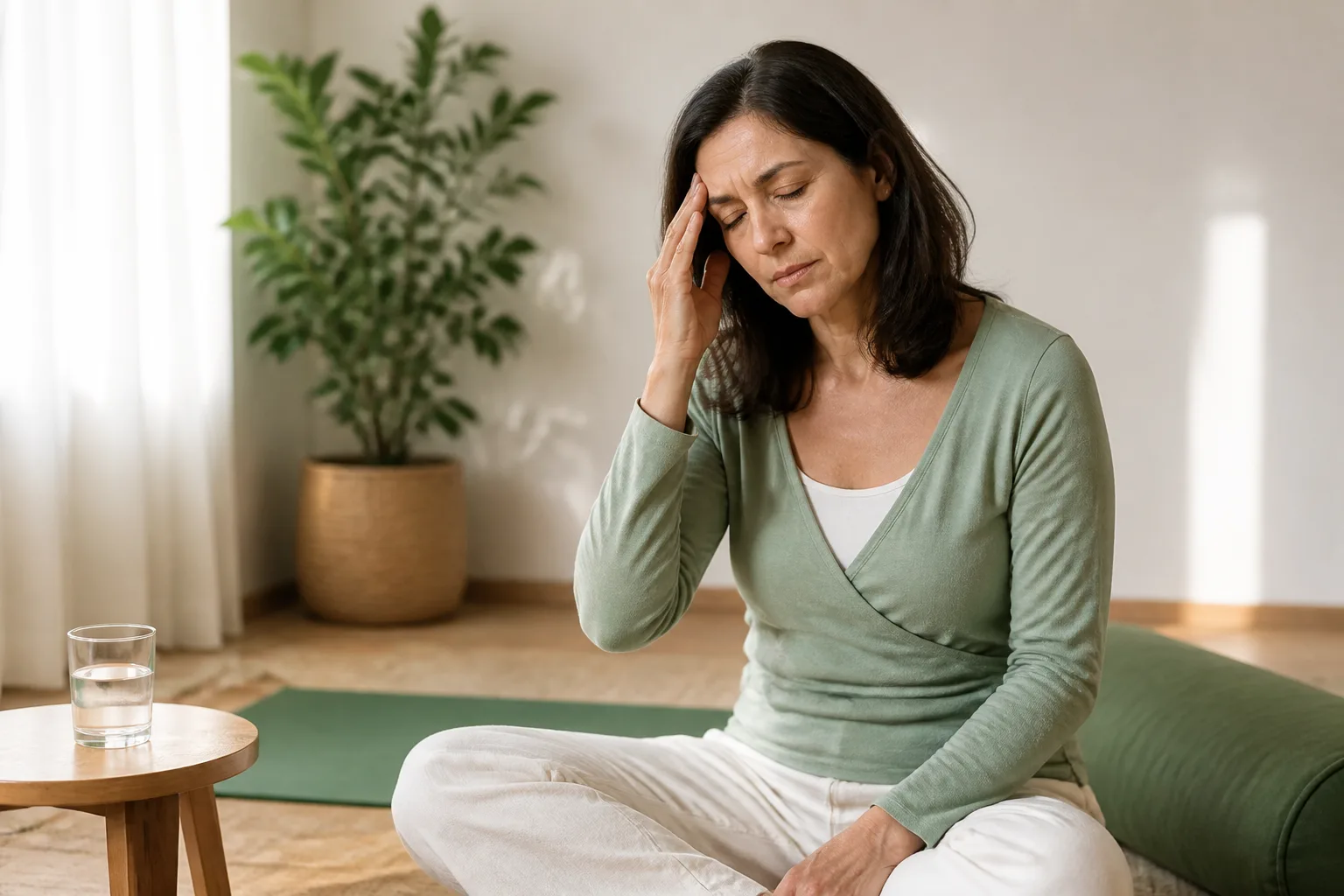
Finding Calm 14: Yoga and Ayurveda Therapy for Headache
Gentle Support for the Head, Neck, Breath and Daily Rhythm
A headache can make the whole world feel too loud.
Light may feel sharper. Sound may feel closer. The eyes may feel tired. The jaw may tighten. The neck and shoulders may become heavy. Even simple tasks can feel harder because the head becomes the centre of attention in a way we did not ask for.
When people ask about yoga for headache, I always want to begin gently.
Yoga can support some headache patterns, especially when tension, stress, sleep disruption, posture, neck tightness, shallow breathing or daily rhythm are involved. Ayurveda can also offer a useful lens: not as a quick cure, but as a way to notice patterns in food, heat, routine, digestion, rest, overstimulation and seasonal change.
But headaches are not all the same.
A mild tension headache after a long day at the computer is different from a migraine attack. A headache from dehydration is different from a sinus-related headache. A sudden severe headache is different from a familiar pattern that comes with stress or poor sleep.
So the first practice is not a pose.
The first practice is discernment.
A Safety Note Before Practice
This article is educational and not medical advice. Yoga and Ayurveda-inspired lifestyle practices can support wellbeing, but they do not replace medical assessment, diagnosis, medication or emergency care when these are needed.
Seek urgent medical care if you have a sudden, severe headache, the worst headache of your life, headache after a head injury, headache with fever or stiff neck, confusion, fainting, seizure, double vision, weakness, numbness, trouble speaking, new neurological symptoms, or a headache that feels frightening or very different from your usual pattern.
Please also speak with a healthcare professional if headaches are frequent, worsening, disrupting life, waking you from sleep, changing pattern, linked to high blood pressure, pregnancy, new medication, infection symptoms, or if you need pain medicine often. Tension-type headaches and migraine can both benefit from proper diagnosis and care.
For Ayurveda, use extra caution with herbs, oils, powders, supplements or medicines. Natural does not automatically mean safe. Some Ayurvedic preparations have been found to contain harmful levels of heavy metals, and herbs or supplements may interact with medication, pregnancy, breastfeeding or medical conditions. This article focuses mainly on lifestyle, routine, food awareness, rest and gentle practices.
If in doubt, choose safety.
A headache is not a moment to force the body.
Understanding the Pattern
Before choosing a practice, ask what kind of headache this seems to be.
A yoga therapy approach looks at patterns rather than assuming one solution works for everyone. A person with pressure around the forehead after screen work may need eye rest and neck release. A person with migraine may need darkness, quiet and very gentle breathing. A person with a heat-related headache may need cooling and hydration. A person with stress-related tightness may need the jaw, shoulders and exhale to soften.
Useful questions include:
- Where is the pain: forehead, temples, one side, back of the head, behind the eyes, jaw, neck or whole head?
- What is the quality: tight, dull, throbbing, sharp, burning, heavy, pulsing or pressure-like?
- What makes it worse: light, sound, movement, bending forward, heat, hunger, screens, stress, strong smells or poor sleep?
- What helps: darkness, food, water, rest, medication, massage, quiet, gentle movement, fresh air or sleep?
- Is this familiar, or new and unusual?
These questions help you choose wisely.
The body is usually giving clues.
A Quick Headache Support Map
| Headache pattern | Yoga support that may help | Ayurveda-inspired support |
|---|---|---|
| Tension around forehead, temples, neck or shoulders | Shoulder rolls, neck release, Supported Forward Fold, Legs on a Chair | Warm regular meals, screen breaks, oiling or gentle self-massage if suitable |
| Stress-related headache | Longer exhale, Constructive Rest, restorative poses, grounding through feet | Regular routine, quieter evening, reducing overstimulation |
| Migraine tendency | Very gentle restorative rest, darkness, natural breath awareness | Identify triggers, protect sleep, avoid excess heat and irregular meals |
| Heat-related or irritable headache | Cooling rest, supported poses, no hot yoga, no forceful breath | Hydration, cooling foods, less heat, less intensity |
| Sinus pressure or heaviness | Upright rest, gentle chest opening, supported seated practice | Warm fluids, steam only if comfortable, avoid heavy practice during illness |
| Headache from screen or eye strain | Palming, eye rest, neck and upper back mobility | Breaks from devices, steady meal times, less late-night stimulation |
| Hunger or dehydration-linked headache | Rest first, then gentle movement only after eating or drinking | Do not skip meals, notice caffeine patterns, warm water if tolerated |
| Menstrual or hormonal headache | Restorative practice, supported supine poses, gentle hip and low back release | Track cycle patterns, prioritise sleep, warmth or cooling depending on symptoms |
This map is not a diagnosis.
It is a starting point for listening.
Tension Headache: When the Head Feels Held Too Tight
A tension-type headache often feels like pressure, tightness or a dull ache around the forehead, sides of the head or back of the head. It may be connected with neck and shoulder tension, stress, jaw clenching, long screen use or fatigue.
For this pattern, the practice should be gentle and spacious.
Try:
- Shoulder Rolls.
- Seated Cat-Cow.
- Neck Release with no pulling.
- Supported Forward Fold.
- Legs on a Chair.
- Gentle exhale awareness.
Start with the shoulders. Sit or stand comfortably. Roll the shoulders slowly forward and up, then back and down. Repeat six rounds, then reverse. Let the jaw soften. Let the tongue release. Notice whether the forehead is working hard.
For Neck Release, sit tall and let one ear move slightly toward the shoulder. Do not pull the head with the hand. Stay for two or three easy breaths, then return to centre and change sides. The movement should feel mild.
Supported Forward Fold can be done at a table. Sit on a chair, place folded arms or a cushion on the table, and rest the forehead if comfortable. This gives the head a place to land without hanging from the neck.
The aim is not to stretch aggressively.
The aim is to reduce the grip.
Migraine: Less Input, More Protection
Migraine is not just a bad headache. It can involve throbbing pain, nausea, light sensitivity, sound sensitivity, visual changes, dizziness, fatigue and neurological symptoms. Some people need medication and a clear care plan from a healthcare professional.
During a migraine attack, yoga may not mean movement at all.
It may mean a dark room, quiet, hydration if tolerated, medication as prescribed, and a supported rest position that does not increase symptoms. Strong movement, hot yoga, intense breathwork, inversions, bright rooms and pushing through discomfort can make things worse for some people.
Gentle options may include:
- Legs on a Chair in a dim room.
- Side-lying rest with pillows.
- Constructive Rest.
- Natural breath awareness.
- A cool cloth over the eyes if comfortable.
If breath focus feels irritating, do not force it. Simply feel the support under the body. Let the practice be small.
Between migraine attacks, regular gentle yoga, relaxation, paced breathing and mindfulness may support stress regulation and resilience for some people. But it should be part of a broader plan, not a replacement for migraine care.
For migraine, the kindest yoga is often protective yoga.
Less heat.
Less strain.
Less sensory demand.
More support.
Heat-Related Headache: Cooling the Practice
Some headaches come with heat, irritability, flushed face, thirst, intensity behind the eyes or sensitivity to bright light. In Ayurveda language, we might describe this as a pitta-like pattern: heat, sharpness and intensity rising.
This is not a medical diagnosis. It is a traditional way of observing qualities.
For a heat-related headache, avoid adding more heat.
Skip:
- Hot yoga.
- Strong vinyasa.
- Forceful breathwork.
- Long holds in demanding poses.
- Practising in a warm, stuffy room.
- Competitive effort.
Try:
- Legs on a Chair.
- Supported Reclined Rest.
- Seated Forward Rest.
- Slow natural breathing.
- A cool room and low light.
Ayurveda-inspired support may include cooling the environment, eating regular meals, reducing very spicy or fried foods if they seem to trigger symptoms, staying hydrated and giving the eyes rest from bright screens.
Cooling does not mean making the body cold or rigid.
It means removing excess intensity.
Screen and Eye-Strain Headache
Many modern headaches begin at the screen.
The eyes stare, blink less, focus intensely and receive light for hours. The head moves forward. The jaw tightens. The shoulders lift. The breath becomes shallow. By the end of the day, the headache may feel as though it started in the eyes and spread into the forehead, temples or neck.
Yoga for this pattern begins with breaks.
Try:
- Palming the Eyes.
- Blinking and Soft Gaze.
- Shoulder Rolls.
- Seated Side Bends.
- Gentle Upper Back Movement.
For Palming, rub the hands together until warm, then cup the palms over closed eyes without pressing on the eyeballs. Let the eyes rest in darkness for a few breaths. If closing the eyes feels uncomfortable, soften the gaze toward the floor instead.
Every twenty to thirty minutes of screen work, look away into the distance. Let the eyes change focus. Move the shoulders. Unclench the jaw.
Ayurveda places importance on sensory care. The eyes are not separate from the nervous system. When the senses are overloaded, the mind and body feel it.
A headache from screens may be asking not only for a pose, but for fewer hours of unbroken intensity.
Sinus Pressure or Heavy Headache
Some headaches feel heavy around the forehead, cheeks, nose or behind the eyes. They may come with congestion, illness, allergies or sinus pressure. If symptoms are severe, persistent, accompanied by fever, swelling, vision changes or worsening pain, seek medical advice.
For this pattern, lying flat or folding deeply forward may increase pressure for some people.
Try more upright options:
- Seated Rest.
- Gentle Chest Opening.
- Supported Reclined Pose with head elevated.
- Shoulder Rolls.
- Easy walking if energy allows.
Avoid strong inversions or deep forward folds when they increase pressure.
Ayurveda-inspired support may include warm fluids, gentle steam if it feels comfortable and is medically safe, lighter meals during illness, and rest. But do not use steam if it worsens symptoms or if there are conditions where heat is not suitable.
The practice should help drainage and ease, not trap more pressure in the head.
Hunger, Dehydration and Irregular Routine
Sometimes the headache is less mysterious than it feels.
The body may be hungry, dehydrated, under-slept or pushed past its usual rhythm. Skipped meals, too much caffeine, caffeine withdrawal, inadequate water, alcohol, poor sleep or irregular routines can all contribute to headache patterns for some people.
Yoga cannot replace food, water or rest.
If the headache may be linked to hunger or dehydration, address that first. Eat something appropriate. Drink water. Rest. Then choose only gentle movement if the body feels ready.
Ayurveda has a strong respect for rhythm. Regular meals, regular sleep, warm water if tolerated, and a quieter evening routine can be simple but powerful supports.
For this pattern, useful yoga may include:
- Constructive Rest.
- Gentle Walking.
- Seated Cat-Cow.
- Legs on a Chair.
Do not do strong practice on an empty, depleted body.
A headache may be the body asking for basic care.
Jaw, Neck and Shoulder Connection
The head does not float alone.
Headaches often involve the jaw, neck, shoulders and upper back. Clenching, grinding, desk posture, stress, phone use and emotional holding can all create tension that travels upward.
Try this gentle sequence:
- Sit comfortably with both feet on the floor.
- Let the teeth separate.
- Move the jaw slightly side to side.
- Roll the shoulders slowly.
- Turn the head a little right and left.
- Practise Seated Cat-Cow.
- Rest the hands on the thighs and soften the exhale.
Keep everything small.
The neck does not need aggressive stretching. It needs safety, warmth, circulation and less gripping.
If you have cervical spine issues, dizziness, nerve symptoms, recent injury or severe neck pain, seek professional guidance and avoid self-adjusting the neck.
Breath Practices for Headache
Breath can be helpful, but it must be gentle.
Forceful breathing can worsen some headaches. Breath retention can increase pressure or anxiety. Strong pranayama is not the place to begin when the head hurts.
Start with simple awareness.
Notice the breath at the nostrils, chest, ribs or belly. Let the exhale soften slightly. If counting feels pleasant, try inhaling for three and exhaling for four. If counting creates pressure, drop it.
For some people, humming on the exhale can be soothing because it lengthens the breath and softens the face. Keep it quiet and easy.
Avoid:
- Kapalabhati.
- Bhastrika.
- Long breath holds.
- Straining to breathe deeply.
- Any breathing that increases pain, dizziness or pressure.
The breath should feel like a dimmer switch, not a command.
Ayurveda Lens: Vata, Pitta and Kapha Patterns
Ayurveda often observes symptoms through qualities. This can be helpful if we use it gently, without turning it into a rigid label.
A vata-like headache may feel linked with irregularity: skipping meals, travel, poor sleep, anxiety, dryness, overthinking, too much movement or too much stimulation. Support may include warmth, routine, grounding food, rest, oiling the feet or scalp if suitable, and steady gentle yoga.
A pitta-like headache may feel linked with heat, intensity, irritability, bright light, strong hunger, overwork, hot weather or spicy foods. Support may include cooling, moderation, regular meals, less heat, low light and cooling restorative practice.
A kapha-like headache may feel heavy, dull or congested, especially with sinus pressure, sluggishness or damp weather. Support may include gentle upright movement, warm fluids if suitable, lighter meals during heaviness and avoiding long daytime sleep if it worsens dullness.
These are traditional pattern ideas, not medical categories.
Use them as questions:
Do I need grounding?
Do I need cooling?
Do I need light movement?
That is often more useful than trying to label yourself perfectly.
Ayurvedic Daily Supports Without Overcomplication
For headache support, Ayurveda does not have to become complicated.
Start with rhythm.
- Eat regular meals when possible.
- Avoid skipping breakfast or lunch if hunger triggers headaches.
- Keep hydration steady.
- Protect sleep and wake times.
- Reduce late-night screens.
- Notice caffeine patterns.
- Take breaks before the mind is exhausted.
- Keep the evening quieter if headaches build through the day.
Some people find gentle self-massage supportive. This may include massaging the temples, jaw, scalp, neck or feet with a suitable oil. Avoid strong pressure, avoid oils that irritate the skin, and do not massage areas that are inflamed, injured or medically sensitive.
If using essential oils, be cautious. Strong scents can trigger headaches or migraine in some people.
Ayurveda at its best is not about adding many products.
It is about understanding what the body is already asking for.
A Gentle Headache Practice
This practice is for mild, familiar headaches related to tension, stress or tiredness. Do not practise if symptoms are severe, unusual or medically concerning.
- Sit with feet on the floor, one minute.
- Soften the jaw and tongue, thirty seconds.
- Shoulder Rolls, six rounds each direction.
- Seated Cat-Cow, eight slow rounds.
- Gentle Side Bend, two breaths each side.
- Supported Forward Rest at a table, one to three minutes.
- Legs on a Chair or Constructive Rest, five minutes.
- Natural breath awareness, one minute.
Keep the room dim if light bothers you. Keep the breath easy. Come out if the headache worsens.
This is not a performance practice.
It is a care practice.
A Migraine-Friendly Rest Option
If migraine symptoms are present, reduce the practice even further.
Try:
- Dim room.
- No strong scents.
- Side-lying rest or Legs on a Chair.
- Eye pillow or cool cloth if comfortable.
- Natural breathing.
- Medication or medical plan as prescribed.
Do not force meditation if the pain is too intense. Do not force breathing if nausea is present. Do not force movement if movement worsens throbbing.
Sometimes the most yogic choice is to stop doing and allow the body to be protected.
What to Avoid During Headache
During an active headache, be careful with:
- Hot yoga.
- Strong inversions.
- Forceful breathwork.
- Long breath holds.
- Deep backbends.
- Aggressive neck stretches.
- Bright rooms or loud music.
- Strong scents.
- Pushing through nausea, dizziness or visual symptoms.
Also be cautious with online advice that promises instant cures. Headaches are complex. What helps one person may trigger another.
A good practice should reduce strain, not add another layer of effort.
Tracking Patterns With Kindness
A headache journal can be useful.
You do not need to make it complicated. Note the date, time, pain location, possible triggers, sleep, meals, hydration, stress level, menstrual cycle if relevant, screen time, weather changes, medication and what helped.
Over time, patterns may appear.
Perhaps headaches arrive after skipped meals. Perhaps they come before menstruation. Perhaps neck tension builds after long computer work. Perhaps late-night screens matter. Perhaps certain scents, heat or strong yoga classes are triggers.
This is where yoga and Ayurveda meet beautifully.
Both ask us to observe.
Not obsessively.
Kindly.
A pattern is not a reason to blame yourself. It is information that can help you care for yourself sooner.
A Softer Way to Meet the Head
Headaches can make us impatient with the body.
We may think, not again. I do not have time. Why is this happening? Why can’t I just function?
That frustration is understandable.
But the head is part of the body, and the body may be asking for something real: less strain, more water, regular food, sleep, medical care, darkness, quiet, movement, medication, boundaries, rest, or simply a kinder pace.
Yoga and Ayurveda therapy for headache is not about controlling the head into silence.
It is about listening to the conditions around the pain.
The neck.
The eyes.
The breath.
The jaw.
The meals.
The sleep.
The heat.
The stress.
The rhythm of the day.
When we listen this way, the practice becomes more intelligent. We stop asking one pose to solve everything. We begin to build a life that gives the nervous system fewer reasons to shout.
Sometimes relief comes quickly.
Sometimes it takes patience, professional care and many small adjustments.
But even then, the practice can still matter.
A dim room. A supported posture. A softened jaw. A regular meal. A slower exhale. A decision not to force through pain.
These are not small things when the head hurts.
They are ways of returning to care.
Leave a Reply